




Renaissance Furniture Chest
These renaissance furniture chest pieces bring heavy timber, bold carving, and centuries of domestic utility straight into a modern room.
Renaissance Furniture Chest
A renaissance furniture chest encompasses sturdy storage coffers, bench seats with compartments, and intricate writing cabinets originating from periods like the seventeenth and nineteenth centuries. These items serve practical storage needs while anchoring a room with dark, heavily figured timber and architectural presence.
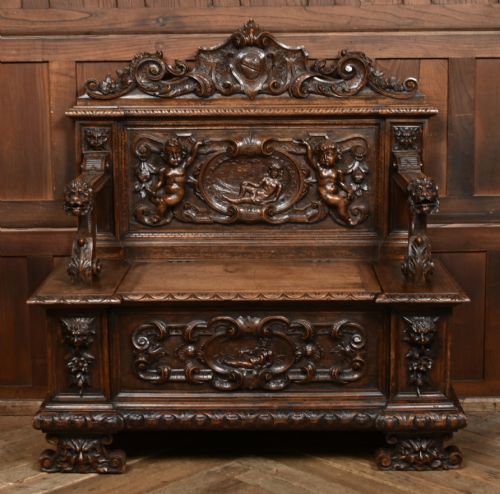
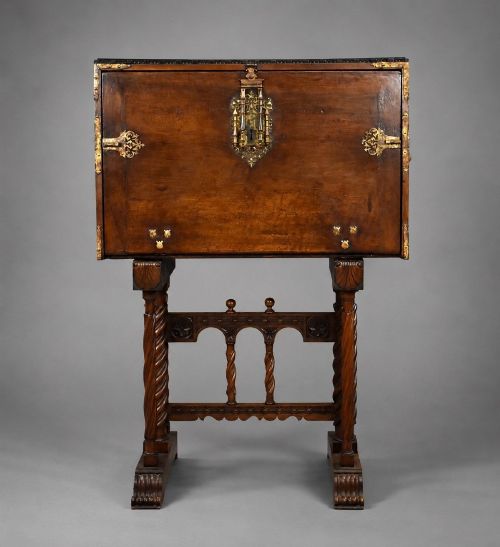
The varieties seen on this page span French carved oak hall benches, Spanish walnut vargueno cabinets, and Italian cassapanca seating. Buyers frequently encounter nineteenth-century revival interpretations alongside genuine seventeenth-century examples made in walnut, oak, and fruitwood.
Forms range from simple lidded coffers and monks benches to elaborate desk cabinets fitted with internal drawers and wrought iron mounts. Each piece reflects the heavy structural traditions of Spanish, Italian, German, and French craftsmanship.
How They Were Made
Carpenters built these pieces using solid walnut, oak, and fruitwood, often joining heavy panels with traditional pegged and tenoned framing. Surfaces frequently display deep relief carving, geometric inlay, and marquetry patterns using contrasting timber tones.
Metalwork played a structural and decorative role, with heavy wrought iron hinges, locks, and drop handles securing the heavy lids and doors. Giltwood accents and fabric linings appear on select cabinets and seating to add contrast to the dark wood.
Renaissance Furniture Chest Retail Price Guide 2026
Typical asking prices for renaissance furniture chest among the pieces listed under this phrase on Sellingantiques today, from the lower quarter to the upper quarter. They describe what is for sale here now, not the wider market.
Many early writing cabinets conceal secret compartments behind miniature drawers, designed to hide private letters from curious eyes.
What Varies in Quality
The depth and crispness of the chisel work dictate the visual strength of the carving, separating fluid artisan execution from mechanical or flat nineteenth-century imitation. Timber selection also defines worth, as dense, well-figured seventeenth-century walnut or oak carries a different weight and presence than softer secondary woods.
Original hardware, including wrought iron locks, hinges, and drop handles, heavily influences the integrity of a piece. Examples retaining their initial mounts and untouched interior drawer arrangements command greater regard from collectors than those altered over subsequent centuries.
The Renaissance Furniture Chest Glossary
- Cassapanca
- An Italian wooden bench featuring a storage compartment beneath the seat, often equipped with a high back and carved arms.
- Cassone
- A traditional large Italian chest used for storing household valuables, typically constructed from heavy walnut and richly decorated.
- Vargueno
- A Spanish writing cabinet featuring a drop-front panel that conceals a complex arrangement of small drawers and compartments.
- Marquetry
- The art of applying thin veneers of different coloured woods to a structural surface to create pictorial or geometric patterns.
- Monks Bench
- A convertible piece of furniture functioning as a table with a tilting back that transforms the top into a chair or settle with storage below.
Renaissance Furniture Chest: Frequently Asked Questions
How do I use a chest in a modern room?
These pieces work well as focal storage units at the foot of a bed or beneath a window, holding linens or bulky items out of sight.
Cabinets and writing desks function effectively as statement storage in hallways or studies, offering surface display space alongside enclosed compartments.
What is the difference between a coffer and a cassone?
A coffer is a general term for a heavy storage chest with a hinged lid, common across northern and western European traditions during the seventeenth century.
An cassone specifically refers to the Italian Renaissance chest form, which is typically larger, more architecturally detailed, and finished with rich carvings or marquetry.
How do I care for antique oak and walnut furniture?
Keep these heavy timber pieces away from direct heat sources and sudden humidity shifts to prevent the wood from splitting or warping.
Apply a traditional beeswax polish occasionally to nourish the dry grain and maintain a natural, protective sheen on the carved surfaces.