

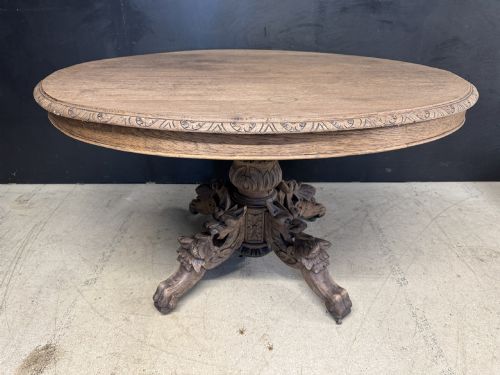


Renaissance Dining Table
A renaissance dining table brings monumental presence and heavy historic carving into a serious interior.
Renaissance Dining Table
A renaissance dining table is a substantial piece rooted in historic European design, most commonly encountered here as a nineteenth century revival form. These heavy tables draw on French, Dutch, Flemish, and Italian traditions, utilising robust timber frames designed for large rooms.
The selection ranges from French hunting tables and refectory forms to Dutch inlaid draw leaf examples and Italian trestle styles. Alongside traditional dining tables, buyers also encounter sideboards, buffets, and centre tables that share the same heavy historic vocabulary.
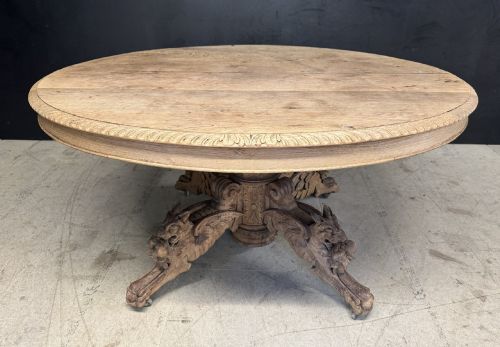
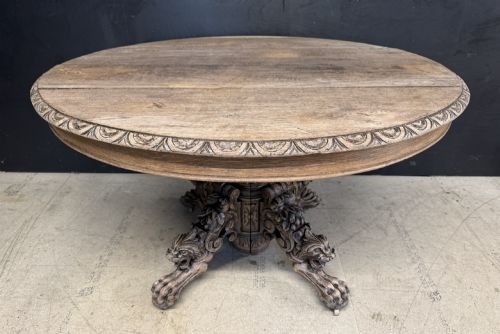
Nineteenth century makers eagerly reinterpreted sixteenth and seventeenth century models, often adding deep relief carving, green man motifs, or extending mechanisms to suit later dining habits. These pieces offer grand scale and architectural presence without requiring a true seventeenth century antiquity.
How they were made
Oak and walnut form the structural core of these tables, chosen for their dense grain and ability to support deep, chiselled decoration. Bleached oak variants also appear, lightening the heavy timber appearance through surface treatment.
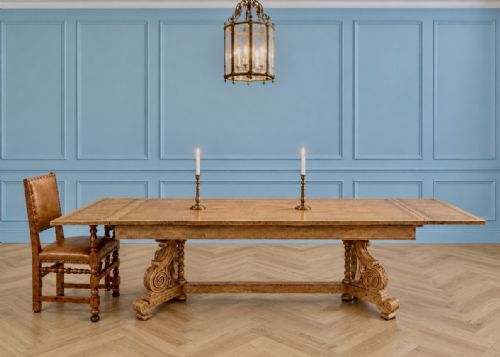
Master craftsmen employed traditional joinery such as draw leaf mechanisms and sturdy trestle supports, often pairing the timber with wood inlay. Surfaces were frequently embellished with profuse hand carving, showcasing scrolled legs, figural details, and geometric panels.
Renaissance Dining Table Retail Price Guide 2026
Typical asking prices for renaissance dining table among the pieces listed under this phrase on Sellingantiques today, from the lower quarter to the upper quarter. They describe what is for sale here now, not the wider market.
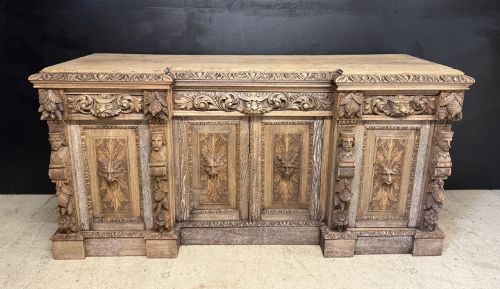
Stare closely into the foliage and you might just spot a leafy green man staring right back from the carved oak frieze.
What varies in quality
The depth and crispness of the hand carving dictate the aesthetic success of a table, separating fluid sculptural work from flat, mechanical cutting. Richness in the walnut or oak grain, particularly where timbers are matched across large tops, elevates the piece significantly.
Structural integrity in the base and legs determines whether a heavy table stands firmly without movement. Finer examples retain sophisticated mechanical extensions or intricate wood inlay that remains flush and secure within the surrounding timber.
The Renaissance Dining Table Glossary
- Hunting table
- A long, narrow dining table traditionally associated with French country houses and game meals. These pieces often feature substantial end supports and substantial length.
- Draw leaf table
- An extending table with two pull-out leaves stored beneath the main top. This mechanism expands the surface area smoothly while keeping the central carving intact.
- Refectory table
- A long, narrow table originally used in monastic dining halls. These sturdy items rely on strong stretcher bases to maintain stability over great lengths.
- Green man
- A sculptural face carved from leaves, foliage, or vines. This traditional motif symbolizes rebirth and appears frequently in nineteenth century Flemish and oak revival carving.
- Trestle table
- A table supported by two or more upright frame structures joined by a horizontal beam. This ancient form provides robust legroom beneath the top.
Renaissance Dining Table: Frequently Asked Questions
How do I seat guests comfortably?
These large tables usually offer substantial length, but the carved aprons and heavy legs can limit knee clearance underneath. Check the height from the floor to the underside of the rails before selecting dining chairs.
Pairing a monumental table with simpler seating prevents the room from feeling overcrowded. Benches often accompany these large surfaces to maximise seating flexibility during gatherings.
Can I use daily without worry?
Solid oak and walnut construction provides exceptional durability for everyday dining and heavy use. Standard timber care prevents moisture rings and surface drying on the historic wood.
Using felt pads under hot dishes and wiping spills promptly protects the polished surface. The robust build quality ensures these tables handle active family life with ease.
How do I date a revival piece?
Nineteenth century revival tables often combine sixteenth century motifs with later mechanical extensions or factory-sawn timber marks. Examining the underside and joint construction reveals the manufacturing methods of the Victorian era.
Patina develops naturally over decades of handling, showing softer edges on high-contact areas. Comparing the carving style to documented nineteenth century workshop output helps confirm the exact period.
Will a heavy table fit my room?
Measuring both the floor space and access doorways is essential before bringing a monumental table indoors. Many of these pieces arrive with fixed bases that require careful clearance through tight hallways.
Consider the visual weight of dark walnut or carved oak in relation to your natural light. Lighter bleached oak finishes can help balance a substantial form in a modest dining space.