


Religious Pendant Jewellery
Religious pendant jewellery spans centuries of devotion, presenting devotional medals and crosses crafted in gold and silver.
Religious Pendant Jewellery
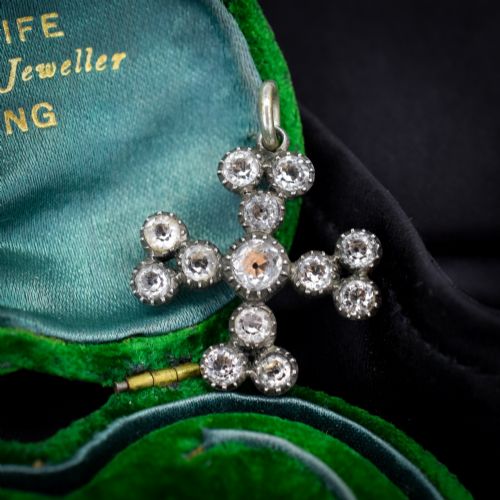
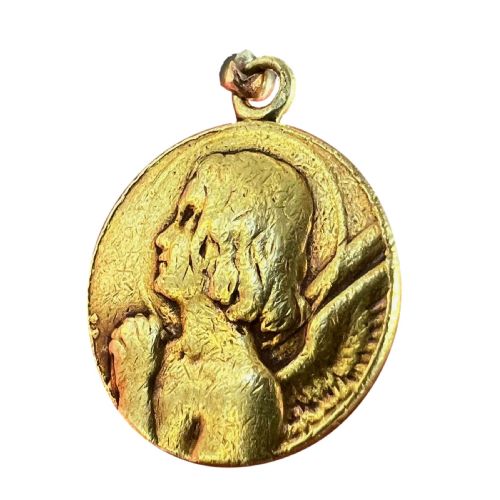
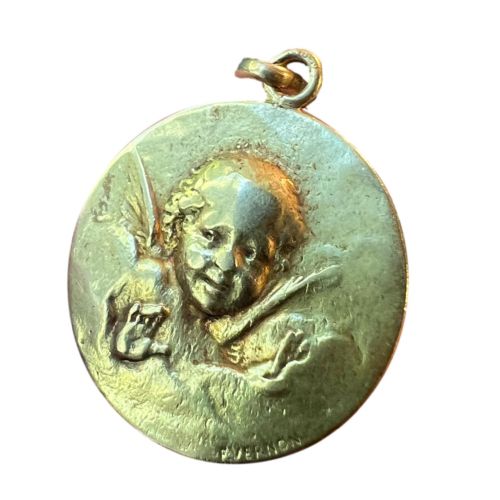
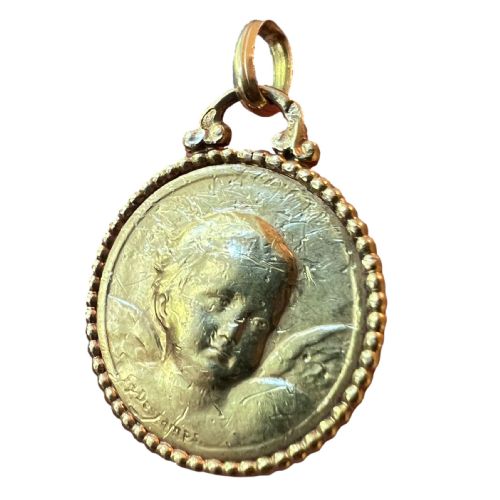
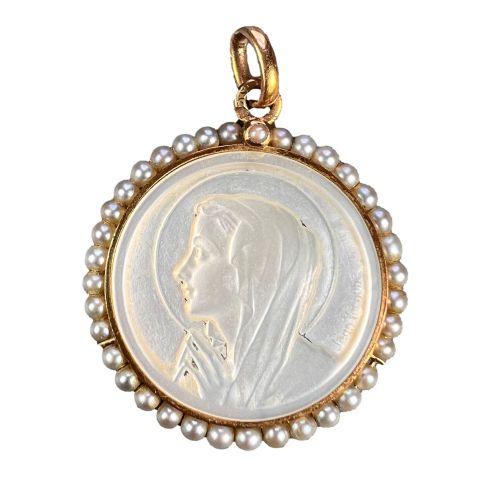
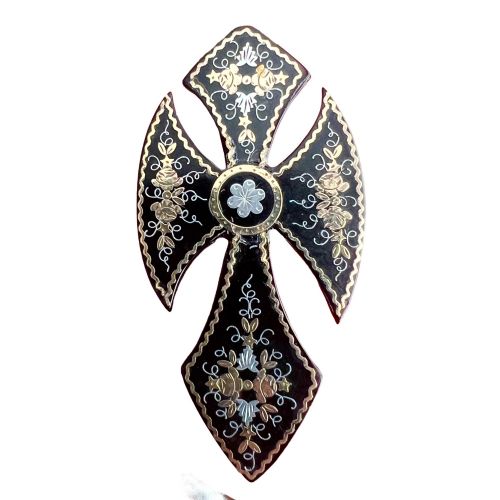
Religious pendant jewellery encompasses items worn close to the heart, featuring sacred figures, crosses, and devotional symbols. Pieces of religious pendant jewellery frequently take the form of French medallions, crosses, and lockets originating from the Victorian, Edwardian, and Art Nouveau periods. These objects combine personal adornment with spiritual expression, utilising precious metals and gemstones to mark faith and devotion.
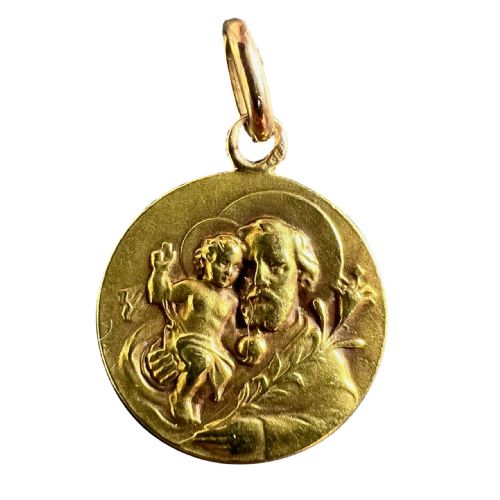
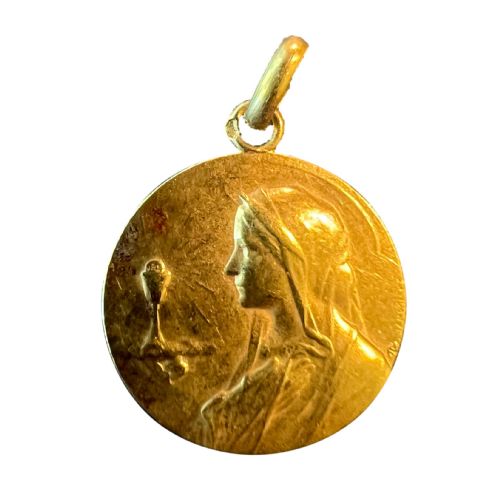
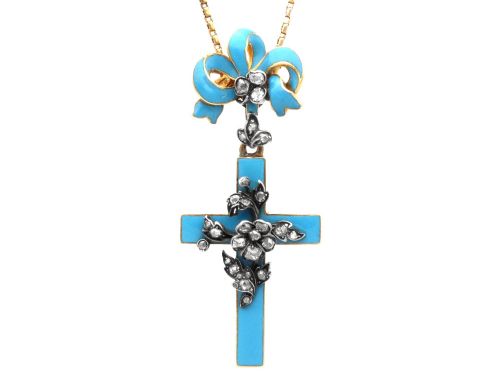
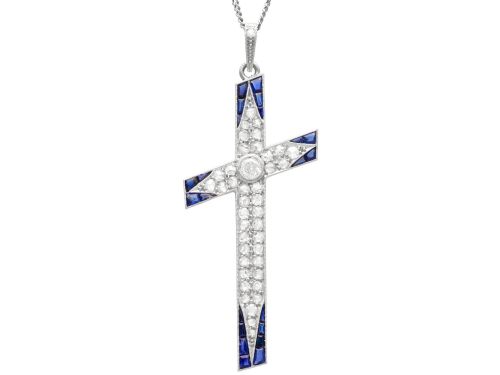
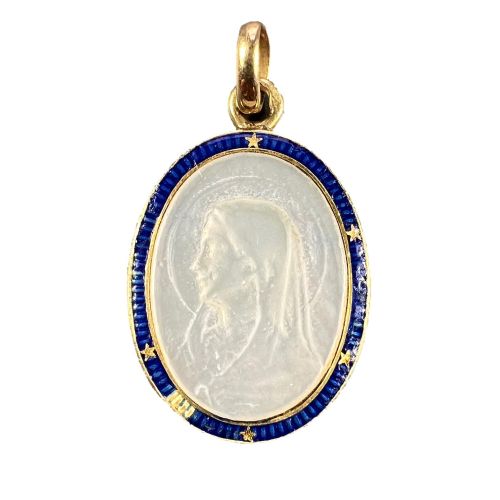
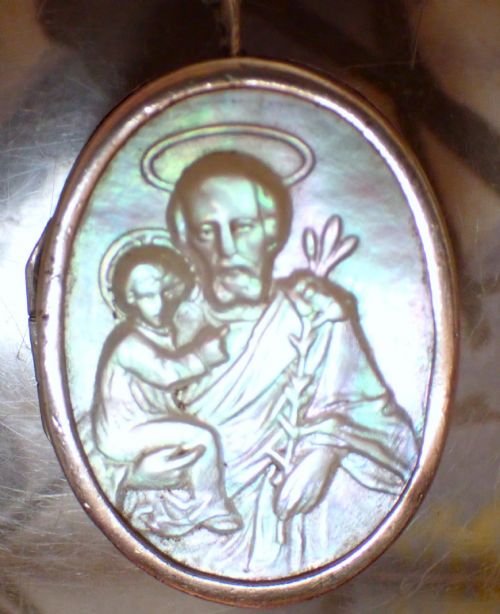
The most common examples on this page are French devotional medals cast in eighteen karat yellow gold and depicting the Virgin Mary, Saint Joseph, or Jesus Christ. Alongside these French medals, buyers encounter British and European crosses set with diamonds, sapphires, coral, and seed pearls. These pendants often double as charms or lockets, reflecting varied domestic and ecclesiastical traditions across the nineteenth and early twentieth centuries.
How religious pendant jewellery was made
Goldsmiths worked primarily in eighteen karat yellow gold, fifteen karat gold, nine karat gold, and silver to form the structure of these pieces. Metal was cast, engraved, and inlaid, often combining yellow, white, and rose gold within a single pendant. Artisans employed silver alongside gold to mount diamonds and other stones securely.
Enamelling techniques, including blue enamel, red enamel, and translucent plique-à-jour, added colour to metallic surfaces. Natural materials such as mother of pearl, coral, seed pearls, and carved shell were shaped and set into frames. Gemstones like diamonds and sapphires were hand-cut and collet-set or pavé-set into cross pendants and medal borders.
Religious Pendant Jewellery Retail Price Guide 2026
Typical asking prices for religious pendant jewellery among the pieces listed under this phrase on Sellingantiques today, from the lower quarter to the upper quarter. They describe what is for sale here now, not the wider market.
Materials recorded across the inventory include eighteen karat yellow gold, fifteen karat gold, silver, plique-à-jour enamel, mother of pearl, diamonds, and coral.
What varies in quality
The skill of the medallist or jeweller dictates the refinement of the figurative work, particularly on small devotional medals. Medals signed by known makers exhibit sharper facial expressions, deeper relief, and crisper lettering than unsigned or mass-produced equivalents. Plique-à-jour and enamel work demand exceptional technical precision to achieve translucency and even coverage without cracking.
Material selection and gemstone quality further differentiate pieces within this category. Crosses set with matched diamonds and sapphires, or those incorporating substantial gold weight and intricate hand-engraving, represent higher manufacturing inputs. The integration of complementary materials, such as combining mother of pearl with gold and enamel, points to greater workshop ambition.
Rasumny·Jampolsky·Emile Monier·Paul Brandt·Mazzoni·Pageli Perriat·Dropsy·Guilbert·Sellier
The Religious Pendant Jewellery Glossary
- Plique-a-jour
- An enamelling technique where the enamel is applied without a backing, creating a stained-glass effect that lets light pass through the design. This method requires considerable skill to prevent the enamel from fracturing during cooling.
- Devotional medal
- A small metal pendant bearing the image of a saint, the Virgin Mary, or Christ, worn for spiritual protection or remembrance. These medals were often issued for specific sacraments, jubilees, or pilgrimages.
- Seed pearl
- A very small, naturally occurring pearl, often pierced and threaded onto silk or set in clusters. Victorian and Edwardian jewellers used them extensively to outline floral and cross motifs.
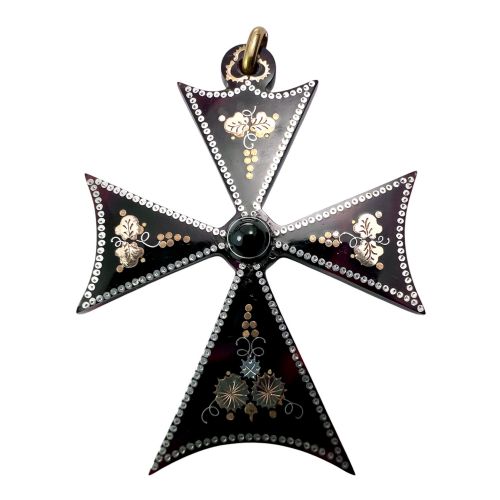
- Pique
- A method of inlaying tiny points or patterns of gold and silver into tortoise shell or other organic materials. It appears frequently on Victorian cross pendants and brooches.
- Miraculous Medal
- A specific devotional medal design depicting the Virgin Mary based on apparitions reported by Saint Catherine Labouré in eighteen thirty. It remains one of the most recognizable forms of religious pendant jewellery.
Religious Pendant Jewellery: Frequently Asked Questions
What is a religious pendant medal?
A religious pendant medal is a small metallic token bearing an image of a saint, holy figure, or sacred event intended for personal devotion. They were frequently struck in gold or silver and worn daily on a chain.
Many of these medals originated in France during the nineteenth and early twentieth centuries, often commemorating specific holy sites or sacraments like communion.
How can I date an antique cross pendant?
Dating relies on examining the metal purity marks, gemstone cuts, and manufacturing techniques present in the piece. Georgian and Victorian crosses often feature closed-back settings or hand-engraved details distinct from later work.
Assay marks and hallmarks stamped on the jump ring or reverse of the pendant provide official registration years and workshop origins.
Were these pendants worn as necklaces or charms?
These pieces served multiple functions, operating both as necklace pendants and as charms suspended from bracelets or chatelaines. Many surviving examples feature loops or rings sized for suspension on fine gold chains.
Some items double as lockets or brooches, demonstrating the versatile nature of Victorian and Edwardian jewellery design.
What materials are typical for these pieces?
Yellow gold in eighteen karat, fifteen karat, and nine karat specifications forms the primary structural material for most items. Silver, mother of pearl, enamel, and coral appear frequently as complementary elements.
Gemstones such as diamonds and seed pearls are often integrated into cross designs to add texture and light reflection.