



Religious Jewellery Charm
When you handle a religious jewellery charm, you hold miniature devotional art crafted in gold and enamel to be worn near the heart.
Religious Jewellery Charm
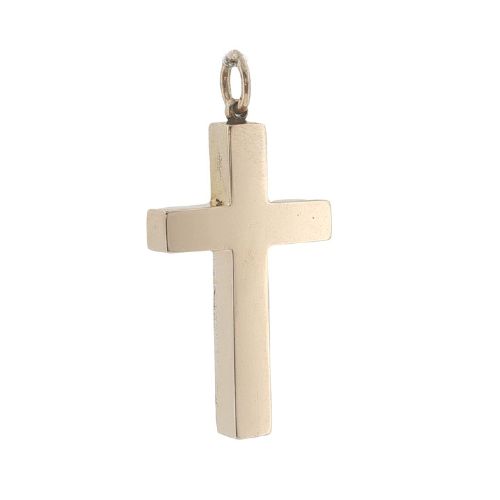
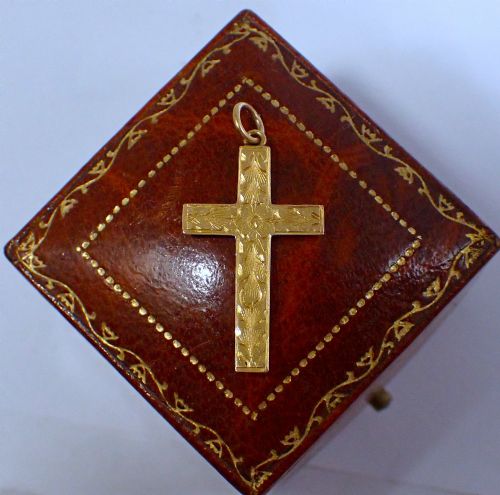
A religious jewellery charm typically takes the form of a small pendant, medal or cross worn on a chain or attached to a bracelet. These pieces originate primarily from French workshops spanning the Georgian era through to the mid-twentieth century.
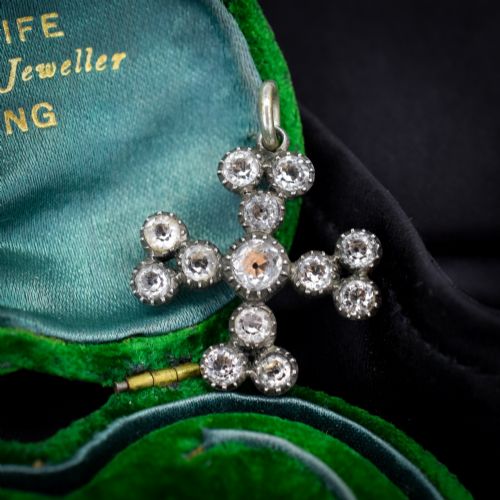
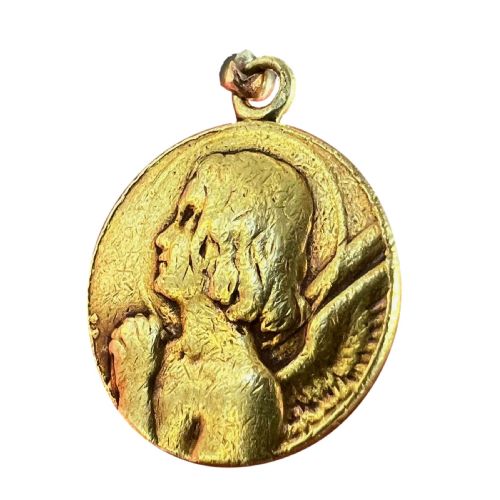
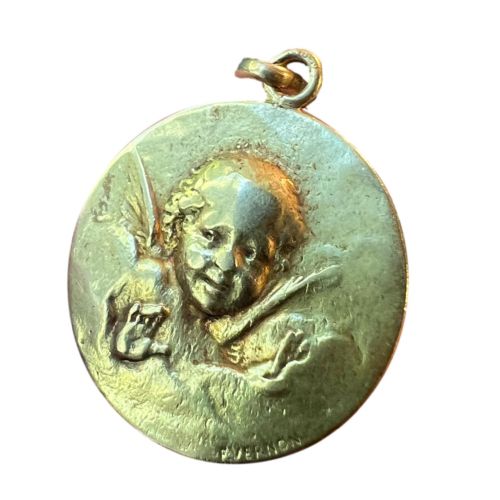
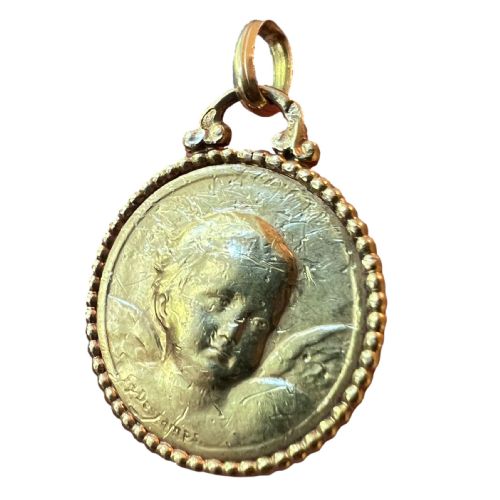
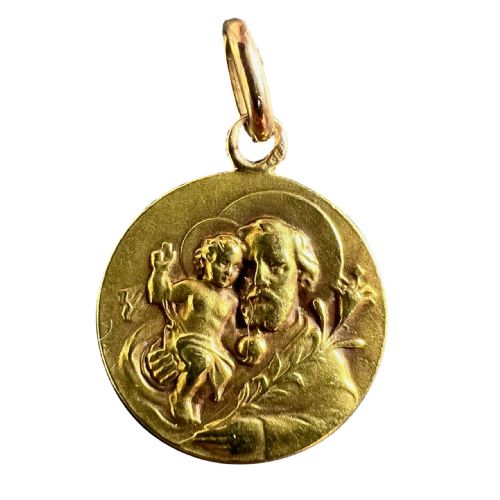
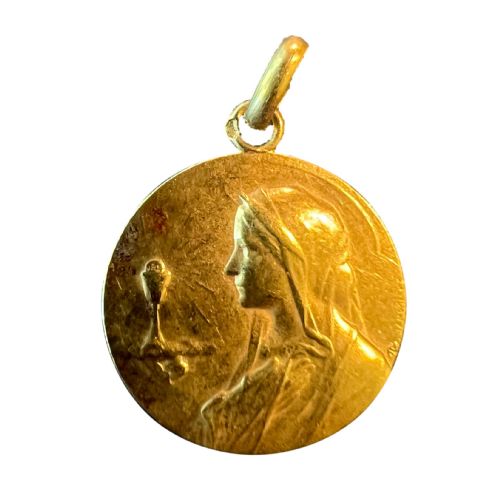
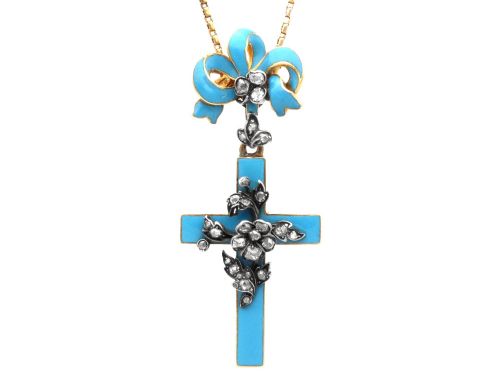
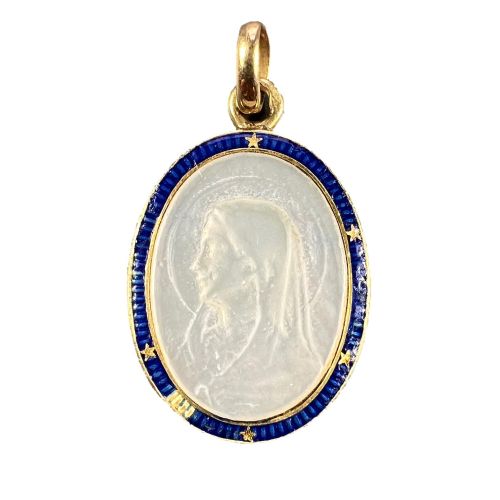
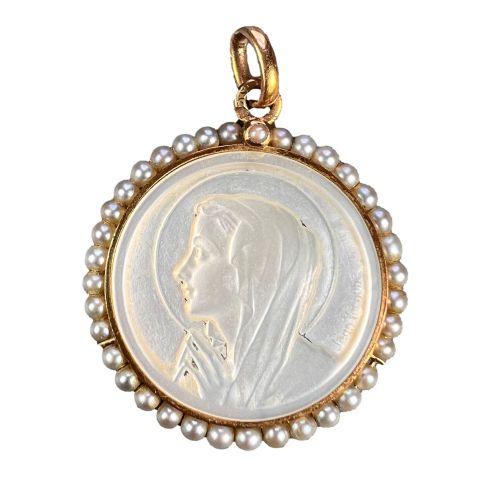
The most common version met on this page is the French gold medal depicting the Virgin Mary, Saint Joseph or the Madonna and Child. Makers also produced crosses set with seed pearls, coral, diamonds and enamel during the nineteenth and early twentieth centuries.
Materials and construction techniques
Goldsmiths shaped these pieces predominantly from yellow, rose and white gold in eighteen-carat purity alongside lower nine-carat and fifteen-carat variants. Artisans stamped, cast and engraved the metal to form intricate devotional portraits and borders.
Colour arrived through the application of vitreous enamel, including translucent plique-a-jour methods that let light pass through the design. Workshops frequently integrated mother of pearl, seed pearls, diamonds and coral to accent the metallic relief work.
Religious Jewellery Charm Retail Price Guide 2026
Typical asking prices for religious jewellery charm among the pieces listed under this phrase on Sellingantiques today, from the lower quarter to the upper quarter. They describe what is for sale here now, not the wider market.
One unexpected piece pairs religious devotion with rural pursuits by featuring a deer hunting horn alongside a saint's medal.
Distinctions in craftsmanship and artistry
Quality rests in the crispness of the metallic strike and the finesse of the hand-engraving on the figures of saints and biblical scenes. Master medallists executed facial expressions and drapery with notable depth and clarity.
The preservation of the enamel and the integration of gemstones dictate the standing of a piece. Intact plique-a-jour panels and neatly bezel-set pearls or diamonds elevate the execution above simpler stamped designs.
Rasumny·Jampolsky·Emile Monier·Paul Brandt·Mazzoni·Pageli Perriat·Dropsy·Guilbert·Sellier·Ovide Yencesse·Tairac
The Religious Jewellery Charm Glossary
- Medal
- A small metallic disc bearing a devotional image or inscription intended for personal wear. These items often commemorate specific saints, holy figures or sacraments.
- Plique-a-jour
- An enamelling technique where enamel is applied within a cellular framework without a backing, creating a stained-glass effect. Light passes directly through the transparent or translucent coloured glass.
- Mother of pearl
- The iridescent internal layer of mollusc shells used as a backing or carved base for religious portraits. It provides a shimmering, pearlescent ground beneath golden figures.
- Seed pearl
- A tiny, naturally small pearl utilised in clusters or borders on antique jewellery. They add delicate texture and a soft white lustre to gold crosses and frames.
Religious Jewellery Charm: Frequently Asked Questions
How do you wear these charms?
These pieces function primarily as pendants suspended from gold chains around the neck. They also appear attached to charm bracelets or carried within pockets as personal tokens.
The small suspension loops built into their designs allow them to move freely alongside other devotional medals.
How can I tell the age of a piece?
Dating relies on stylistic shifts like the flowing organic lines of Art Nouveau versus the geometric rigour of Art Deco. Hallmarks stamped into the gold provide official records of origin and metal standard.
Makers' signatures stamped onto the surface also connect specific medals to known Parisian medallists active around nineteen hundred.
What materials were used?
Goldsmiths worked chiefly in eighteen-carat yellow, rose and white gold, alongside occasional fifteen-carat and nine-carat examples. Surfaces were enhanced with red or blue enamel, mother of pearl and diamonds.
Natural elements like coral and seed pearls frequently accented the borders of crosses and round medals.