





Relief Carved Cameo
A relief carved cameo brings classical portraiture and mythology into wearable and decorative art, capturing fine profile details in shell, stone, and marble.
Relief Carved Cameo
A relief carved cameo presents a raised profile or scene against a contrasting background, drawing on classical motifs and neoclassical revival styles. When searching for a relief carved cameo, buyers encounter a diverse range of formats spanning brooches, earrings, wall plaques, and tabletop ornaments.
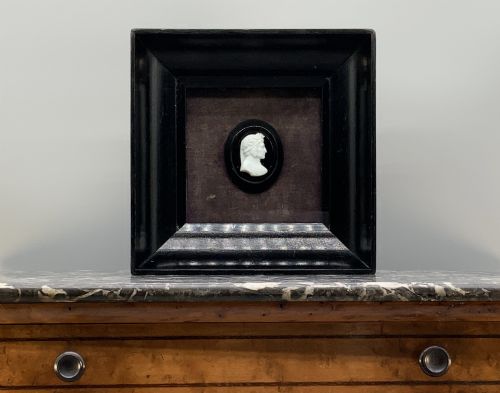
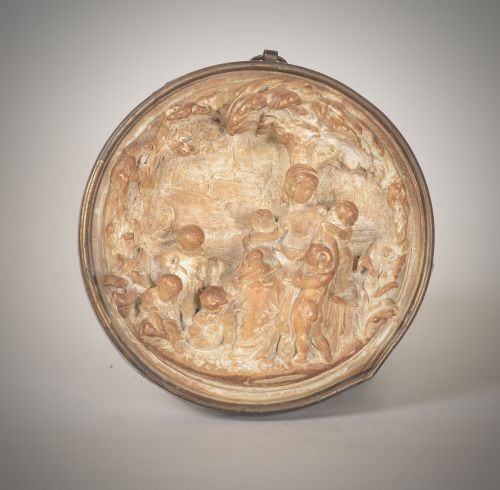
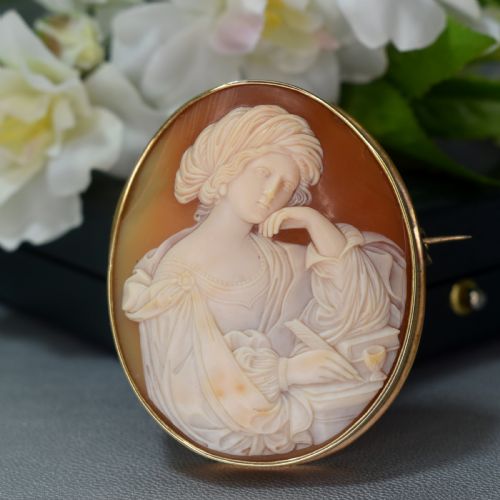
The pieces on this page originate predominantly from the nineteenth century, including Victorian grand tour souvenirs and classical revival works. Formats vary from small shell brooch mounts in gold and silver to substantial Italian marble profile plaques and carved mahogany wall art.
Subjects range from mythological figures such as Demeter and Flora to historical poets and Roman emperors, often executed after well-known sculptures or paintings. Buyers will find both personal adornments like earrings and cameo brooches alongside larger sculptural works intended for display.
Materials and carving techniques
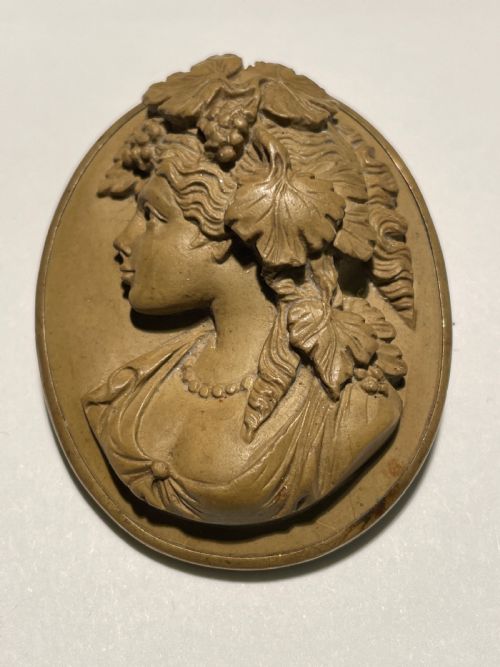
Carvers utilised natural organic and mineral materials, working primarily with shell, various stones including lava and marble, ivory, and wood. Shell and conch layers provide a natural colour contrast between the raised white figure and the darker backing, while hardstones and marbles demand meticulous abrasive shaping.
Mounts and frames incorporate precious metals such as nine-carat and eighteen-carat gold as well as silver, securing the carved plaques for wear or display. Master carvers utilised specialised steel gravers and drills to achieve the delicate undercut details characteristic of classical relief work.
Relief Carved Cameo Retail Price Guide 2026
Typical asking prices for relief carved cameo among the pieces listed under this phrase on Sellingantiques today, from the lower quarter to the upper quarter. They describe what is for sale here now, not the wider market.
Distinctions in quality
The choice and natural integrity of the material dictate value, with unblemished shells, dense marbles, and high-carat gold or silver mounts marking superior execution. Signed works by established carvers demonstrate a higher tier of artistic mastery compared to anonymous workshop pieces.
R. Pernice·Thorvalsen Workshop
The Relief Carved Cameo Glossary
- Grand Tour
- A traditional trip through Europe undertaken by upper-class young men in the eighteenth and nineteenth centuries to study classical art. Souvenirs from these journeys frequently included carved plaques and cameos.
- Bas-relief
- A sculptural technique where the figures project only slightly from the background plane. This method dominates profile portraits on both shell and marble plaques.
- Conch shell
- A large marine mollusc shell used by carvers to create cameos. The distinct colour layers allow for high-contrast portrait work.
- Lava stone
- A porous volcanic material utilised by Italian carvers during the Victorian era. It accepts fine detail and provides a uniform matte surface for classical subjects.
- Neoclassical
- An artistic movement drawing inspiration from the classical art and culture of ancient Greece and Rome. This aesthetic heavily influences the subject matter found on nineteenth-century plaques and brooches.
Relief Carved Cameo: Frequently Asked Questions
What is a relief carved cameo?
A relief carved cameo is a miniature sculpture where a figure or scene projects outward from a contrasting background layer. These pieces capture classical portraits, mythological figures, and historical profiles.
Artisans carved these designs into materials such as shell, lava stone, marble, and ivory. They appear as wearable jewellery like brooches and earrings, or as decorative wall and tabletop plaques.
How were cameos worn in the Victorian period?
During the Victorian era, cameos served primarily as personal adornment in the form of brooches pinned to collars or garments. They were frequently mounted in silver or gold settings.
Earring sets and matching suites were also popular among fashionable travellers returning from continental tours. These items demonstrated both an appreciation for classical antiquity and personal status.
How do I care for a shell cameo?
Shell cameos require gentle handling because the organic material is relatively soft and sensitive to harsh chemicals. Cleaning should involve only a soft, dry cloth or a very slightly damp brush.
Avoid submerging antique shell pieces in water or exposing them to ultrasonic jewellery cleaners. Proper storage away from direct sunlight and extreme temperature shifts preserves the natural colour layers.
How can I tell shell from stone cameos?
Shell cameos typically exhibit a translucent quality when held to the light and often show natural growth lines on the reverse side. The surface feels relatively warm to the touch compared to mineral materials.
Stone and lava cameos feel heavier, colder, and completely opaque. Marble and lava plaques also display a matte or fine-grained texture distinct from the polished sheen of natural shell.