


Regency Wooden Bookshelf
These regency wooden bookshelf pieces are timber library furnishings that organise volumes with architectural dignity.
Regency Wooden Bookshelf
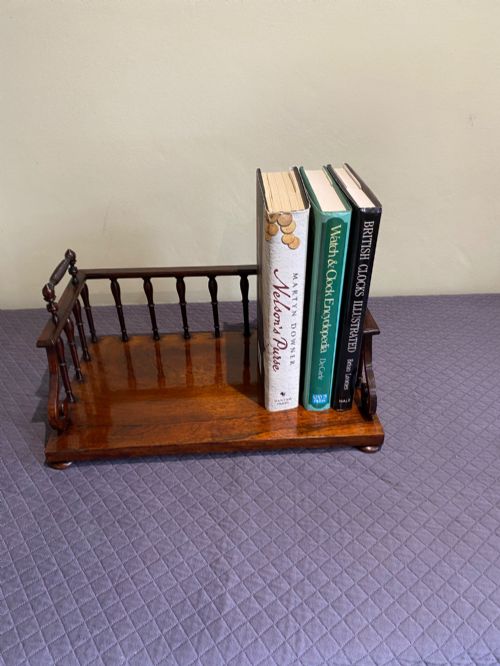
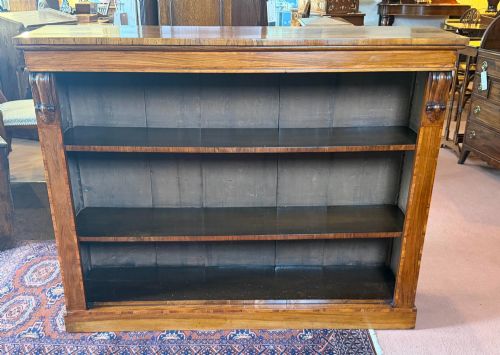
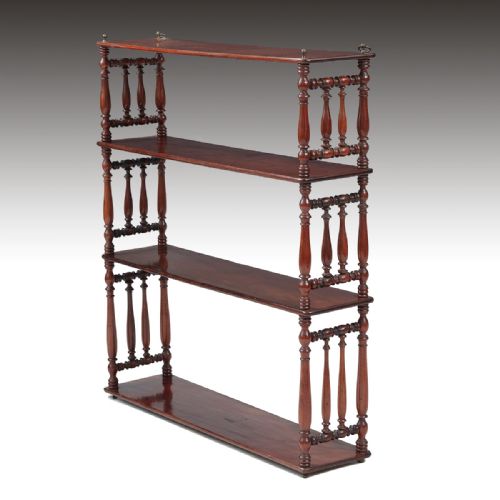
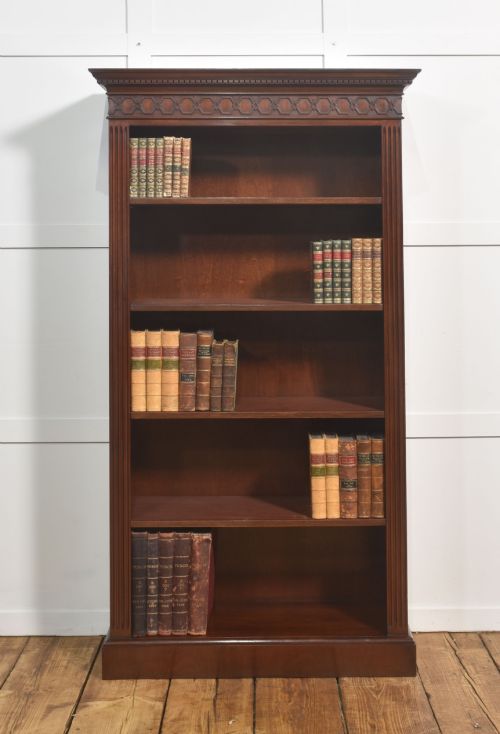
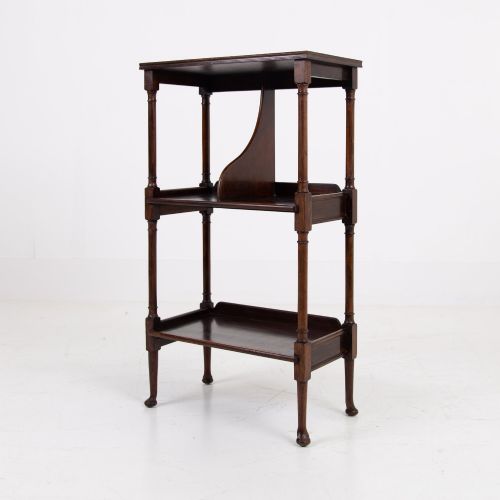
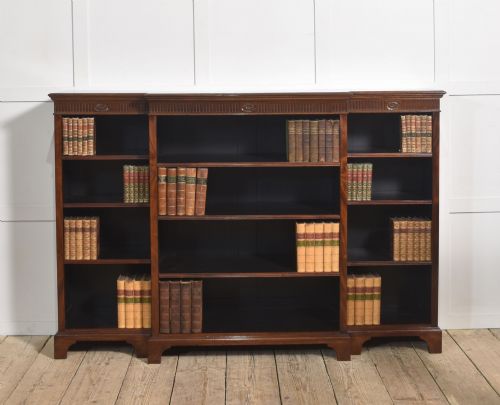
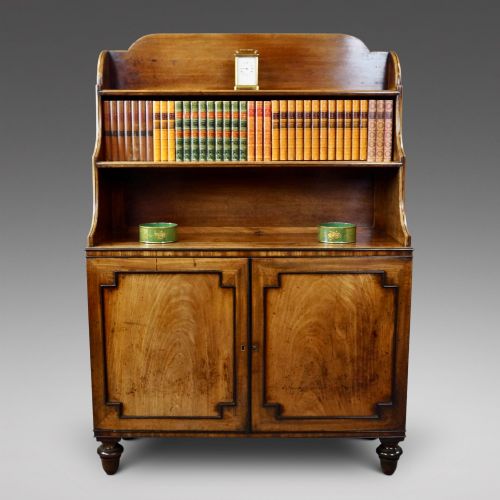
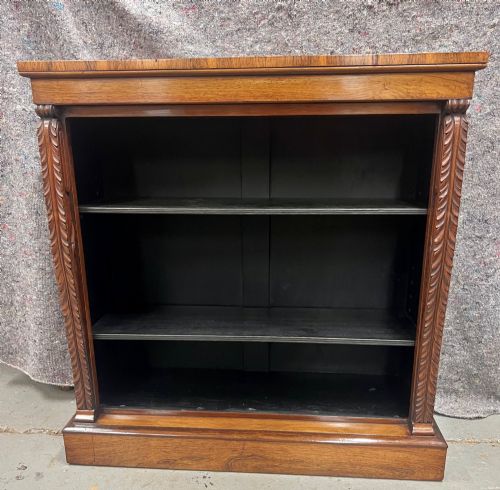
A buyer seeking a regency wooden bookshelf encounters open dwarf bookcases, tiered waterfalls, and hanging wall shelves designed for domestic libraries. The pieces span the nineteenth century, including revival works and earlier periods up to the Edwardian era.
Materials and construction
Cabinetmakers utilised dense timbers including mahogany, rosewood, walnut, and satinwood, often embellishing surfaces with boxwood stringing and contrast cross-banding. Brass fittings appear on gallery rails and supports.
Joinery techniques accommodated adjustable shelves and multi-tiered galleries, while simulated rosewood finishes offered alternative decorative surfaces during the nineteenth century.
Listings feature timbers including mahogany, rosewood, walnut, satinwood, and partridge wood alongside brass mounts.
Judging quality in timber bookcases
Quality rests in the selection of timber grain, the crispness of cross-banding, and the subtlety of boxwood stringing. Solid construction in primary woods dictates the structural integrity of tall breakfronts and dwarf bookcases.
The refinement of tiered galleries and the proportion of waterfall tiers distinguish ambitious cabinet work from standard utility pieces. Original brass mounts and unaltered shelf mechanisms elevate individual examples.
The Regency Wooden Bookshelf Glossary
- Waterfall bookcase
- A tiered shelving unit where each level steps back progressively from the one below it.
- Cross-banding
- A border strip of veneer laid perpendicular to the grain of the main surface.
- Boxwood stringing
- Thin inlaid lines of pale boxwood used to outline panels and shelves.
- Breakfront
- A cabinet facade where the central section projects forward from the outer wings.
- Whatnot
- An open multi-tiered piece of furniture used for displaying books and ornaments.
Regency Wooden Bookshelf: Frequently Asked Questions
How do I date a mahogany bookcase?
Dating relies on timber selection, construction methods, and stylistic details like boxwood stringing or cross-banding. Nineteenth-century pieces often display dense mahogany grains.
Revival pieces from later periods imitate these earlier proportions and material choices.
Were these shelves adjustable?
Many open bookcases incorporate adjustable shelves to accommodate volumes of varying heights. Cabinetmakers achieved this using rackwork or wooden support strips.
Fixed shelves remain common in smaller hanging units and specific waterfall designs.
Where should I place a dwarf bookcase?
Dwarf bookcases suit smaller rooms where tall library shelving would overwhelm the space. Their top surface provides additional display area for objects.
Free-standing examples fit neatly beneath windows or against living room walls.