


Regency Whatnot Stand
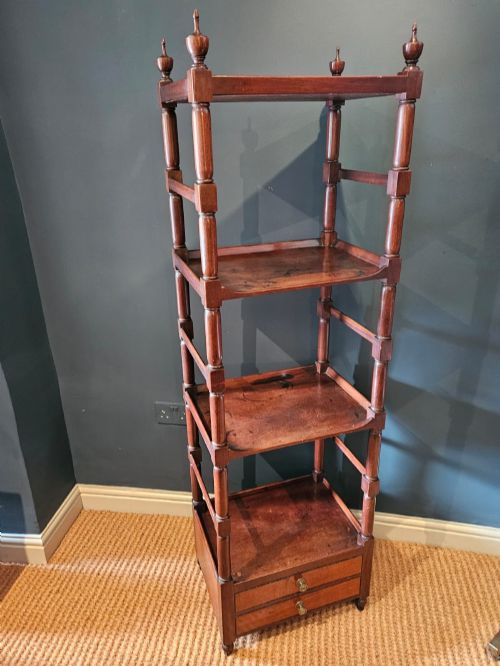
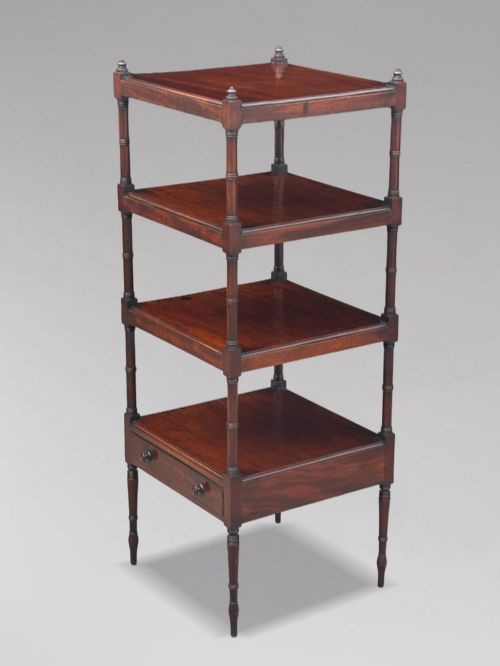
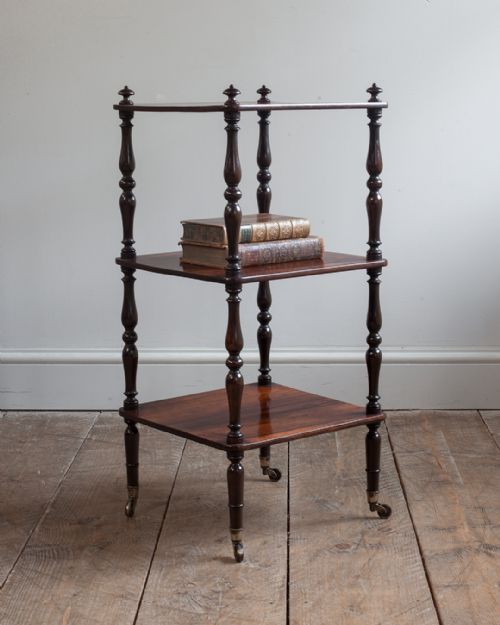
A regency whatnot stand is an open multi-tiered piece designed for display and storage, offering versatile surfaces in rich hardwoods.
Regency Whatnot Stand
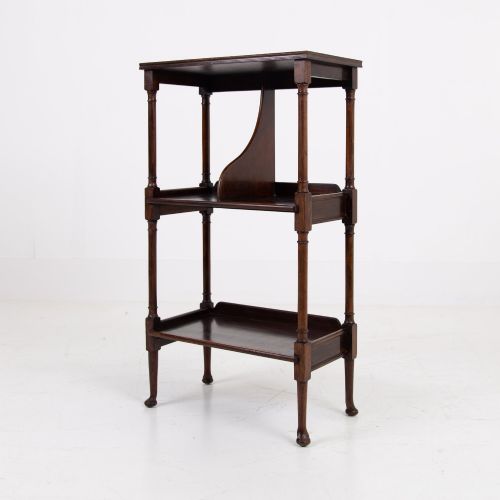
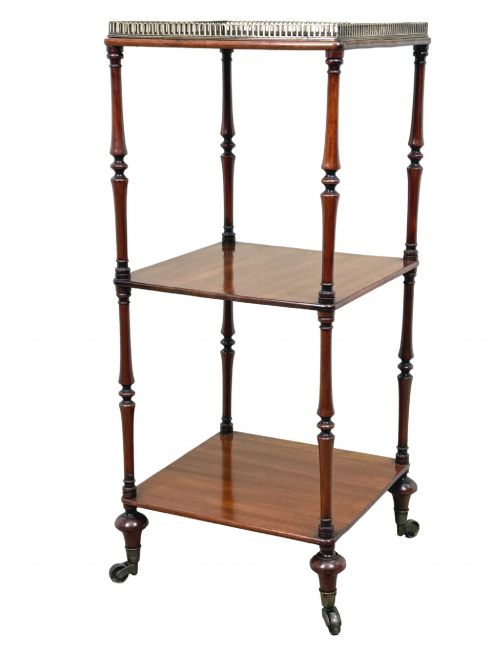
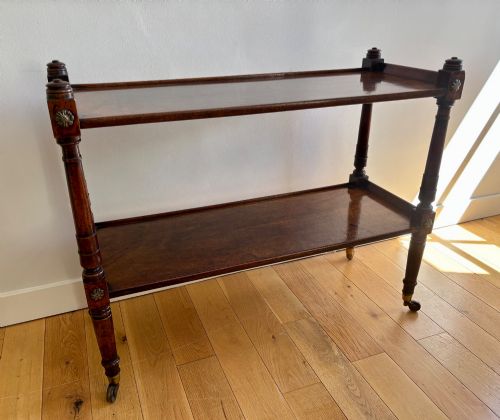
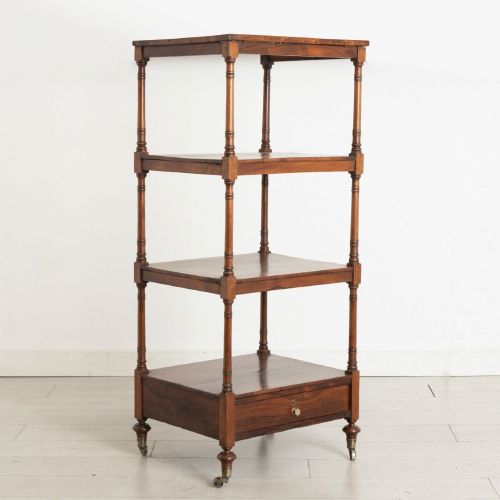
A regency whatnot stand provides graduated open shelving across three to five tiers, often terminating in a drawer or cabinet base.
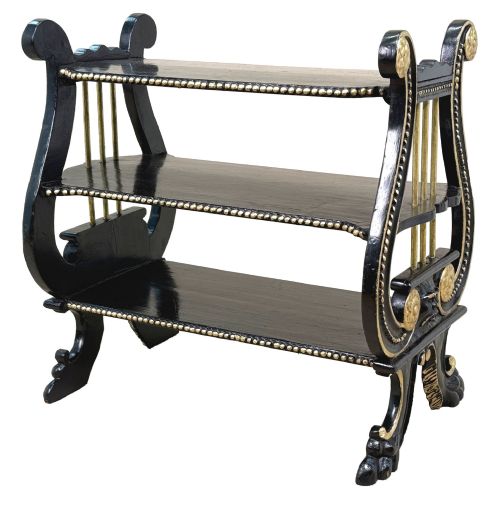
The primary forms on this page include music stands with reading lecterns, Canterbury stands with partitioned compartments, and tall display etagères.
Originating predominantly from the Regency, Georgian, and William IV periods, these items function as practical side tables and decorative display units.
How they were made
Cabinetmakers utilised dense native and exotic timbers, predominantly solid and veneered mahogany, rosewood, and occasionally walnut or burr elm.
Structural uprights frequently incorporate turned columns or slender supports, whilst brass castors allow mobility across floors.
Secondary details involve ebonised finishes, parcel gilding, cane inserts, and intricate brass gallery rails securing each shelf tier.
Several stands double as reading desks, proving that early nineteenth-century bibliophiles took their book-resting ergonomics rather seriously.
What varies in quality
The selection of timber grain dictates visual appeal, with highly figured rosewood or flame mahogany marking the superior examples.
Joinery execution distinguishes everyday utility items from pieces attributed to premier workshops like Gillows, evident in the crispness of turning and drawer construction.
Inclusion of articulated reading desks, integrated cellarettes, or complete matching pairs elevates the distinction of individual pieces.
Gillows
The Regency Whatnot Stand Glossary
- Whatnot
- An open shelving unit with multiple tiers used for displaying ornaments, books, or china during the nineteenth century.
- Etagère
- A French term for a tiered display stand, functionally synonymous with the English whatnot.
- Canterbury
- A low stand featuring partitioned vertical sections designed specifically for holding sheet music, books, or folios.
- Cellarette
- A lockable compartment built into the lower section of certain stands to store bottles.
- Lectern
- An adjustable reading slope fitted to the top tier of music stand variants.
Regency Whatnot Stand: Frequently Asked Questions
What is a regency whatnot stand used for?
These tiered stands served primarily for displaying decorative objects, holding books, or keeping writing materials close to hand in principal rooms.
Over time, specific variants were adapted to hold sheet music or serve as bedside and end tables.
How do I tell a music stand version apart?
Music stand variants typically incorporate an adjustable reading desk or pivoting lectern attached to the upper shelf tier.
They also frequently feature lower partitioned sections designed to accommodate bound folios and sheet music.
What woods were used for these stands?
Mahogany and rosewood dominate the surviving examples, selected for their stability and deep grain patterns.
Walnut, burr elm, birdseye maple, and ebonised woods appear less frequently across specific decorative periods.
How do I live with a whatnot stand?
The open shelving makes these stands ideal for displaying collections of books, ceramics, or small plants without crowding a room.
Because they are lightweight and often fitted with castors, they move easily to accommodate different seating layouts.