



Regency Urn Desk Lamp
These regency urn desk lamp pieces bring classical form and warm illumination to a room, offering both history and utility.
Regency Urn Desk Lamp
When you search for a regency urn desk lamp, you are looking at lighting created from classical urn forms rooted in the nineteenth century and later revival periods. The pieces appearing here span table lamps and converted oil lamps, drawing on neoclassical, regency chinoiserie, french empire, and classical revival styles.
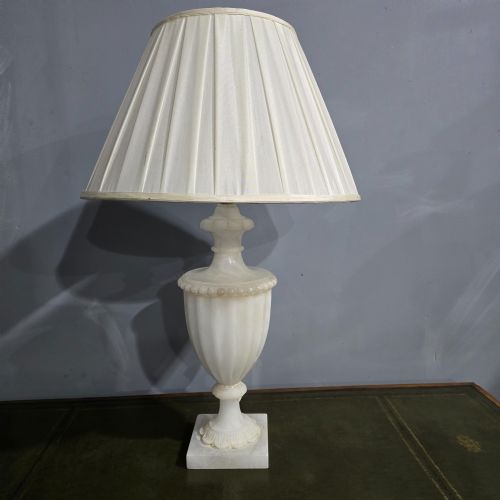
You are most likely to meet examples fashioned from brass, bronze, or ormolu, alongside ironstone vases, alabaster, and black and gold lacquer toleware. These objects bridge the gap between antique decorative art and practical desk illumination.
The origins stretch from early nineteenth century Grand Tour pieces and regency ironstone down through victorian, edwardian, and later twentieth century revivals. Each brings a distinct architectural silhouette and patination to a desk or table top.
How they were made
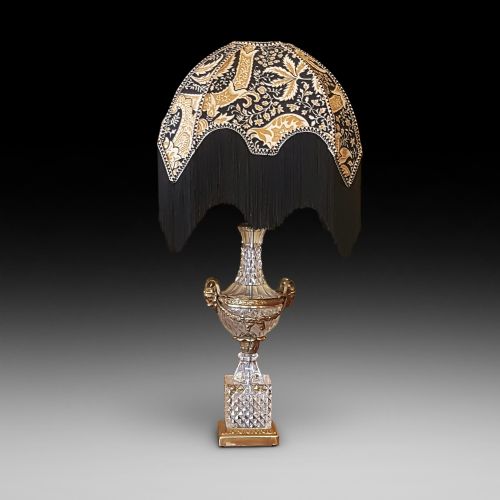
Makers shaped these lamps from cast metals like brass, bronze, and gilt bronze, often mounting them with cut glass or pairing them with fabric shades. Ormolu and fire gilding lent a bright metallic sheen to classical motifs such as rams' heads.
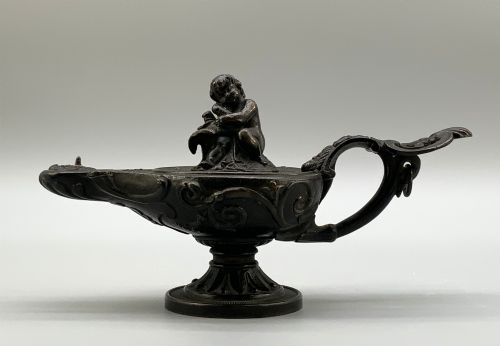
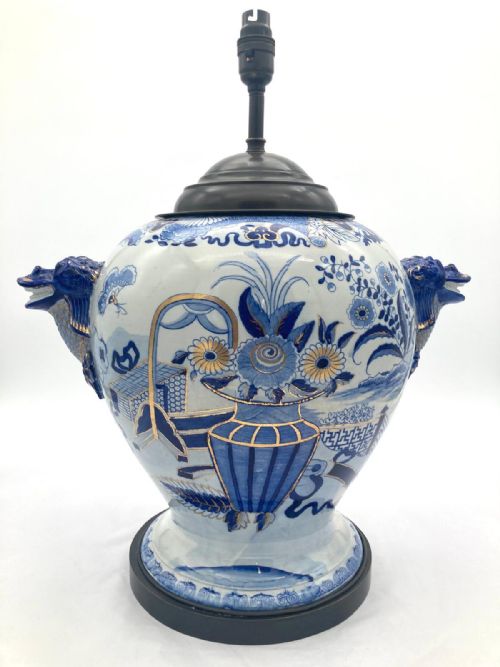
Ceramic forms utilised heavy ironstone and porcelain bodies, while other pieces employed carved alabaster or painted toleware with black and gold lacquer. Many surviving examples began life as oil lamps or vases before being converted for modern electrical use.
Current listings span the nineteenth century, victorian, and edwardian eras, alongside 1920 and 1930 revival pieces.
What varies in quality
The caliber of a regency urn desk lamp rests upon the crispness of its casting and the depth of its original gilding or patination. Finer metalwork displays sharp detailing on classical mounts and handles, whereas lesser pieces show softer edges and flat surfaces.
The integrity of the conversion and the choice of materials dictate the overall balance and presence of the piece. Heavy ironstone bodies and substantial bronze or ormolu bases provide a physical weight that lesser substitutes lack.
The Regency Urn Desk Lamp Glossary
- Ormolu
- Gilded bronze produced by applying a mercury and gold amalgam to a bronze base, creating a durable golden surface. It defines the rich metallic highlights found on classical pieces.
- Toleware
- Painted or lacquered metalware, frequently finished in black with gilt decoration. It appears in chinoiserie interpretations of classical urns.
- Grand Tour
- The cultural journey undertaken by wealthy young europeans to view classical antiquities, inspiring souvenir artefacts and furnishings. These objects often formed the basis for later lamp conversions.
- Ironstone
- A heavy, durable type of earthenware patented in the nineteenth century to rival porcelain. Large vases in this material frequently serve as the body for desk lamps.
- Neoclassical
- A style reviving the classical art and architecture of ancient greece and rome. It governs the urn shapes, rams' heads, and symmetrical motifs seen across these lamps.
Regency Urn Desk Lamp: Frequently Asked Questions
Are these lamps converted from old oil lamps?
Many examples began as nineteenth century oil lamps or decorative vases before receiving modern electrical fittings. This conversion allows period forms to function as practical desk lighting.
Evidence of their original purpose often remains visible in the burner mounts, font structures, or weighted bases designed for stability.
How do I identify a neoclassical style?
Neoclassical pieces draw directly from the architectural vocabulary of ancient Greece and Rome. Look for symmetrical urn shapes, handled vases, and classical motifs.
Styles from this tradition favor proportion, restraint, and formal dignity over excessive ornamentation.
What materials were used for these bases?
Maker materials range from cast metals like brass, bronze, and gilt bronze to heavy ironstone and carved alabaster. Lacquered toleware and cut glass also appear among the selections.
Each material dictates the weight, colour, and tactile quality of the finished desk lamp.
How do I style a regency urn lamp on a desk?
These lamps provide a strong vertical focal point that suits traditional studies, libraries, or executive workspaces. Pair them with a simple fabric shade to balance the ornate metallic or ceramic body.
Allow enough surrounding space for the classical silhouette to register against the wall or bookshelf.