






Regency Table Top Mirror
A regency table top mirror offers a neat surface reflection, bringing period proportion and timber warmth to a chest or dresser.
Regency Table Top Mirror
A regency table top mirror groups portable looking glasses designed to sit on dressing tables or side furniture during the nineteenth century. These objects typically feature adjustable mirror plates pivoted within upright frame supports, offering a clear reflection for grooming.
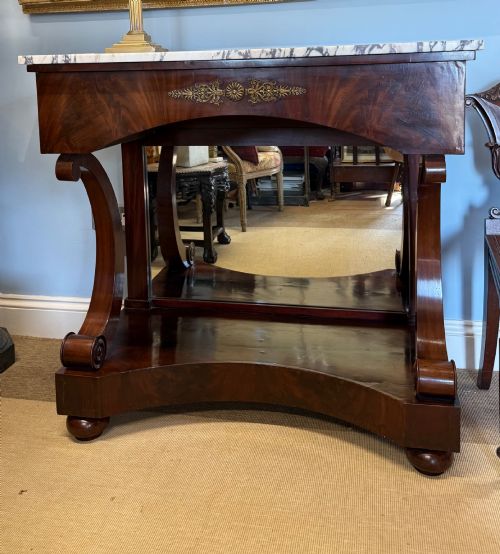
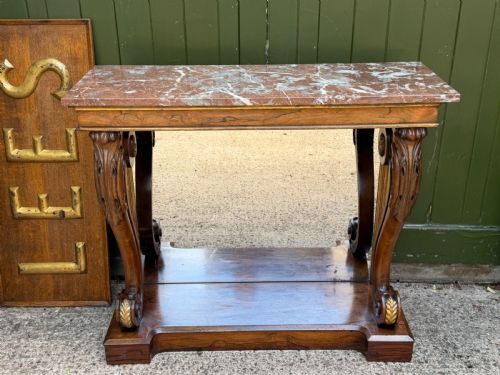
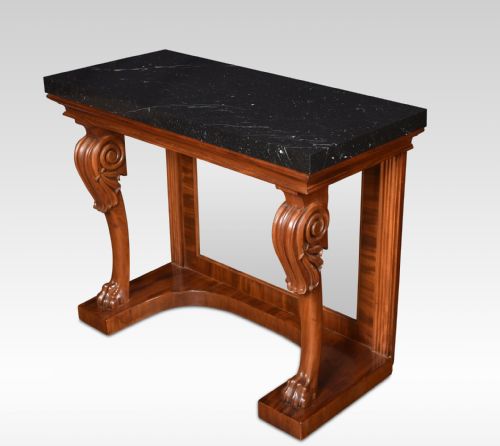
The versions most commonly met on this page span the nineteenth century, including pieces executed in mahogany, rosewood, and satinwood. Alongside smaller table mirrors, the listings show console tables and chiffoniers that incorporate mirror backs into their larger timber structures.
Makers of the period also utilised alternative materials like bird's-eye maple and faux bamboo for child's dressing furniture. Whether freestanding or attached to a low platform base, each regency table top mirror relies on sturdy uprights to hold the glass steady.
How they were made
Cabinet makers constructed these looking glasses from dense tropical hardwoods such as mahogany and rosewood, often applying parcel-gilt highlights to enhance the timber grain. The frames rely on solid joinery for the upright supports, ensuring the pivoting mirror plate remains balanced on its base.
Mirrored glass plates of the era were set into rebated frames and held with wooden backs, while companion console tables combined these glasses with figured marble tops. Selected pieces introduce fine satinwood veneers or decorative turning to soften the heavier proportions of the wood.
Regency Table Top Mirror Retail Price Guide 2026
Typical asking prices for regency table top mirror among the pieces listed under this phrase on Sellingantiques today, from the lower quarter to the upper quarter. They describe what is for sale here now, not the wider market.
Makers occasionally turned to faux bamboo and bird's-eye maple to craft diminutive dressing furniture specifically for children.
What varies in quality
The refinement of the timber selection separates standard examples from finer works, particularly where highly figured rosewood or matched satinwood veneers are chosen for the frame. Superior pieces demonstrate crisp carving on the scroll supports and careful proportioning between the glass plate and the base.
Construction methods also dictate quality, visible in the stability of the brass pivot hardware and the original integrity of the mirror glass. Pieces that retain their fitted drawers, stable platforms, and uncompromised timber surfaces command greater attention from collectors.
The Regency Table Top Mirror Glossary
- Parcel-gilt
- Partially gilded with thin gold leaf to highlight specific carved details or mouldings on a timber frame. This technique adds subtle contrast against dark woods like rosewood.
- Console table
- A wall-mounted or freestanding table frequently fitted with a marble top and occasionally paired with a mirror back. These forms often stand in hallways or principal reception rooms.
- Chiffonier
- A low sideboard or cabinet developed during the nineteenth century, sometimes incorporating a mirror backing. It provides enclosed storage alongside display space.
- Cheval mirror
- A full-length freestanding looking glass suspended on a vertical frame with four supporting feet. Unlike a table top mirror, it stands directly on the floor.
- Bird's-eye maple
- A figured timber showing small circular knots resembling bird eyes within the grain pattern. It was selected for decorative cabinetwork and specialised dressing items.
Regency Table Top Mirror: Frequently Asked Questions
Where should I place a table top mirror?
These mirrors sit comfortably upon chests of drawers, side tables, or dressing units where their pivoting glass provides a practical reflective surface.
Because they require only a stable horizontal platform, they offer flexibility in smaller rooms without needing permanent wall fixings.
How do I identify the wood used?
Nineteenth-century makers relied heavily on dense hardwoods like mahogany and rosewood, which show deep reddish-brown tones and distinct grain patterns. Examining the undertones and weight of the timber helps distinguish between these primary cabinet woods.
Lighter pieces may employ satinwood or maple, sometimes enhanced with contrasting stringing or gilt highlights around the frame borders.
What is the difference between a toilet mirror and a dressing table mirror?
Historically, toilet mirrors were designed for personal grooming and cosmetic use on a dressing chest, often incorporating small drawers in the base platform. They share similar pivoting mechanisms with standard dressing table mirrors.
The terminology often overlaps in nineteenth-century inventory records, though both serve the same functional purpose of adjustable reflection.
How do I care for antique glass and wood?
Keep the timber frames away from direct sunlight and steady heat sources to prevent the wood from drying or splitting over time. Gentle dusting with a dry cloth maintains the finish without harming the historic polish.
When cleaning the mirror plate, apply glass cleaner directly to a cloth rather than the glass itself to avoid moisture seeping behind the antique silvering.