

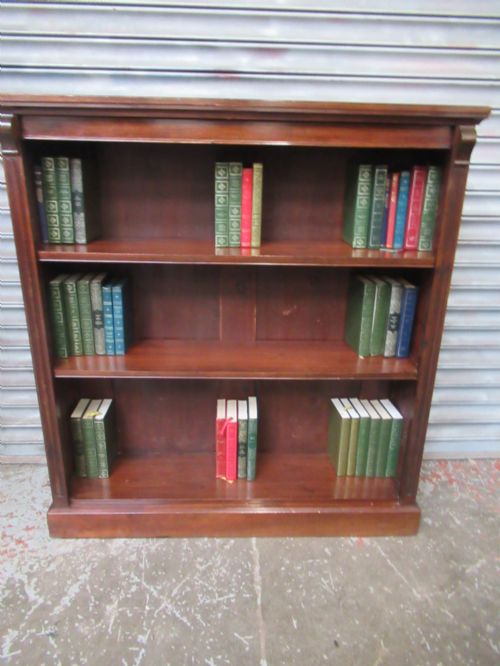
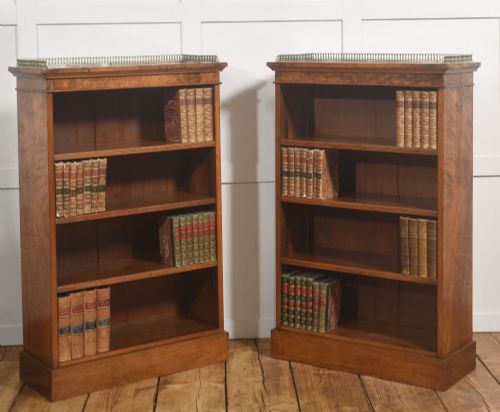
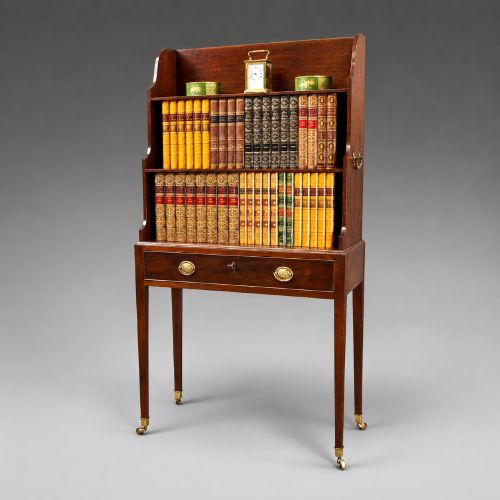
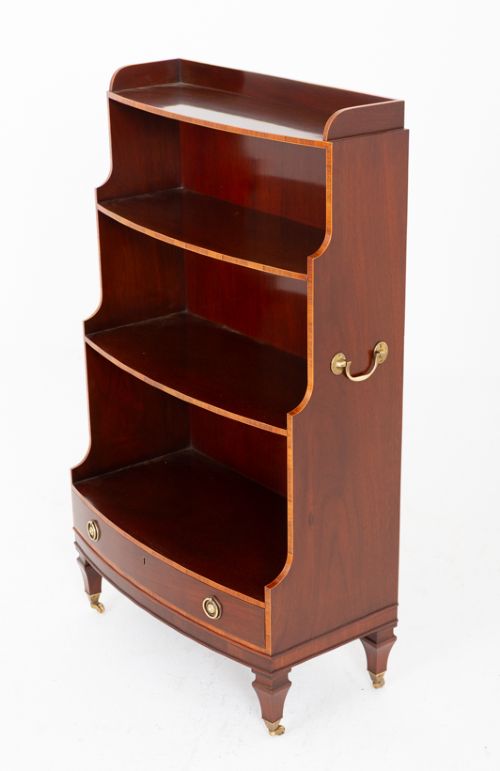
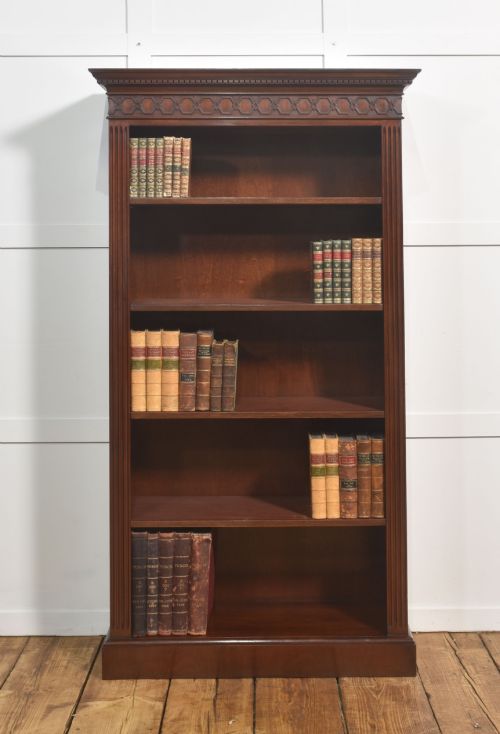
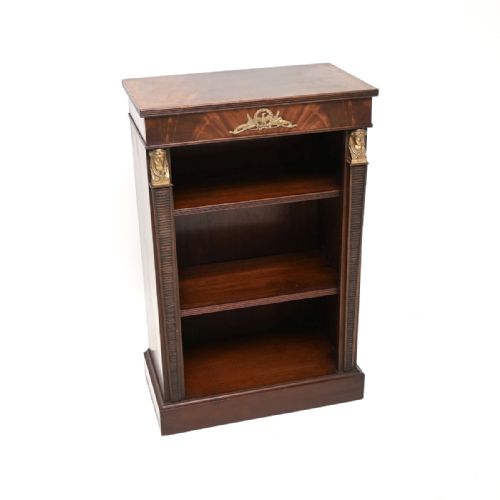
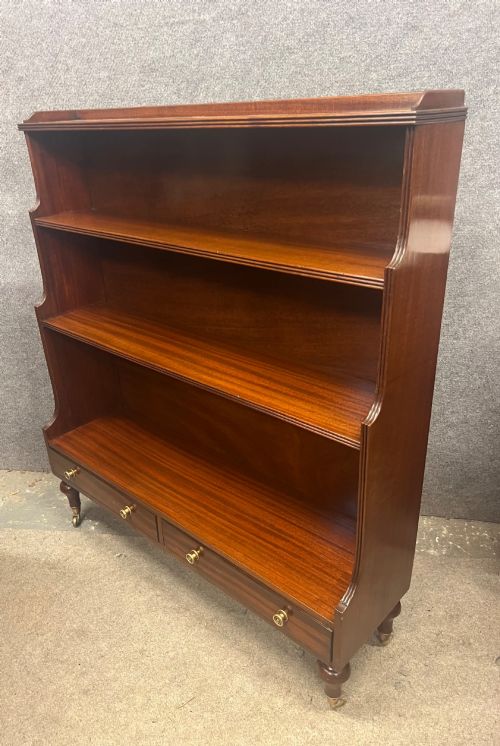
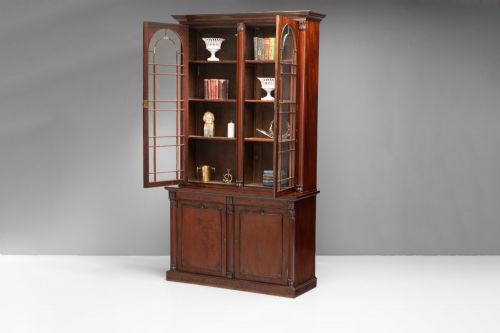
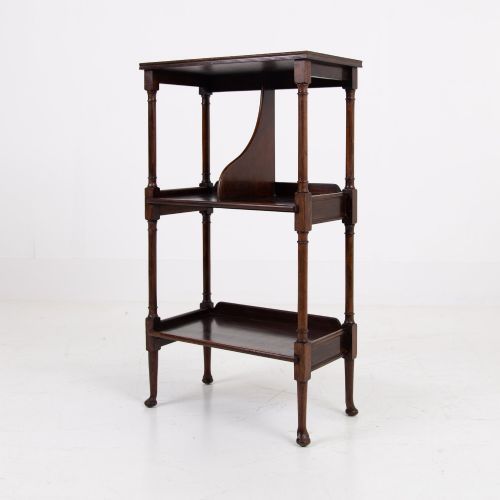


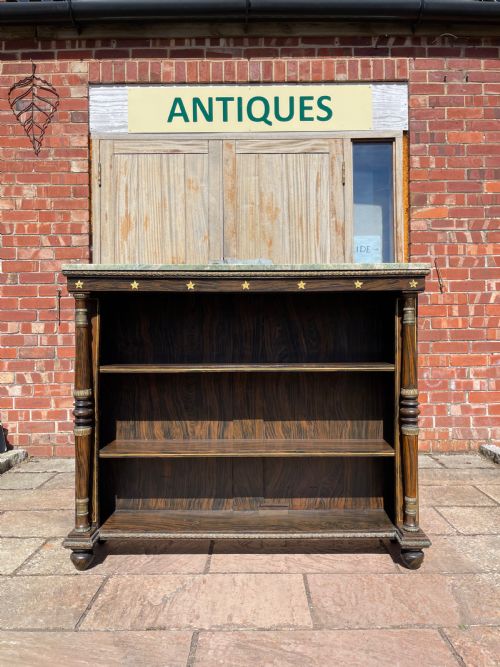


Regency Style Shelving Unit
A regency style shelving unit brings architectural proportion and open display to a room, drawing on classical forms from the nineteenth century onward.
Regency Style Shelving Unit
A regency style shelving unit encompasses open bookcases, tiered whatnots, hanging shelves and freestanding display units that serve to organise books and objects.
The selections span nineteenth century originals alongside revival interpretations produced in the early decades of the twentieth century.
The configurations range from tall multi-tiered waterfall bookcases and breakfront low cases to pairs of érigères and hanging wall shelves.
Woods and metalwork in construction
Cabinet makers utilised dense hardwoods such as mahogany, rosewood, burr walnut and teak, frequently applying decorative veneers to flat surfaces.
Brass fittings appear as structural galleries, mounts and rail details, whilst ebonised wood and simulated paint finishes provide alternative surface treatments.
Regency Style Shelving Unit Retail Price Guide 2026
Typical asking prices for regency style shelving unit among the pieces listed under this phrase on Sellingantiques today, from the lower quarter to the upper quarter. They describe what is for sale here now, not the wider market.
Listings feature mahogany, rosewood and burr walnut across nineteenth-century originals and twentieth-century revival pieces.
Proportion and grain selection
Superior examples demonstrate careful selection of timber grain, particularly in burr walnut and figured mahogany surfaces, where natural patterns enhance the visual balance of the piece.
Refinement of proportion, the integration of brass galleries and the crispness of turned supports distinguish finely executed pieces from simpler utility shelving.
The Regency Style Shelving Unit Glossary
- Waterfall bookcase
- A set of open shelves diminishing in depth from bottom to top, often arranged with stepped sides.
- Whatnot
- A freestanding tiered shelving unit designed for the display of ornaments and books, popular throughout the nineteenth century.
- Breakfront
- A piece of furniture where the central section projects forward from the flanking outer sections.
- Étagère
- A French piece comprising several open shelves for holding small objects or books, functioning as a display table.
- Gallery
- A raised ornamental rail or balustrade fitted along the edge of a shelf or top surface to prevent items from falling.
Regency Style Shelving Unit: Frequently Asked Questions
How do I use a waterfall bookcase?
These stepped open shelves suit smaller volumes, decorative ceramics and collections of small objects where graduated heights offer clear visibility from top to bottom.
Position them against plain walls in studies or living spaces to let the timber grain and tier structure form the visual focus.
What is a whatnot used for?
Historically serving as versatile display furniture for ornaments and books in reception rooms, a whatnot functions well today for holding bedside books or plants.
Their open construction keeps rooms feeling spacious while providing multiple tiers of vertical storage.
How do I distinguish revival pieces?
Pieces attributed to the early twentieth century often employ standard revival proportions and machine-assisted joinery alongside traditional hardwood veneers.
Examination of the secondary timbers used for internal drawer linings and backboards helps differentiate nineteenth-century originals from later revival interpretations.
Where should hanging shelves be hung?
Hanging wall shelves require secure fixing to solid wall studs to support the weight of books and display items safely.
Mount them above sideboards or desks to utilise vertical wall space without crowding the floor area of a room.