



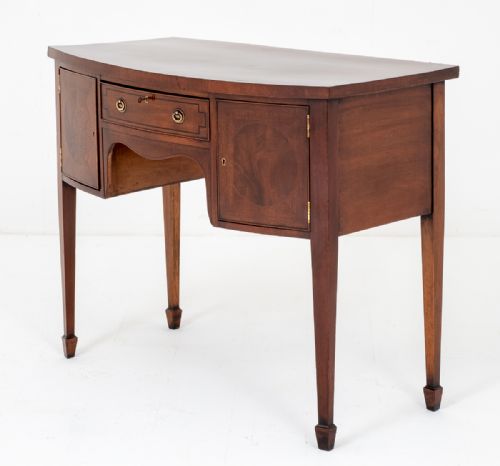


Regency Serving Cabinet
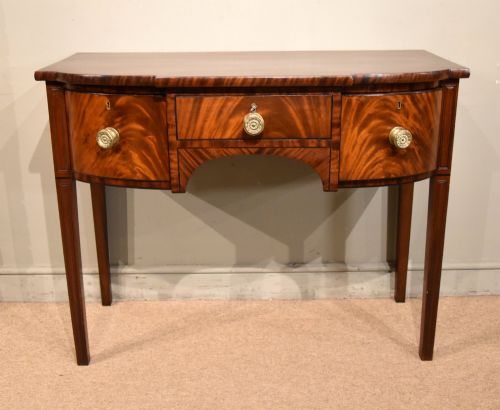
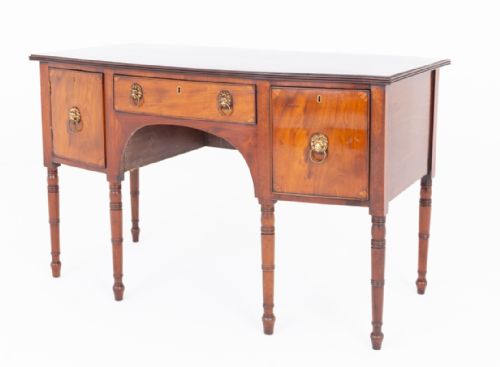
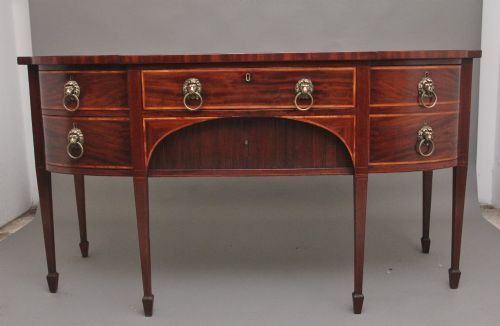
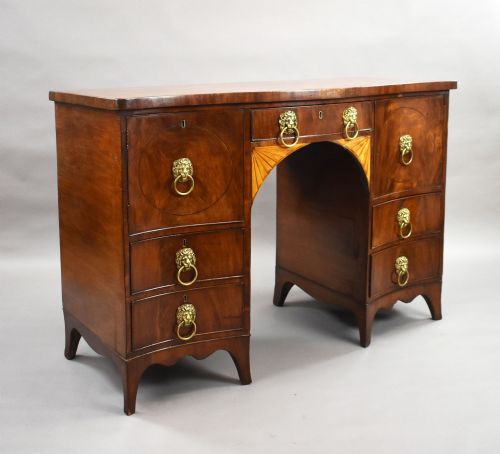
These regency serving cabinet pieces combine rich mahogany timbers with practical storage, offering a functional centrepiece for the dining room.
Regency Serving Cabinet
A regency serving cabinet primarily takes the form of a mahogany sideboard, buffet, or chiffonier designed for the dining room. These pieces provide surface space and enclosed storage for serving food and displaying tableware during meals.
The selection on this page ranges from authentic early nineteenth-century examples to later revival pieces. Alongside large case furniture, the listings include related serving items such as botanical dishes and armorial plates.
Most items adhere to classic British furniture forms, utilising mahogany woods shaped with bow fronts or straight lines. Pieces span the Georgian, Regency, and William IV periods, alongside later twentieth-century interpretations.
How they were made
Makers constructed these cabinets using solid mahogany and flame mahogany veneers over secondary timbers. Cabinetmakers selected veneers with strong grain patterns to create decorative panels on door fronts and drawers.
Details often include contrasting boxwood stringing, brass mounts, and hand-carved elements such as barley twist columns. Surface finishes were built up using traditional polishing methods to bring out the natural warmth of the timber.
Regency Serving Cabinet Retail Price Guide 2026
Typical asking prices for regency serving cabinet among the pieces listed under this phrase on Sellingantiques today, from the lower quarter to the upper quarter. They describe what is for sale here now, not the wider market.
Some serving plates carry the exact floral patterns used by the Nawab of the Carnatic in eighteen-twenty.
What varies in quality
Quality in a regency serving cabinet rests on the choice of timber and the precision of the cabinetwork. Superior examples display carefully matched flame mahogany veneers and crisp, unrubbed carvings rather than heavy machine-made details.
Proportion and structural integrity distinguish finer pieces from standard production. Well-executed joints, original brass hardware, and balanced proportions mark the upper end of the range.
Coalport·Chamberlains·Bloor Derby
The Regency Serving Cabinet Glossary
- Flame mahogany
- A veneer cut from the fork of the mahogany tree to create a distinctive flame-like pattern. This material was favoured for prominent door and drawer fronts.
- Bow front
- A convex curved cabinet front popular during the period. This shape softens the profile of large dining room furniture.
- Chiffonier
- A low cabinet derived from the sideboard, featuring enclosed shelving below. These pieces offered compact storage for dining accessories.
- Boxwood stringing
- Thin inlaid lines of light-coloured wood used to frame panels and drawer edges. This technique creates subtle contrast against darker mahogany surfaces.
Regency Serving Cabinet: Frequently Asked Questions
What is a regency serving cabinet?
A regency serving cabinet is a dining room storage piece, typically encountered as a sideboard, buffet, or chiffonier. These items were designed to hold serving dishes and cutlery.
They combine functional cupboards with surface space for food presentation during formal meals.
How do I identify the period?
Dating relies on timber selection, construction methods, and stylistic details such as brass mounts or carved columns. Earlier pieces show hand-cut dovetails and native polish techniques.
Revival pieces from later decades often imitate these characteristics using standardised manufacturing methods.
Where were these cabinets used?
These pieces belonged primarily in the dining rooms of large houses and town residences. Servants used the surfaces to stage courses before bringing them to the main dining table.
The enclosed cupboards and drawers stored linens, silverware, and serving plates.
How do I care for mahogany?
Mahogany furniture requires stable indoor humidity away from direct heat sources and sunlight to prevent timber movement. Regular dusting with a soft cloth preserves the polished surface.
Avoid silicone-based sprays and apply traditional wax polish sparingly when the wood appears dry.