

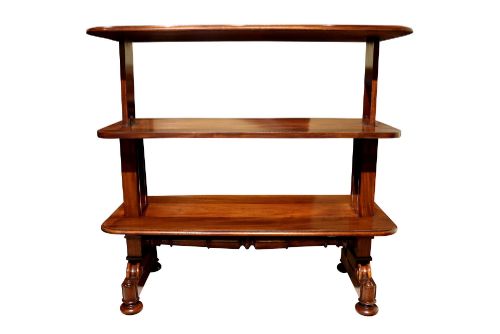
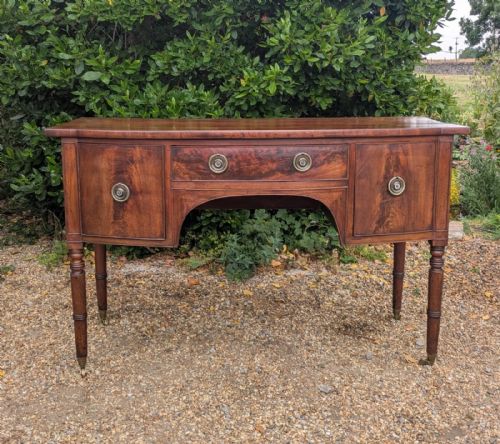
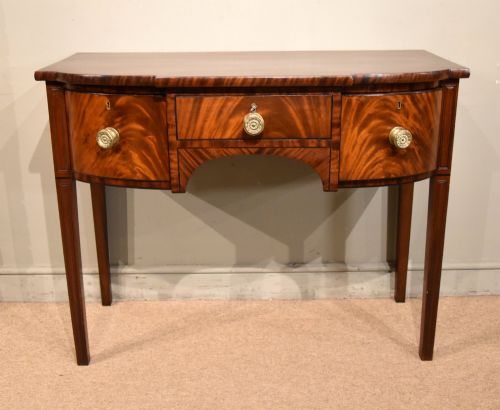
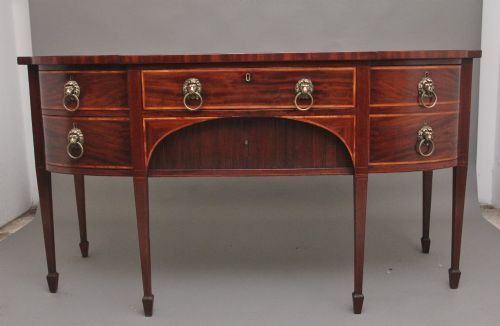




Regency Serving Buffet
A regency serving buffet brings architectural presence and formal dining utility to a room through rich timber grain and linear design.
Regency Serving Buffet
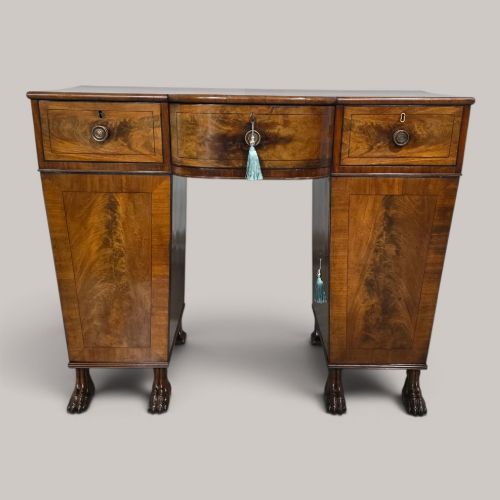
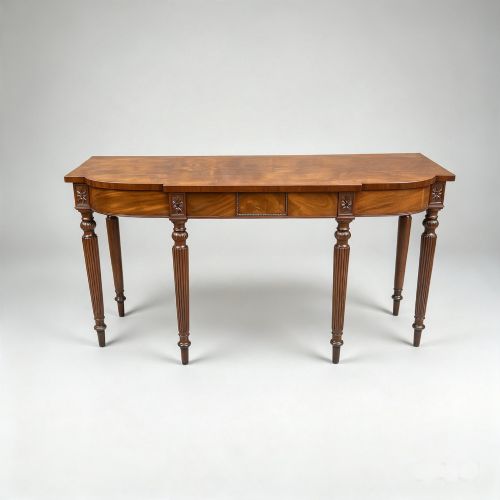
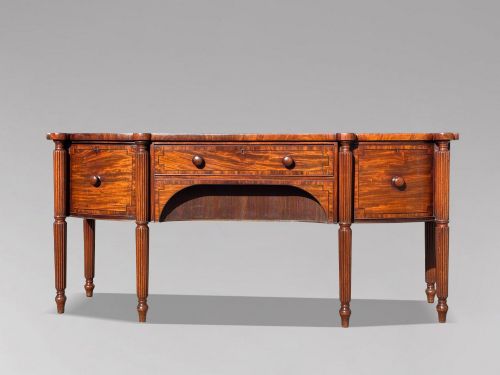
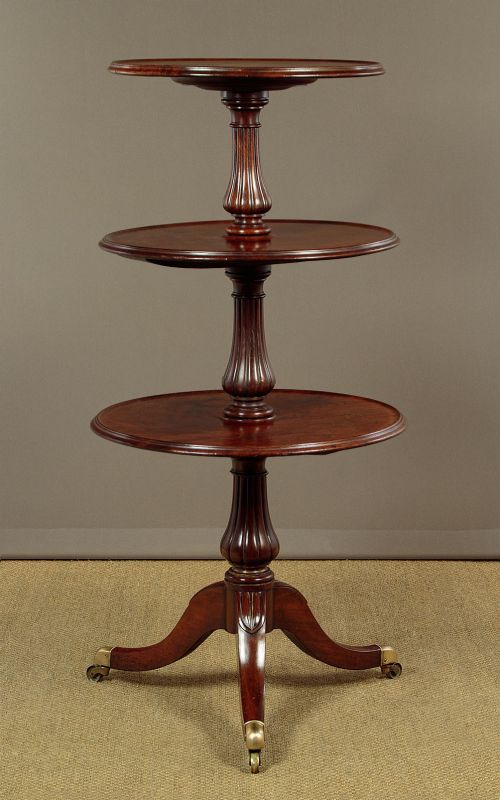
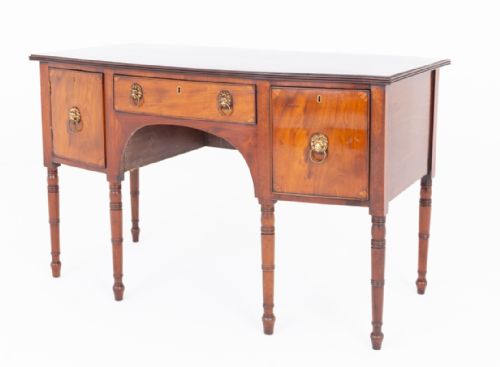
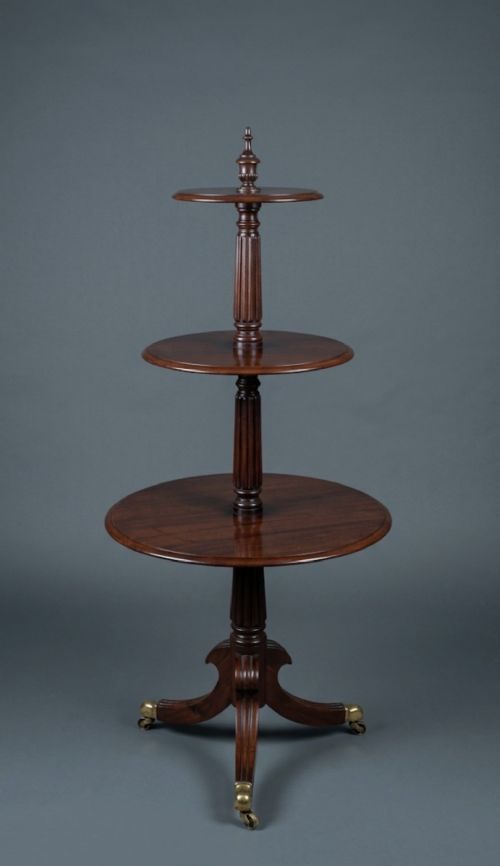
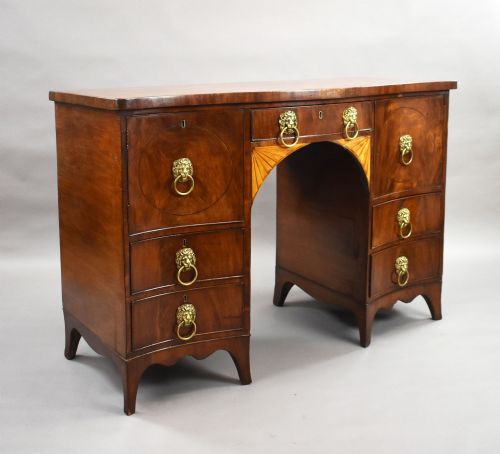
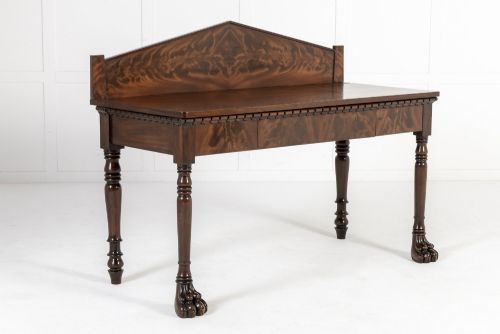
A regency serving buffet encompasses sideboards, multi-tiered dumb waiters, and serving tables designed for the dining room. These pieces originate predominantly from the nineteenth century, including the Regency, William IV, and George IV periods.
The form is most frequently met as a mahogany serving table or sideboard, sometimes featuring multiple tiers for display and service. Examples span formal English workshop pieces to Irish variations and later revivals.
Makers and designers of the era, such as Gillows and George Smith, influenced the architectural lines and classical ornamentation seen across these dining room mainstays.
Materials and construction methods
Makers relied heavily on solid mahogany and flame mahogany veneer, often enhanced by contrasting stringing in boxwood and ebony. Secondary timbers like oak appear in structural carcases and drawer linings.
Surface ornamentation incorporates brass fittings, gilt accents, and carved details such as barley twists or classical motifs. Multi-tiered dumb waiters and buffets utilise clever joinery to support rotating or graduating shelves.
Regency Serving Buffet Retail Price Guide 2026
Typical asking prices for regency serving buffet among the pieces listed under this phrase on Sellingantiques today, from the lower quarter to the upper quarter. They describe what is for sale here now, not the wider market.
Some ingenious dumb waiters were built to rotate silently, ensuring guests could pass the port without interrupting the table talk.
Separating standard production from masterwork execution
Quality rests in the selection of timber figures, where dense flame mahogany and well-matched veneers elevate an ordinary sideboard into a refined statement. The crispness of hand-carved details and the integration of brass inlay dictate the piece's aesthetic success.
Construction integrity distinguishes workshop output, particularly in the stability of multi-tiered dumb waiters and the smooth operation of metamorphic or rising mechanisms. Pieces attributed to prominent makers demonstrate superior proportion and joinery that outlasts utilitarian equivalents.
Gillows of Lancaster and London·George Smith·Robert Strahan and Co·Matthew Linwood
The Regency Serving Buffet Glossary
- Dumb waiter
- A tiered stand used in dining rooms for holding dishes and serving items without domestic staff present. These pieces commonly feature two or three circular or graduating tiers supported on a central column.
- Flame mahogany
- A decorative wood veneer harvested from the fork of the mahogany tree, prized for its dramatic, flickering grain pattern. Cabinet makers arranged these veneers symmetrically to create striking visual movement across large drawer fronts and doors.
- Stringing
- Thin inlaid lines of contrasting timber, such as boxwood or ebony, used to outline panels and edge tabletops. This technique defines the geometric rigour characteristic of the period.
- Metamorphic
- Describing furniture designed to transform its function or configuration, such as a buffet with rising tiers. These clever mechanical deployments required precise engineering.
- Chiffonier
- A compact sideboard or low cabinet equipped with shelving or drawers, frequently utilised for serving and storage in smaller dining spaces.
Regency Serving Buffet: Frequently Asked Questions
How were dumb waiters used in period dining?
Dumb waiters stood beside the dining table to hold extra plates, cutlery, and wine bottles during meals. This allowed diners to help themselves and maintain privacy without servants in the room.
The graduated tiers kept different courses or utensils organised within arm's reach of the host.
What is the difference between a sideboard and a buffet?
Sideboards generally feature enclosed cupboards and central drawers designed for storing silver and linen while providing a top surface for serving. Buffets frequently incorporate open tiers or serving surfaces specifically intended for displaying dishes during a meal.
Both forms served central functions in nineteenth-century dining room hospitality.
How do I spot a true Regency piece from a revival?
Authentic pieces display period construction techniques, timber shrinkage patterns, and hand-cut dovetails consistent with early nineteenth-century cabinet making. Revival pieces often utilise machine-sawn secondary timbers and standardised hardware from later decades.
Examining the underside and drawer linings reveals the primary clues to a piece's true age.
How do I care for a mahogany serving table?
Keep mahogany furniture away from direct sunlight and heat sources to prevent the timber and veneers from drying out. Regular dusting with a soft, dry cloth preserves the polished surface without building up residue.
Application of appropriate wax feed periodically maintains the depth of the flame mahogany grain.