




Regency Scientific Antiques
Regency scientific antiques bring precision brass and mahogany into the home as working instruments of Georgian and nineteenth-century discovery.
Regency Scientific Antiques
Regency scientific antiques encompass functional instruments and natural history framed prints produced across the Georgian, Regency, and Victorian eras. These pieces bridge domestic elegance with empirical utility, reflecting a period of intense fascination with measurement and observation.
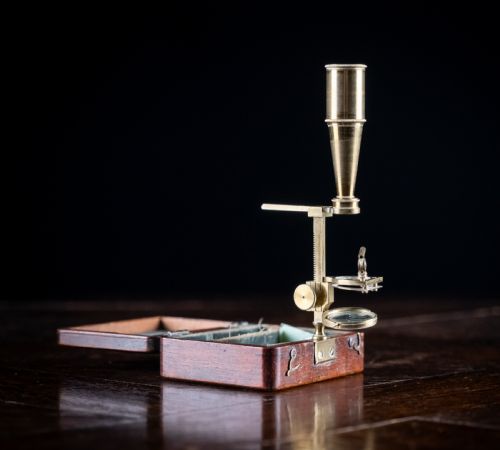
The objects span domestic barometers, telescopes, pocket microscopes, sundials, compasses, globes, and meteorological thermoscopes. Mahogany and satinwood cases house precision mechanics intended for both stationary rooms and travel.
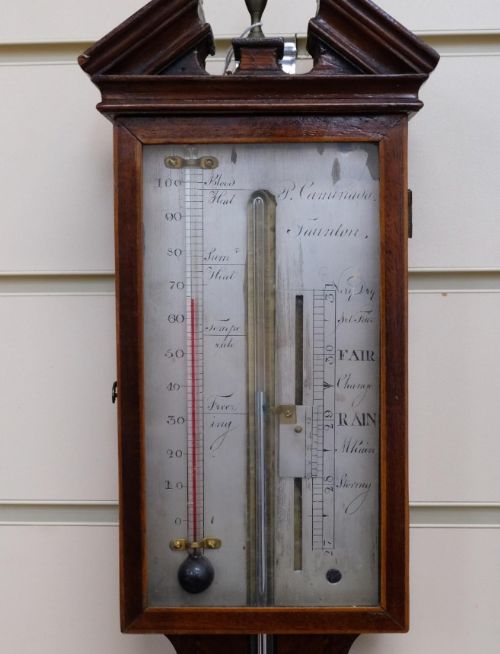
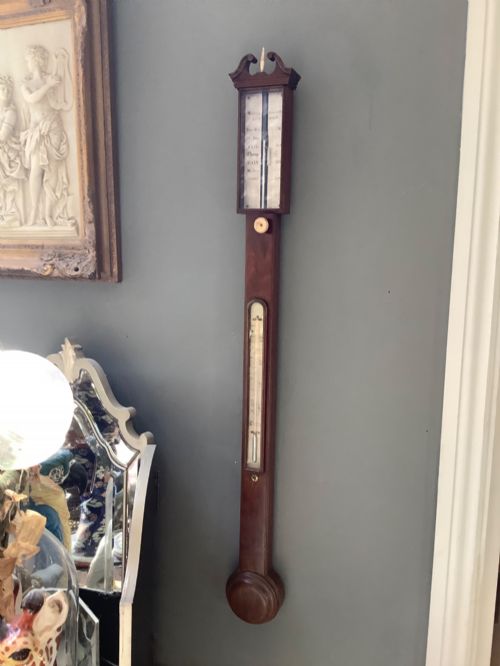
Barometers dominate the selection, appearing in stick, bow-fronted, wheel, and banjo configurations executed in rich timber. Alongside them, portable brass instruments and framed engravings demonstrate the era's widespread engagement with science.
Materials and construction
Makers utilised dense timbers such as mahogany, satinwood, and birds-eye maple to house delicate mechanisms, often finishing cases with fine inlay. Brass formed the backbone of optical tubes, dials, and gimbal mounts, frequently complemented by silvered metal for engraved scales.
Paper scales, bone adjustments, and glass lenses completed the instrumentation, alongside leather cases for portable items like travel thermometers and pocket microscopes. Joinery prioritised clean architectural lines that suited refined interiors while protecting fragile interior tubes.
Regency Scientific Antiques Retail Price Guide 2026
Typical asking prices for regency scientific antiques among the pieces listed under this phrase on Sellingantiques today, from the lower quarter to the upper quarter. They describe what is for sale here now, not the wider market.
Listings feature scientific instruments primarily across the Georgian, Regency, and Victorian periods, constructed from brass, mahogany, and glass.
Assessing quality and execution
Quality rests on the crispness of the maker's signature engraving, the selection of timber figures, and the survival of original components such as mercury tubes and glass dials. Superior examples display precise mechanical calibration alongside cabinetwork of high merit.
Makers who supplied institutional clients or held royal warrants achieved greater refinement in their divided scales and optical clarity. The cohesion between the instrument's scientific capability and the housing cabinet dictates the upper tier of the range.
Cary London·W and T Gilbert·Dollond of London·Ganthony of London·Alexander Adie·Stephen Houghton and Son·Thomas Harris and Son·John Newman·George Dollond
The Regency Scientific Antiques Glossary
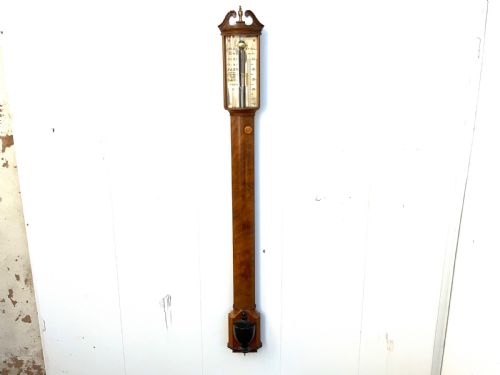
- Stick barometer
- A vertical instrument measuring atmospheric pressure via a column of mercury visible through a narrow glass tube. These often feature enclosed mahogany trunks with architectural pediments.
- Wheel barometer
- A dial-type barometer that translates mercury movement using a float and pulley system to turn a pointer around a circular face. They frequently incorporate hygrometers or thermometers.
- Altazimuth theodolite
- A precision surveying instrument designed to measure both horizontal and vertical angles. These robust brass tools rest on adjustable tripod bases.
- Thermoscope
- An early device showing relative temperature changes without a calibrated numerical scale. They utilise sensitive liquid or gas expansions within enclosed glass and boxwood housings.
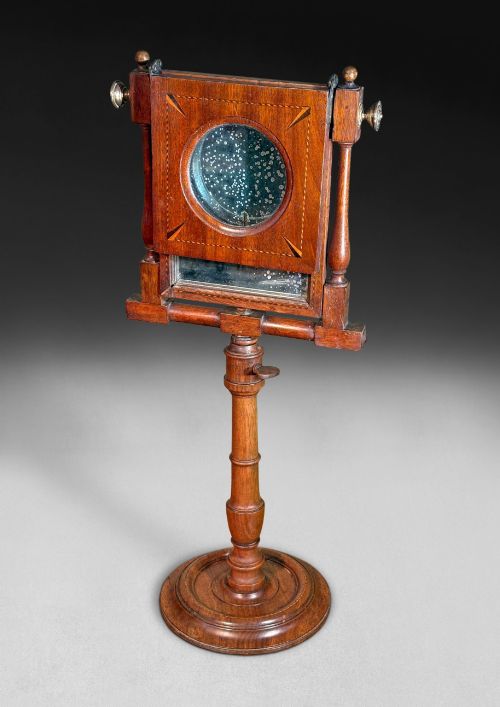
- Zograscope
- An optical device consisting of a large magnifying glass and a mirror used to view flat prints with an illusion of depth. They were popular parlour amusements during the Georgian period.
- Inclinometer
- A specialised instrument used for measuring the angle of a slope or tilt relative to gravity. They frequently accompany desk compasses from the early nineteenth century.
Regency Scientific Antiques: Frequently Asked Questions
How do I read a stick barometer?
Observe the height of the mercury column inside the glass tube against the engraved scale. Higher readings indicate fair weather, while falling mercury points toward approaching storms.
Note any vernier scale adjustments fitted to the brass plate, which allow for precise fractional readings of atmospheric pressure.
Were these instruments used outdoors?
Many items, such as pocket sundials, field telescopes, and leather-cased travel thermometers, were designed specifically for portability and outdoor navigation. Desk compasses and large wheel barometers remained stationary indoors.
Transportable pieces typically feature protective wooden or leather outer cases to withstand carriage travel.
How do I date a scientific instrument?
Examine the maker's signature and address engraved on the brass plate or dial face, as workshop locations shifted over time. Stylistic clues in the mahogany casework, such as string inlay or bowed fronts, also point to specific decades.
Comparative study of similar signed pieces helps narrow down the exact decade of manufacture.
How should I clean a mahogany barometer?
Dust the timber case gently with a dry, soft cloth to prevent accumulation. Avoid commercial polishes or moisture, which can damage aged French polish and paper scales.
Leave internal glass tubes and mercury columns entirely undisturbed by amateur cleaning attempts.