

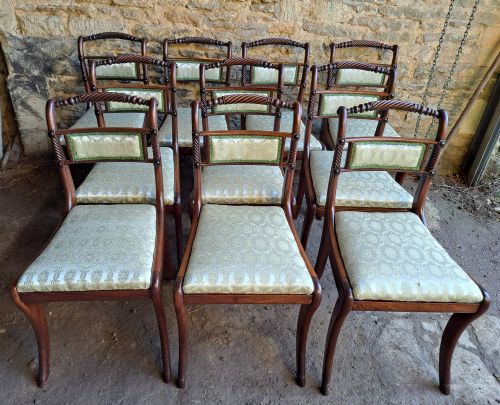
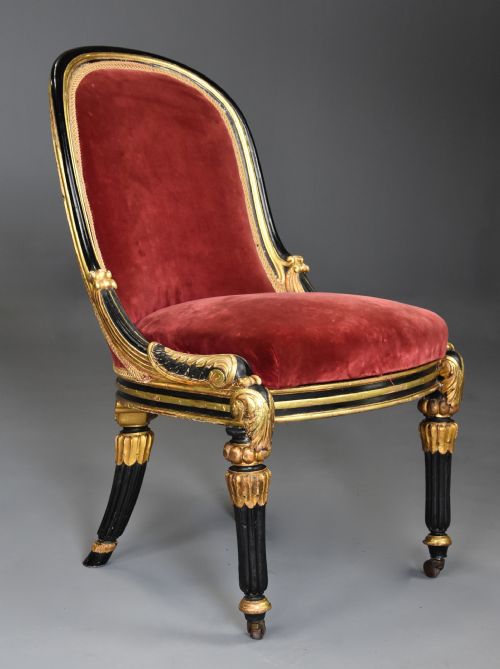
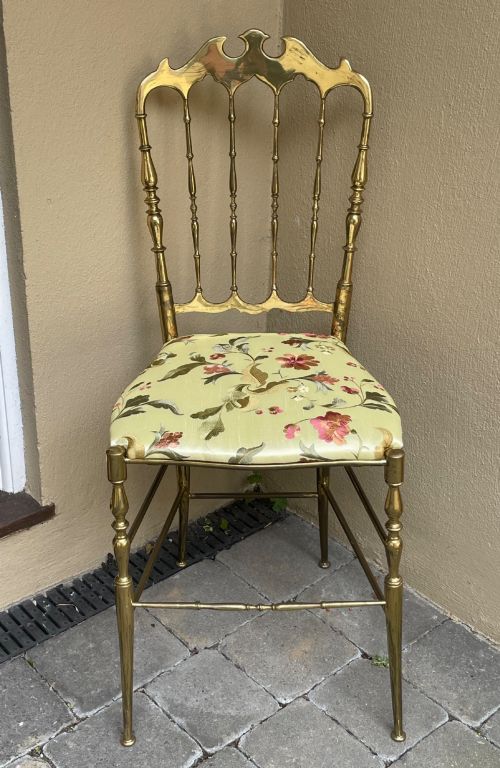


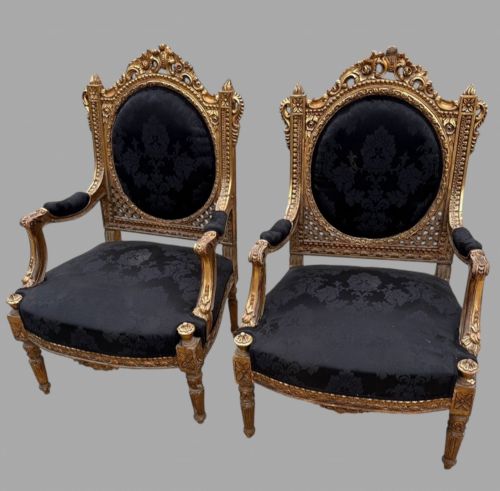


Regency Salon Chair
These regency salon chair examples combine elegant lines with period craftsmanship, offering a refined seat for drawing rooms and parlours.
Regency Salon Chair
A regency salon chair provides a formal seat designed for entertaining, featuring distinctive framing from the nineteenth century alongside later revival interpretations.
The selections available here range from authentic period pieces to subsequent iterations including Rococo Revival, Hollywood Regency, and French Neoclassical styles.
Forms span open armchairs, side chairs, music chairs, and dining chairs originating from nineteenth century workshops and later twentieth century revivals.
How they were made
Cabinetmakers constructed the primary structures using dense hardwoods such as mahogany, rosewood, walnut, and maple, frequently applying ebonised finishes.
Decorative detailing incorporates carved gilt wood, polished brass accents, and applied gilding to enhance the architectural profiles of the frames.
Seating portions utilise traditional upholstery fabric, silk, and velvet to finish the padded backs and squabs.
Regency Salon Chair Retail Price Guide 2026
Typical asking prices for regency salon chair among the pieces listed under this phrase on Sellingantiques today, from the lower quarter to the upper quarter. They describe what is for sale here now, not the wider market.
Listings feature mahogany, rosewood, walnut, and maple timbers alongside brass, silk, and velvet.
What varies in quality
The calibre of timber selection and the crispness of carved wooden details establish the baseline distinction between standard seating and finer workshop production.
Sophistication in joinery and the precision of brass or gilt embellishments elevate certain armchairs and side chairs above simpler utility items.
Henry Thomas Peters·Gillows
The Regency Salon Chair Glossary
- Regency
- A British design period spanning the early nineteenth century defined by classical restraint and archaeological revival motifs. This aesthetic draws heavily upon Greek, Roman, and French influences.
- Giltwood
- Timber treated with gold leaf or metallic paint to simulate solid gold surfaces. It provides a reflective highlight on nineteenth century frames.
- Ebonised
- Wood stained or painted deep black to imitate ebony. This dark finish appears frequently on formal seating from the period.
- Spoon back
- An upholstered chair back curved in a concave shape resembling the bowl of a spoon. This contour supports the sitter's spine.
Regency Salon Chair: Frequently Asked Questions
How do I identify a true period piece?
Examine the timber ageing, joinery methods, and underlying construction beneath the upholstery. Authentic nineteenth-century examples display hand-cut joints and native hardwood framing consistent with the era.
Compare the decorative motifs and silhouette against documented workshop styles from the Regency and William IV periods.
Where were salon chairs used?
These seats belonged in principal reception rooms, drawing rooms, and parlours where guests gathered for conversation and music. Their lighter frames allowed easy movement around the room.
Music chairs and side variants served specific functions near instruments or writing desks within larger houses.
Can I use these chairs daily?
Most antique salon chairs tolerate normal seating when the frame joinery remains sound and stable. Regular use benefits from periodic checks of the structural fixings by a specialist conservator.
Delicate giltwood or ebonised surfaces require careful placement away from direct sunlight and heavy knocks.
What defines the revival styles?
Revival pieces from later decades reinterpret earlier nineteenth-century proportions using the manufacturing techniques of their own time. Styles like Hollywood Regency or Rococo Revival adapt classic shapes for twentieth-century interiors.
These later interpretations maintain the decorative ambition of the originals while employing modified woods and modern textiles.