



Regency Period Dressing Table
A regency period dressing table brings architectural line and figured timber to the bedroom, offering compact drawers and pivoting mirrors.
Regency Period Dressing Table
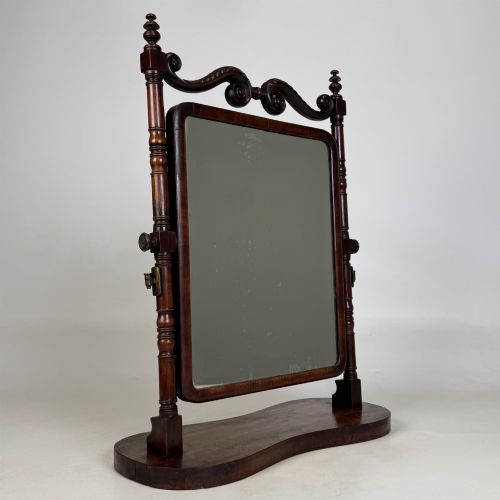
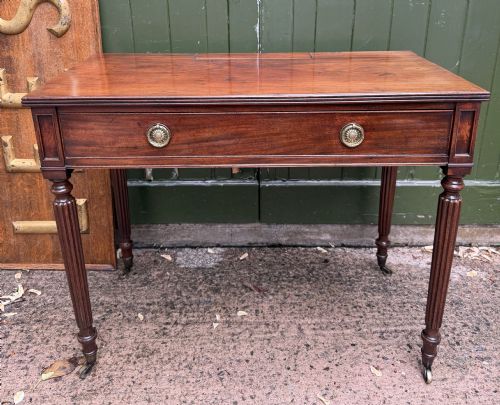
A regency period dressing table combines the forms of the side table, writing desk and toilet mirror into a cohesive piece for the bedroom. You will encounter compact kneehole layouts, bowfront designs with three drawers, and larger side tables paired with adjustable mirrors.
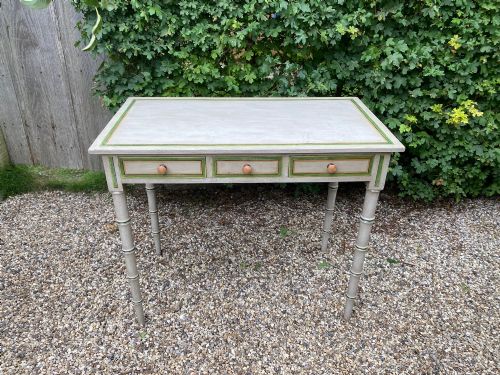
Many examples utilise mahogany as the primary timber, sometimes enhanced with boxwood stringing, brass inlays or painted faux bamboo finishes. Smaller items such as toilet mirrors and hand mirrors appear frequently alongside the larger case furniture.
What varies in quality
The selection of timber grain largely determines the visual standing of a piece, with highly figured mahogany and careful book-matching commanding attention. Subtle details such as finely turned reeded legs, crisp brass inlays and original drawer pulls elevate the execution.
Structural integrity rests on the tightness of joinery in the drawer frames and the stability of the mirror supports. Pieces retaining their original glass plates, leather surfaces and patinated hardware represent the upper tier of survivals.
Listings feature mahogany as the predominant material, accompanied by brass, glass, leather, pine, boxwood and painted wood.
Gillows of Lancaster
The Regency Period Dressing Table Glossary
- Bowfront
- A curved cabinet front that swells outward in the centre, common in Regency side tables and dressing pieces. This shape softens the room and showcases continuous mahogany grain.
- Kneehole
- A recessed space beneath the central drawers of a desk or dressing table designed to accommodate the user's legs. Smaller kneehole tables often integrate a configuration of three or more small drawers.
- Toilet mirror
- A smaller tabletop mirror fitted to a frame with pivoting side supports, designed to sit atop a dressing table or chest. These mirrors allow the user to adjust the angle for grooming.
- Faux bamboo
- Wood turned and painted to imitate the segmented stalks of natural bamboo. This decorative treatment appears on painted furniture and occasional tables from the period.
- Stringing
- A thin strip of contrasting wood inlaid into the surface of furniture to create decorative borders. Boxwood stringing is frequently seen against dark mahogany backgrounds.
Regency Period Dressing Table: Frequently Asked Questions
What is a regency period dressing table?
A regency period dressing table is a nineteenth-century piece designed for personal grooming, typically featuring a wooden tabletop, multiple small drawers for accessories, and sometimes an attached mirror. These tables often stand on slender legs and make use of figured mahogany timber.
They reflect the neoclassical design tastes of the Regency and George IV eras, balancing formal architectural proportions with practical storage for daily use.
How were these tables used originally?
Wealthy individuals used these tables in bedrooms or dressing rooms for morning ablutions, hairstyling and applying cosmetics. The drawers kept powders, brushes, and jewellery close at hand.
Many designs doubled as writing surfaces, allowing correspondence to take place in the private quarters of a townhouse or country house.
Where should I place one today?
These tables fit naturally in a bedroom as a functional dressing surface or console beneath a wall-mounted mirror. Their compact proportions also suit hallways or living rooms as decorative side tables.
Pairing a kneehole table with a low chair creates a dedicated writing or vanity station without overwhelming small spaces.
How do I spot a genuine period piece?
Examine the construction methods in the drawers and secondary timbers, looking for hand-cut dovetails and pine linings consistent with nineteenth-century workshop practices. Patina on the wood surfaces and original brass hardware offer further confirmation of age.
Compare the proportions and decorative motifs, such as reeded legs or brass stringing, against documented examples from the Regency and Georgian periods.