




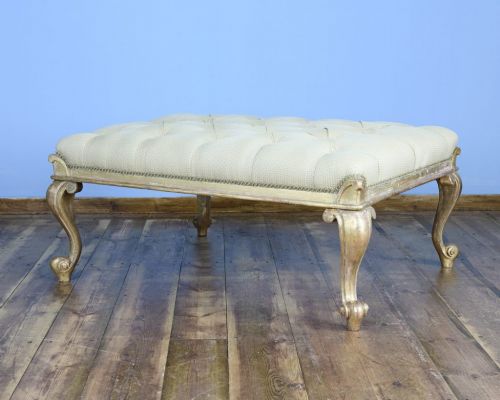


Regency Ottoman
A regency ottoman is a sturdy upholstered seat designed for rest or storage, bringing neoclassical elegance and practicality to a room.
Regency Ottoman
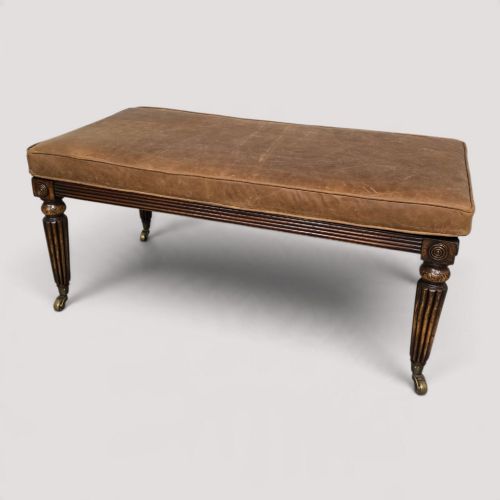
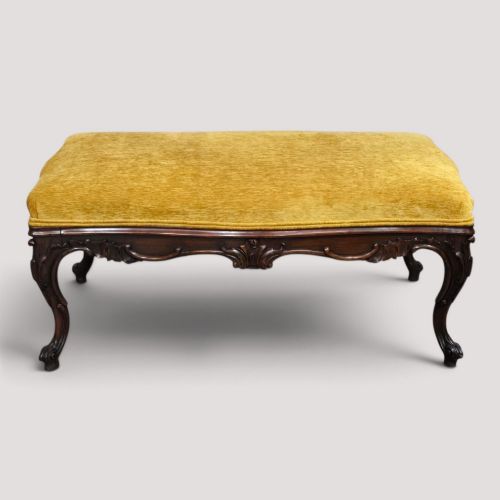
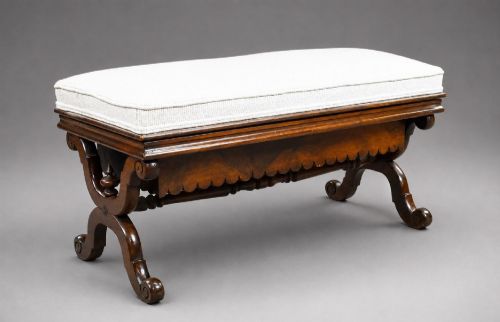
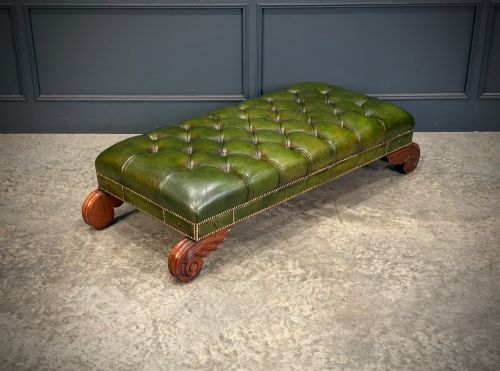
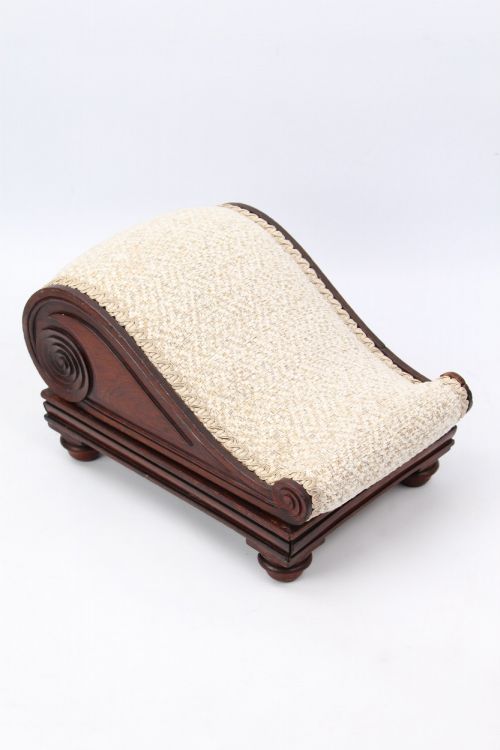
When searching for a regency ottoman, buyers encounter low seating forms including footstools, long benches, and box ottomans designed for domestic comfort. The pieces span the nineteenth century, incorporating William IV, Victorian, and neoclassical influences alongside the core Regency style.
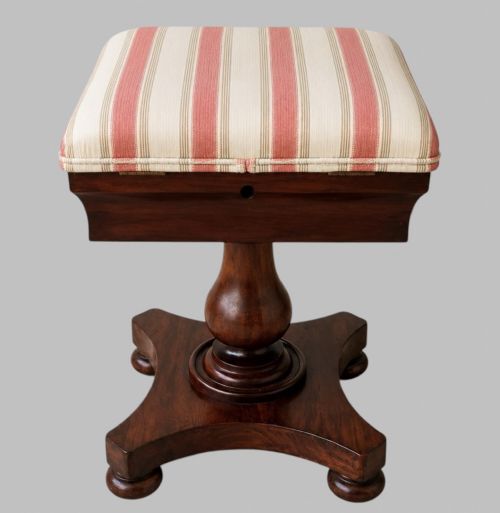
The most common examples on this page are mahogany and rosewood frames upholstered in leather, fabric, or velvet, often standing on sabre legs, fluted supports, or lions paw feet. These versatile seats function as footstools, window seats, or sewing box stools with internal storage compartments.
Distinctions in Craftsmanship
The hierarchy of quality rests upon the selection of timber and the precision of the carved details. Solid rosewood and figured mahogany frames with crisp moulding command greater attention than simpler secondary woods.
Regency Ottoman Retail Price Guide 2026
Typical asking prices for regency ottoman among the pieces listed under this phrase on Sellingantiques today, from the lower quarter to the upper quarter. They describe what is for sale here now, not the wider market.
Listings feature woods such as mahogany, rosewood, burr maple, and giltwood, paired with leather, velvet, and caned tops.
Miles & Edwards·Mathew Gregson·R W Winfield
The Regency Ottoman Glossary
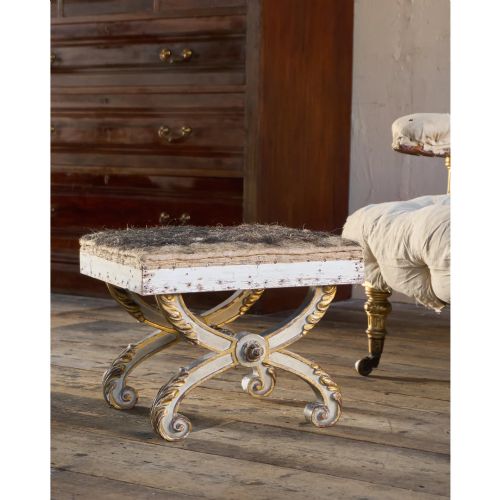
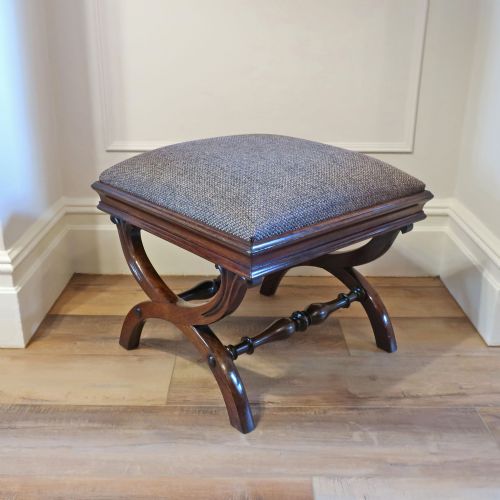
- Curule stool
- A cross-framed seat based on ancient Roman magistrate chairs. This X-frame shape appears frequently in neoclassical and Regency seating.
- Ottoman
- An upholstered seat without a back or arms, often featuring a hinged lid for internal storage. These were used for resting feet or sitting by windows.
- Sabre leg
- A concave sweeping leg that tapers towards the foot, commonly seen on Regency chairs and stools. It derives from classical Greek furniture designs.
- Giltwood
- Timber treated with gold leaf or gesso preparation to simulate solid gold. It provides bright reflective highlights on decorative frames.
Regency Ottoman: Frequently Asked Questions
What is a regency ottoman used for?
These pieces function primarily as footstools, window seats, or low benches for occasional sitting. Some variations include built-in storage boxes for sewing materials or domestic items.
Their compact size allows them to sit easily at the foot of a bed or beneath a window frame.
How do I identify the period?
Look to the timber choices, such as dark rosewood and flame mahogany, alongside characteristic details like sabre legs and lions paw feet. Neoclassical influences and X-frame structures typically point to the early nineteenth century.
Later Victorian adaptations often introduce heavier proportions or altered upholstery styles while retaining the core Regency silhouette.
Are these ottomans comfortable?
Most examples feature firm padding beneath leather, velvet, or chenille upholstery designed for supporting the feet or providing upright seating. While firmer than modern cushions, they offer solid support for domestic use.
Buttoned leather surfaces provide a resilient finish suited to regular interaction.
Where should I place an ottoman?
These stools suit living rooms as movable footrests, or hallways as convenient perches for removing shoes. Long benches and window seats fit naturally beneath low sills or along empty wall spaces.
Box ottomans also function effectively in bedrooms alongside dressing tables or wardrobes.