
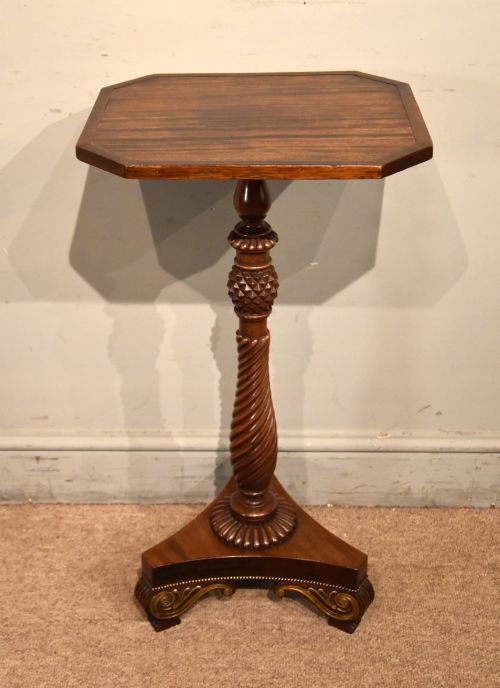
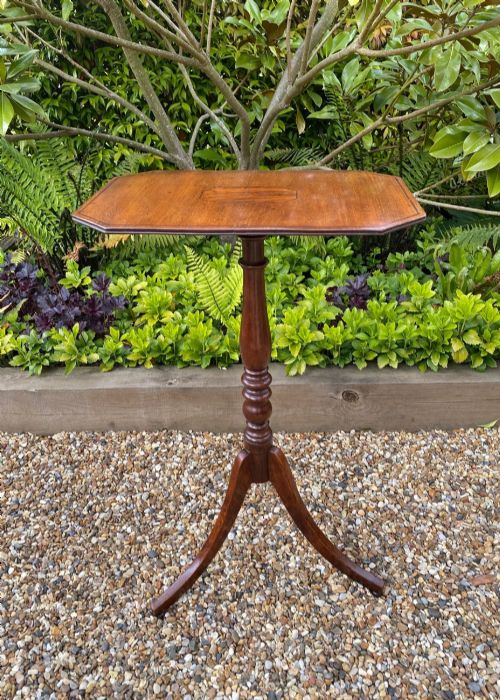
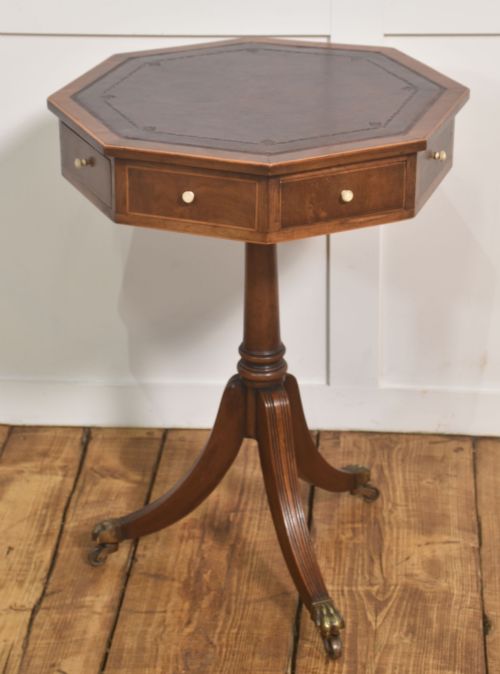
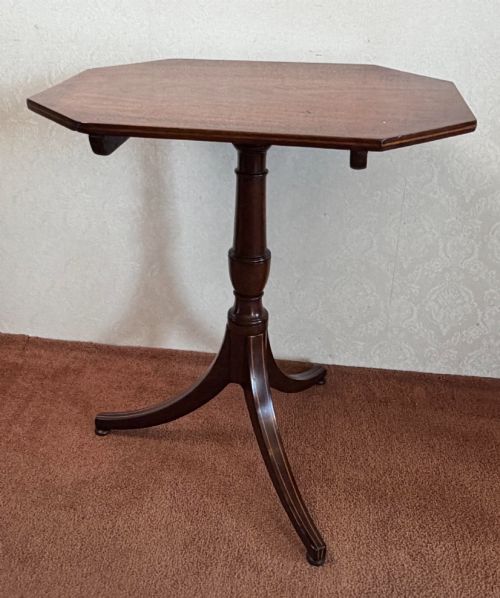
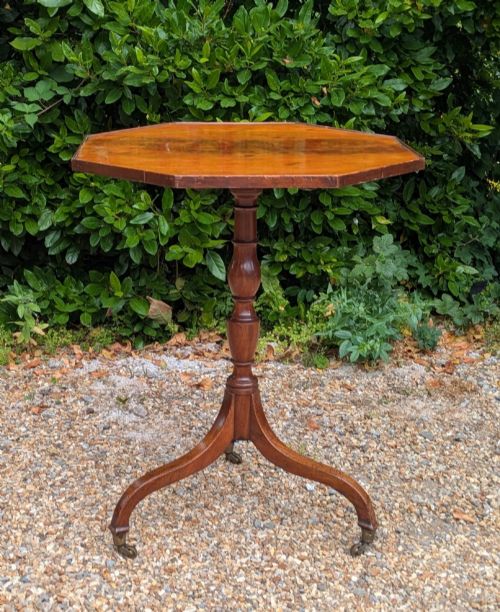
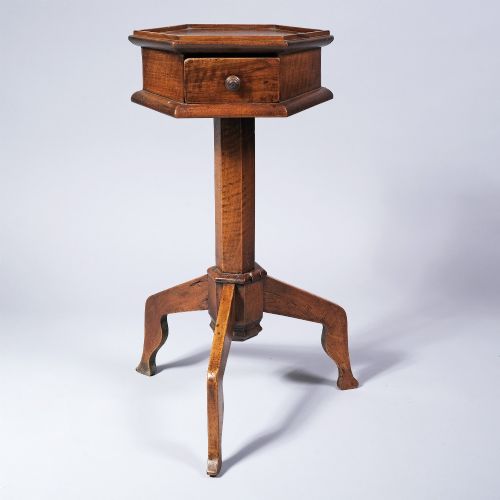
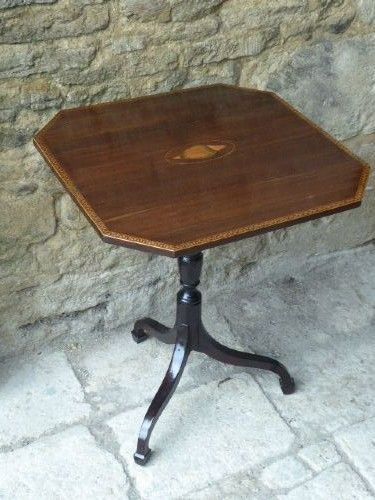
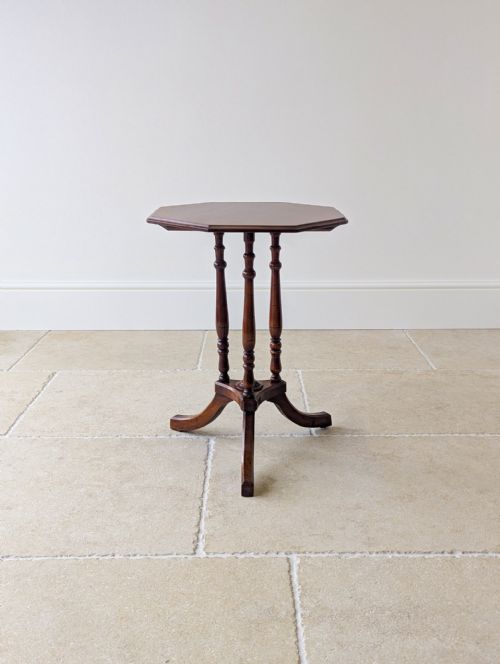





Regency Octagonal Side Table
A regency octagonal side table is a compact architectural surface built for display and service, combining geometric form with period craftsmanship.
Regency Octagonal Side Table
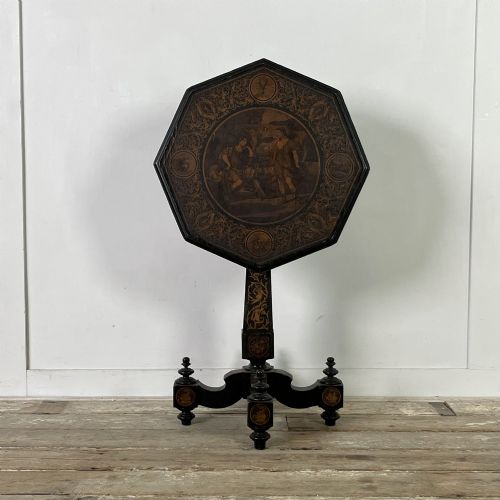
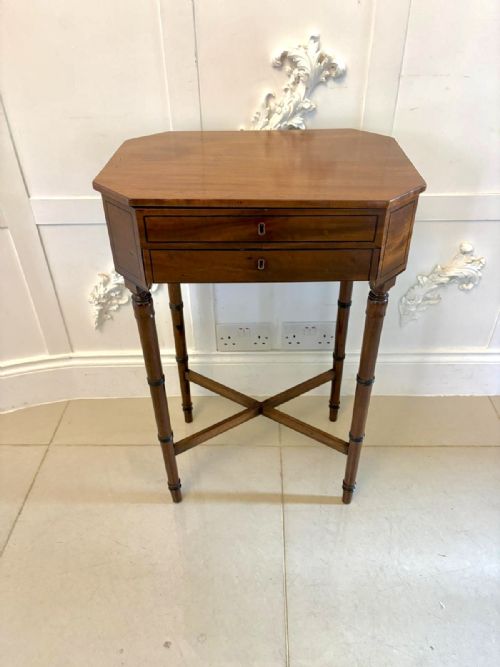
When you search for a regency octagonal side table, you encounter compact occasional pieces designed for domestic interiors during the early nineteenth century. These items typically stand on central pedestals with tripod bases, serving varied roles as wine tables, lamp stands, or work tables.
The surviving inventory spans the Regency period, the broader nineteenth century, and later revival phases. Mahogany dominates the examples, alongside rosewood, satinwood, oak, and fruitwood, often enhanced by boxwood stringing and brass mounts.
How they were made
Cabinet makers utilised dense hardwoods such as mahogany and rosewood, frequently selecting figured veneers and flame grains for table tops. Timber construction was paired with brass inlay, boxwood stringing, and wood inlay to create geometric contrast on the octagonal surfaces.
Many examples incorporate tilt-top actions or tripod pedestals requiring precise joinery and turned supports. Specialised surfaces also feature specimen marble inserts, painted satinwood decoration, and integrated workboxes with fitted compartments.
Materials span traditional British hardwoods like oak and mahogany alongside imported luxury veneers including satinwood, rosewood, and partridge wood.
What varies in quality
Quality rests upon the choice of timber and the precision of the veneer work on the octagonal top. Finer examples display carefully matched flame mahogany, intricate brass stringing, and crisp carving on the pedestal base.
Structural integrity of the tilt mechanism and the stability of the tripod legs distinguish standard production pieces from superior workshop output. The presence of original marble inserts or specialised games tops elevates the standing of an individual table.
Gillows
The Regency Octagonal Side Table Glossary
- Tilt-top action
- A mechanical hinge beneath the table surface allowing the top to pivot vertically for storage against a wall when not in use.
- Tripod base
- A supporting structure comprising three legs radiating from a central turned pedestal column.
- Boxwood stringing
- Narrow inlaid lines of pale boxwood set flush into darker wood veneers to create decorative borders.
- Specimen marble
- A composite top formed from small geometric pieces of different coloured marbles arranged in patterns.
Regency Octagonal Side Table: Frequently Asked Questions
What is a regency octagonal side table used for?
These tables served various domestic functions in drawing rooms and parlours, acting as surfaces for lamps, wine glasses, or reading material.
Many incorporated tilt-top mechanisms so they could be stored upright against a wall when floor space was required.
How do I identify a genuine period piece?
Examine the timber selection, construction methods, and hardware to determine the likely era of manufacture. Genuine period examples often display traditional joinery and patination consistent with early nineteenth century workshop practices.
Styles span the Regency era through to later revival periods, meaning details like brass mounts and secondary timbers help clarify the date.
What woods were commonly used?
Makers relied heavily on mahogany for its durability and rich grain, alongside exotic timbers like rosewood and satinwood for decorative effect.
Secondary woods such as oak and fruitwood appear in internal framing, while boxwood provided contrast through fine inlaid stringing.