



Regency Mirror Back Cabinet
A regency mirror back cabinet brings depth and light to a room through figured timbers and reflective glass.
Regency Mirror Back Cabinet
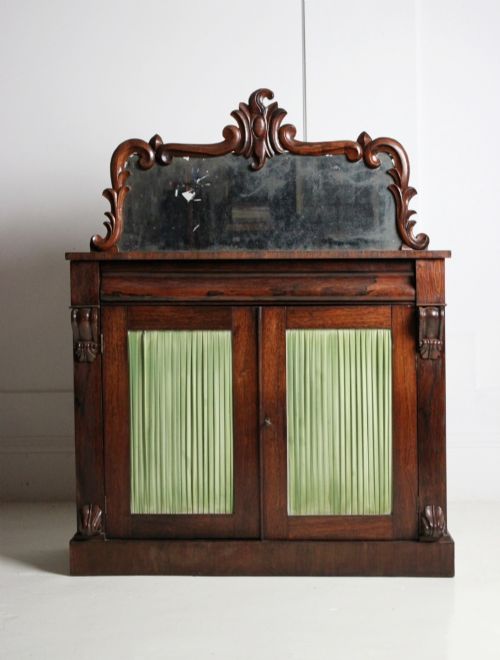
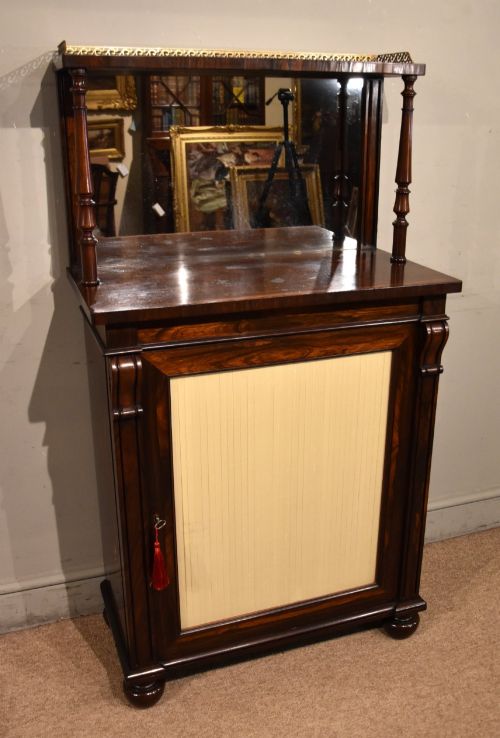
A regency mirror back cabinet serves as a low storage piece or sideboard, often designed with an open shelf or glazed display above the base. These forms include chiffoniers, side cabinets, and bookcases spanning the Regency, George IV, and William IV periods.
Rosewood and mahogany dominate the timber choices, frequently paired with marble tops, brass inlays, and mirror glass backs. Buyers will most frequently encounter rosewood chiffoniers and side cabinets from the early nineteenth century.
The layout bridges practical storage with display space, using the reflective mirror back to amplify light within domestic interiors. Proportions remain compact enough for modern placement while retaining nineteenth century cabinetwork details.
How they were made
Cabinet makers selected dense timbers such as rosewood and mahogany, often choosing figured veneers for the main doors and panels. Brass inlay work was precision fitted into channels cut directly into the wood surfaces.
Mirror glass panels were integrated into the structural backs of chiffoniers and cabinets to bounce light around the room. Marble tops were added to select side cabinets and chiffoniers, resting flush upon the timber framework.
Regency Mirror Back Cabinet Retail Price Guide 2026
Typical asking prices for regency mirror back cabinet among the pieces listed under this phrase on Sellingantiques today, from the lower quarter to the upper quarter. They describe what is for sale here now, not the wider market.
Materials recorded on this page include rosewood, mahogany, brass, marble, and mirror glass.
What varies in quality
The distinction between tiers rests upon the selection of timber veneers and the crispness of brass detailing. Finer examples display continuous grain patterns across the front elevation and meticulous joinery in the internal mahogany linings.
Proportion and decorative restraint dictate the visual balance of the piece, separating standard production from exceptional cabinetwork. The integration of the mirror plate and the weight of the marble top reflect the original cost of production.
Gillow·Town and Emanuel
The Regency Mirror Back Cabinet Glossary
- Chiffonier
- A low sideboard or cabinet featuring a shelved superstructure at the back, frequently fitted with mirror glass or fabric panels. It evolved during the early nineteenth century as a popular dining room and drawing room piece.
- Breakfront
- A cabinet design where the central section projects forward from the flanking outer sections. This architectural arrangement creates depth and shadow across the front elevation.
- Rosewood
- A heavy, dark timber with distinct figuring, widely utilised by cabinet makers during the Regency period. Its rich reddish-brown tones take a high polish.
- Gillow
- A renowned cabinet-making firm operating in Lancaster and London during the eighteenth and nineteenth centuries. Their pieces are distinguished by high quality construction and recorded maker stamps.
Regency Mirror Back Cabinet: Frequently Asked Questions
What is a regency mirror back cabinet used for?
These pieces function as low sideboards and display cabinets for china, books, or decorative objects. The surface serves drinks or lamps while the shelves hold storage.
The mirror back amplifies natural daylight and creates a sense of greater depth in smaller reception rooms.
How do I identify a Regency period piece?
Examine the timber selection for dense rosewood or figured mahogany veneers typical of the early nineteenth century. Brass inlay and classical proportions offer further confirmation.
Construction methods such as secondary mahogany linings help distinguish pieces from later Victorian reproductions.
Where should I place a chiffonier at home?
A chiffonier suits dining rooms, living rooms, or hallways where wall space accommodates a low profile. Placing it opposite a window maximises the light reflected by the mirror back.
Keep wooden surfaces away from direct heat sources to protect nineteenth century timber and veneers.
Did these cabinets always have marble tops?
Marble tops appeared on select chiffoniers and side cabinets, offering a durable and cool surface alongside timber shelves. Many examples retained their original wooden tops instead.
Both timber and marble versions belong to the period, reflecting different original customer orders.