



Regency Mahogany Magazine Holder
A regency mahogany magazine holder organises papers and journals with the clean lines and rich timber tones characteristic of early nineteenth-century cabinet work.
Regency Mahogany Magazine Holder
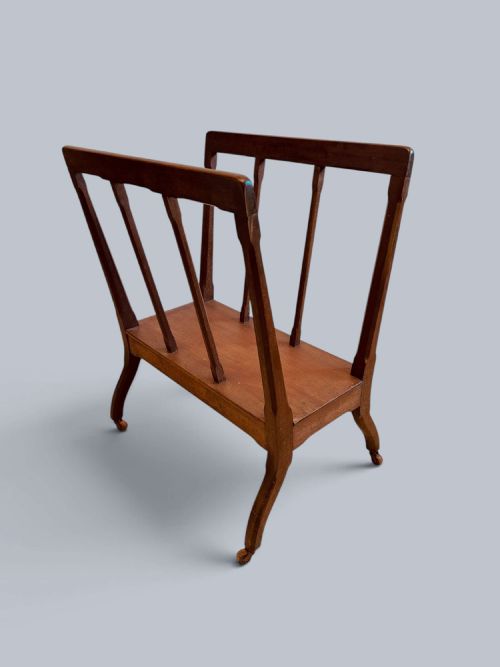
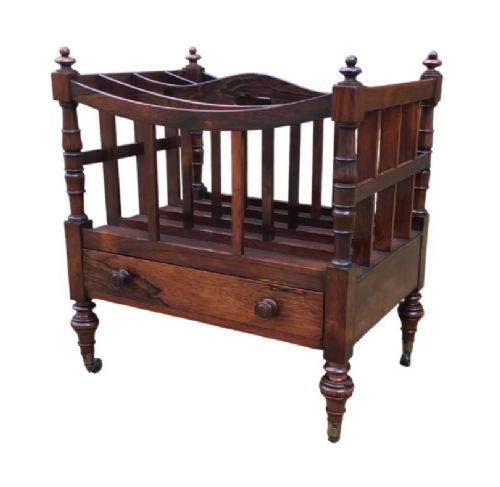
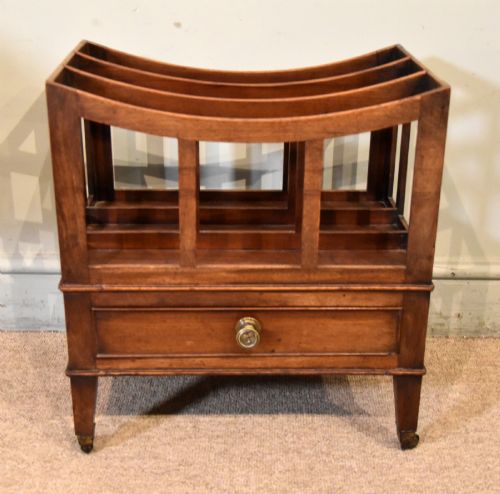
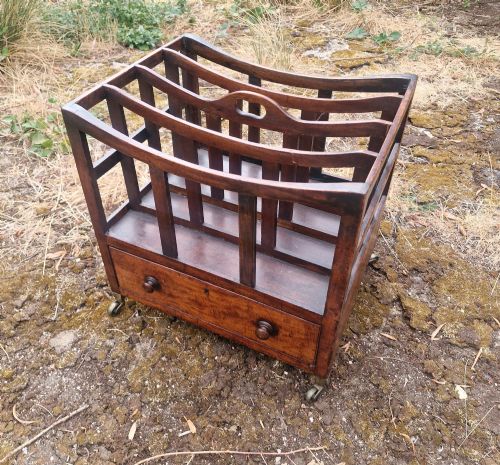
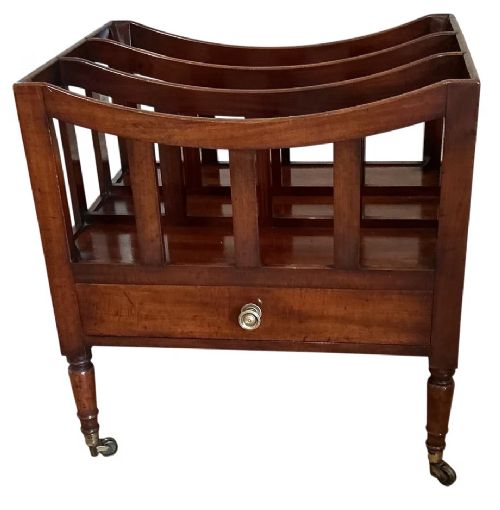
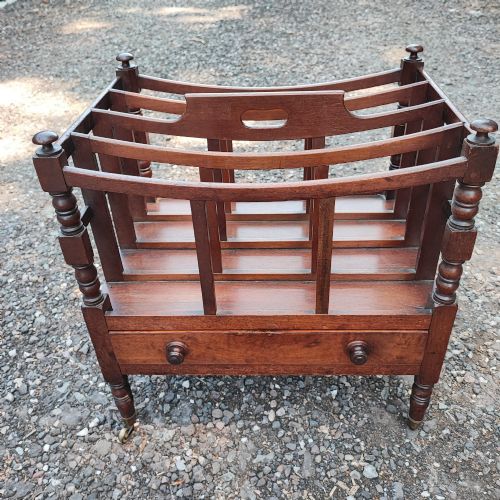
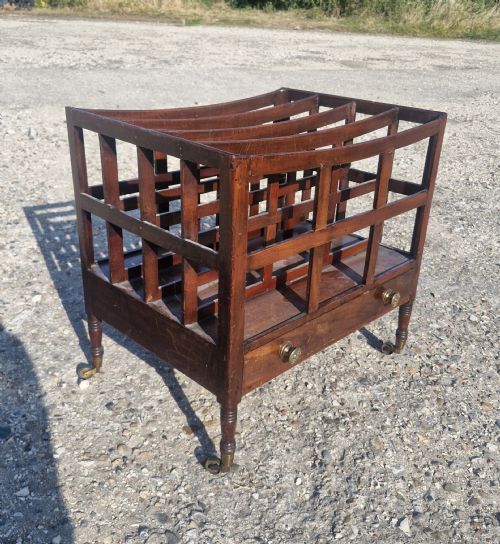
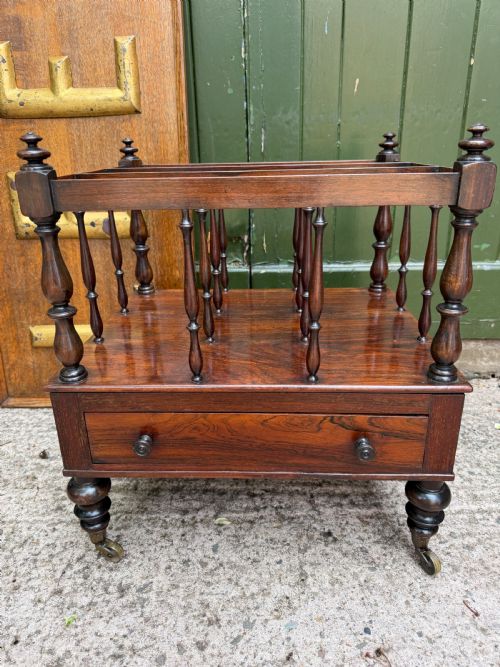
A regency mahogany magazine holder, known historically as a canterbury or folio stand, provides compartmentalised storage for periodicals, newspapers and sheet music. These pieces typically take the form of open slatted racks raised on legs, often featuring a low drawer beneath the divisions.
The pieces seen here range from boat-shaped designs to grand scale folio stands. They appear predominantly in the Regency, George III, and William IV styles, alongside later revivals.
The version most commonly encountered on this page is the freestanding mahogany canterbury with turned supports and brass castors. These items bring functional division to sitting rooms while displaying the warm grain of the primary timber.
How they were made
Cabinet makers utilised solid mahogany and flame mahogany veneer over secondary timbers to construct the main framework and divisions. Finer examples incorporate contrasting details such as boxwood and ebony banding or delicate inlay.
Structural hardware relies on turned wooden legs fitted with brass castors to allow smooth movement across carpets and floorboards. Individual divisions are joined securely to base platforms, sometimes incorporating a dovetailed drawer with small turned knobs.
Regency Mahogany Magazine Holder Retail Price Guide 2026
Typical asking prices for regency mahogany magazine holder among the pieces listed under this phrase on Sellingantiques today, from the lower quarter to the upper quarter. They describe what is for sale here now, not the wider market.
Listings here feature pieces spanning the Georgian, Regency, William IV and Victorian periods, constructed primarily from mahogany with rosewood, ebony and boxwood accents.
What varies in quality
The standard of timber selection marks the primary difference between standard production and top-tier workshop output. Richly figured Cuban mahogany and crisp flame veneer distinguish superior examples from plain stock.
Execution of detail defines the maker's hand, seen in the sharpness of turned spindles, the precision of ebony or boxwood banding, and the integration of substantial brass castors rather than generic replacements.
Gillows of Lancaster
The Regency Mahogany Magazine Holder Glossary
- Canterbury
- A low freestanding stand with partitioned sections for holding music sheets, newspapers and magazines. It typically includes a small drawer and rests on castors.
- Folio Stand
- An adjustable or fixed upright rack designed to hold large books, prints and unbound papers. These pieces often feature X-frame supports.
- Flame Mahogany
- A wood veneer cut from the branch junction of the mahogany tree, producing a distinctive flickering flame pattern. Cabinet makers used this figure on prominent exterior surfaces.
- Banding
- A narrow strip of contrasting timber inlaid around the edges of panels or tabletops. Boxwood and ebony are common banding materials in Regency pieces.
- Castors
- Small swivel wheels attached to the base of furniture legs. Brass fittings of this era allowed heavy stands to be repositioned easily.
Regency Mahogany Magazine Holder: Frequently Asked Questions
What is a regency mahogany magazine holder used for?
These stands serve to store newspapers, journals and sheet music within easy reach in a library or drawing room. The vertical divisions keep unbound papers upright and sorted.
Historically, they sat beside seating areas to hold current reading material. Today they continue this function while displaying period cabinet work.
How do I tell a true Regency piece from a revival?
Original pieces display timber patination, hand-cut dovetails in the drawer construction, and period secondary woods like oak or pine. The wear on brass castors and joints aligns with early nineteenth-century manufacturing.
Revival pieces often show mechanical uniformity in their turning and lack the depth of colour found in untouched Regency surfaces.
Are these stands sturdy enough for daily use?
Most examples are built from dense mahogany and remain robust for holding contemporary magazines and newspapers. The vertical slats and framing are joined to withstand regular handling.
Care should be taken when moving them across uneven floors to protect the lower leg joints and original castors.