




Regency Leather Sofa
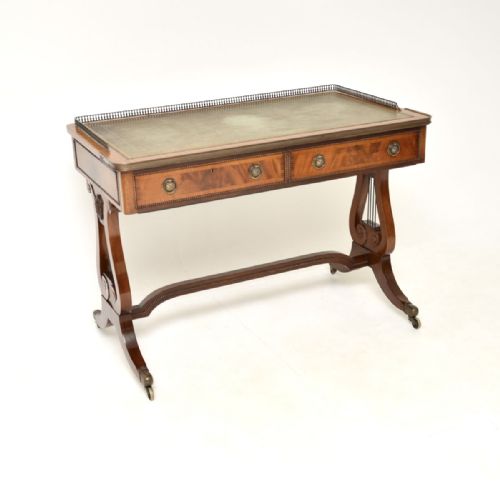
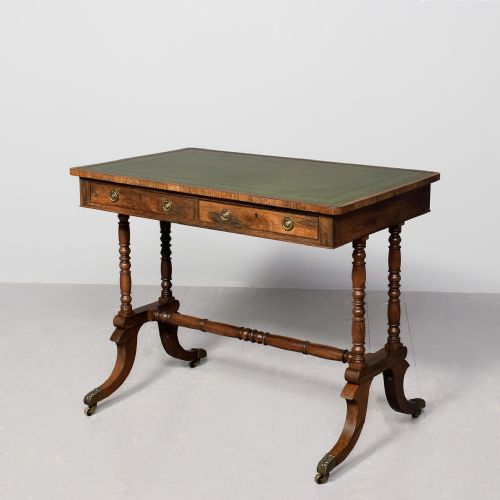
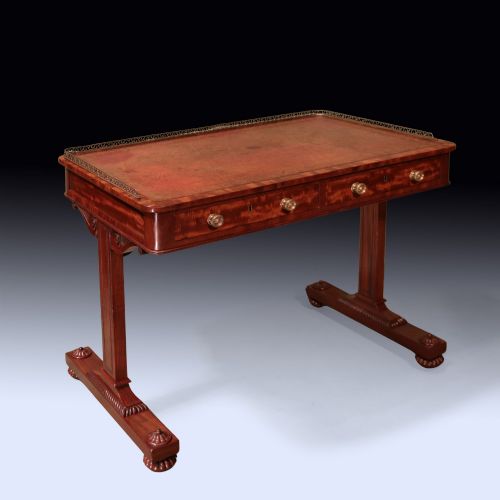
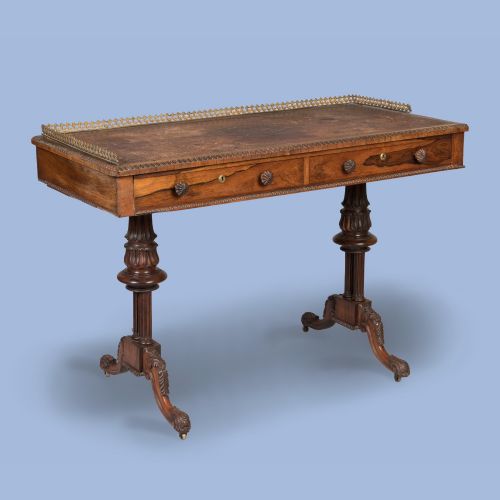
A regency leather sofa or writing table brings the restrained neoclassical lines and rich timber tones of the early nineteenth century straight into a room.
Regency Leather Sofa
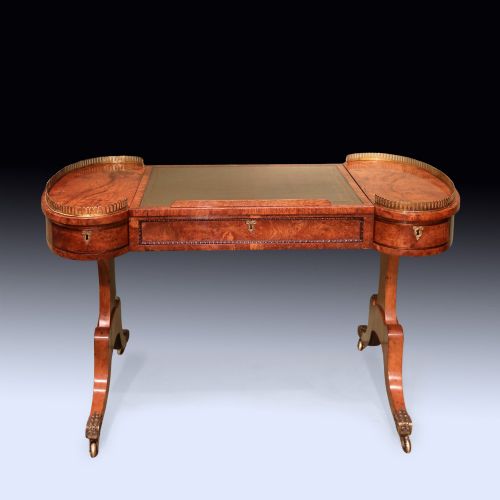
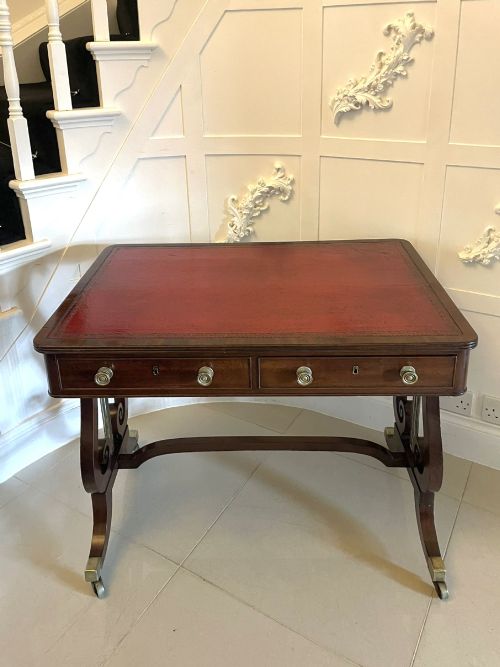
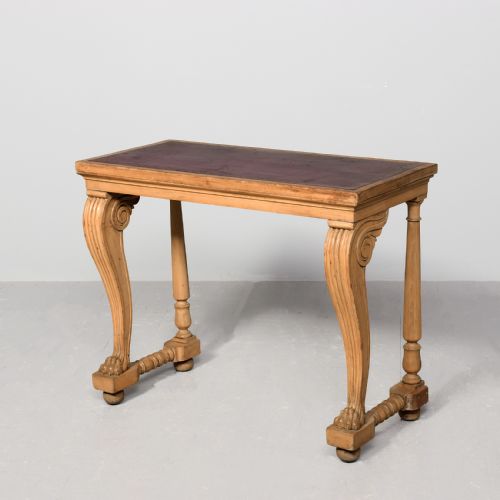
When searching for a regency leather sofa, buyers encounter pieces spanning the Regency, William IV, George IV, and Late Georgian periods, alongside later twentieth-century revivals. The forms include dedicated leather-upholstered sofas, scroll end settees, and library or writing tables featuring inset leather surfaces.
Most examples found on this page are fashioned from dense timbers like mahogany and rosewood, occasionally appearing in burr oak, goncalo alves, or general wood with brass mounts. These pieces bridge the gap between formal drawing-room display and functional library utility.
The aesthetic relies on classical proportions, visible wood frames with carved herms or scroll ends, and disciplined brass inlay rather than heavy ornamentation.
Materials and construction methods
Cabinetmakers of the period utilised solid mahogany, rosewood, and burr oak for the structural frames and table bodies, often selecting veneers to display rich grain patterns. Brass featured prominently as inlay lines, mounts, and castors.
Writing and library tables incorporated inset leather surfaces, frequently tooled with gold leaf borders, fitted into the timber top. Sofas employed heavy wooden frames supporting upholstered sprung or stuffed interiors finished in brown leather.
Regency Leather Sofa Retail Price Guide 2026
Typical asking prices for regency leather sofa among the pieces listed under this phrase on Sellingantiques today, from the lower quarter to the upper quarter. They describe what is for sale here now, not the wider market.
Listings span multiple decades, including the Regency period, Georgian era, nineteenth century, and twentieth-century revival years.
Distinctions in craftsmanship
The tier of a piece depends heavily on the selection of timber veneers and the precision of brass inlay work. Finer examples display crisp, hand-carved details on scroll ends and frames, whereas simpler pieces rely on plain turned legs and minimal decoration.
Structural integrity rests on the joinery of the frame and the quality of the timber seasoning. Pieces attributed to specific cabinet-making traditions demonstrate superior joinery and balanced proportions compared to standard provincial work.
James Mein of Kelso·Marsh and Tatham
The Regency Leather Sofa Glossary
- Regency
- A design period spanning roughly from eighteen eleven to eighteen twenty, characterised by neoclassical restraint and classical antiquity influences. It draws directly upon Greek, Roman, and Egyptian motifs.
- Library Table
- A freestanding table designed to be placed in the centre of a room rather than against a wall. These pieces typically feature drawers and finished backs.
- Scroll End
- A curved, volute-shaped terminal found on the arms of sofas and the ends of settees. This design element reflects classical klismos chair forms.
- Goncalo Alves
- A dense exotic hardwood with striking contrasting dark brown and light figuration, utilised in high-status furniture during the nineteenth century. It provides a heavy, durable surface with distinct visual movement.
- Herm
- A carved bust or figure tapering downwards into a pillar, frequently used as a structural or decorative support on the corners of tables and sofa frames. Originating in ancient Greece, it returned to popularity during the neoclassical revivals.
Regency Leather Sofa: Frequently Asked Questions
What defines a regency leather sofa?
These pieces combine early nineteenth-century frames in mahogany or rosewood with leather upholstery or inset surfaces. They reflect the neoclassical taste for clean lines and classical forms.
Buyers often encounter carved frames, scroll ends, and occasional brass mounts or inlay work on these seating and library pieces.
How do I spot a true regency period piece?
Authentic period pieces show construction methods consistent with the early nineteenth century, utilising solid native and imported timbers like mahogany and rosewood. Proportions remain balanced and classical.
Revival pieces from later dates often mimic these forms but employ different internal construction methods and secondary woods.
Where were these tables and sofas placed?
Library tables and freestanding desks were designed to sit in the middle of a room, finished on all sides for display. Sofas and settees occupied formal drawing rooms and libraries.
Their placement emphasised the architectural symmetry typical of early nineteenth-century interior design.
How do I care for the leather?
Leather surfaces benefit from regular dusting and occasional treatment with appropriate conditioning balms to maintain flexibility. Direct sunlight and dry heat sources should be avoided to prevent cracking.
Gentle maintenance preserves the historical finish of both the inset desk surfaces and the upholstered sofa hides.