


Regency Furniture Music Stand
Regency furniture music stand options bring functional elegance to rooms, offering dedicated holders for scores and reading materials.
Regency Furniture Music Stand
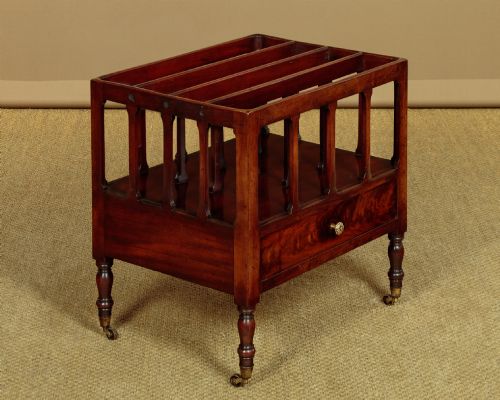
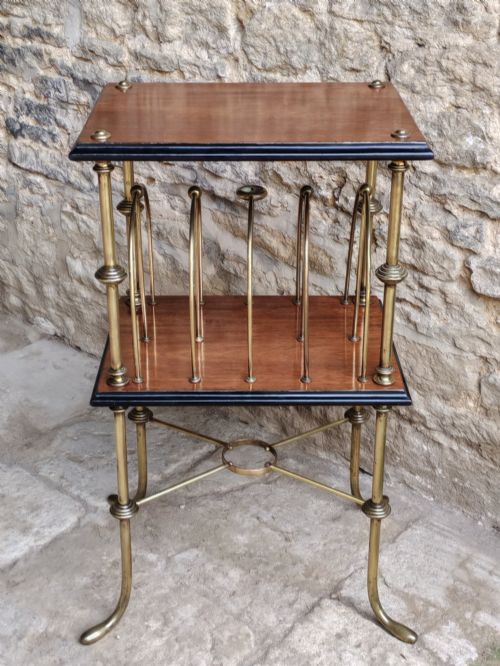
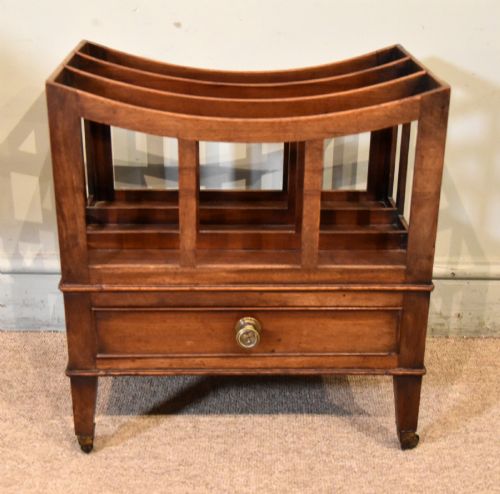
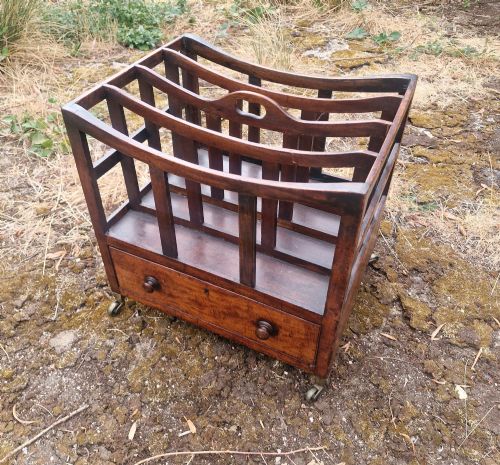
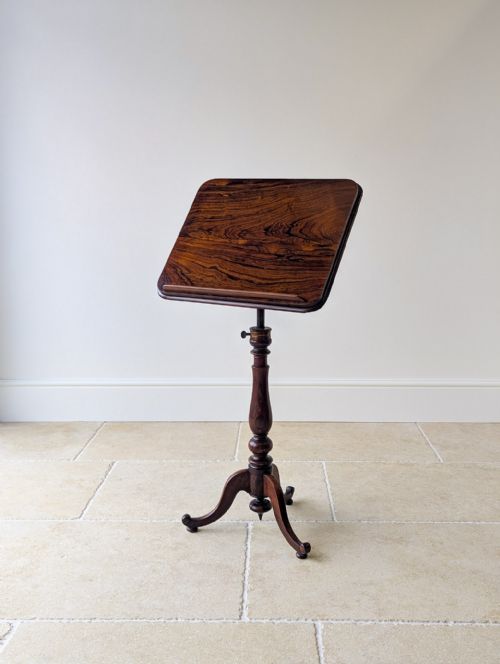
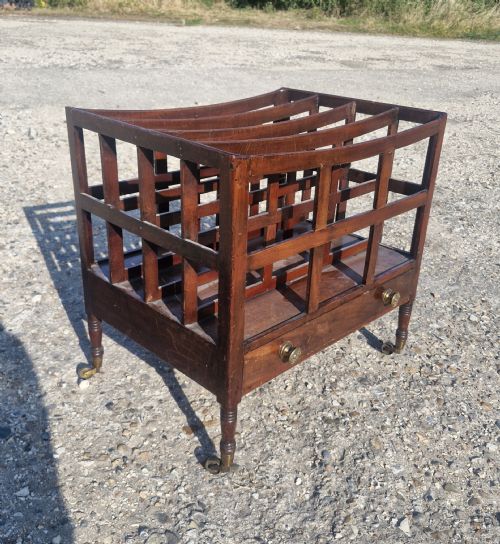
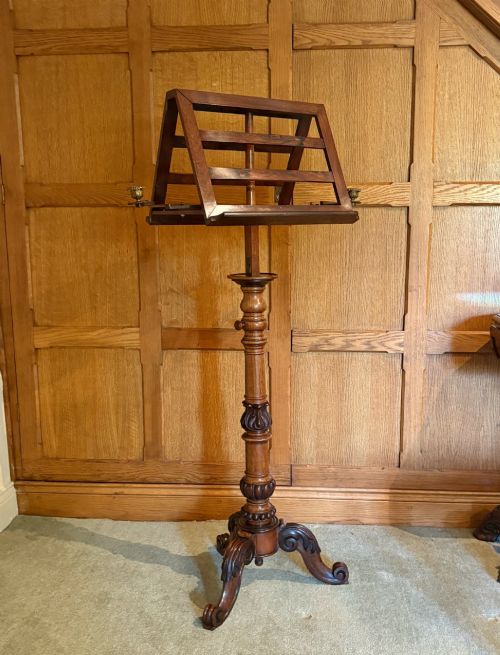
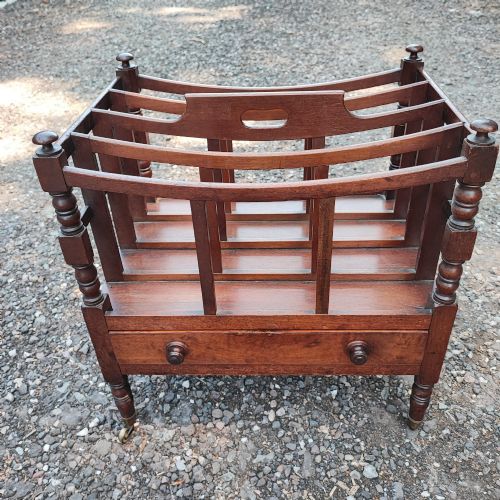
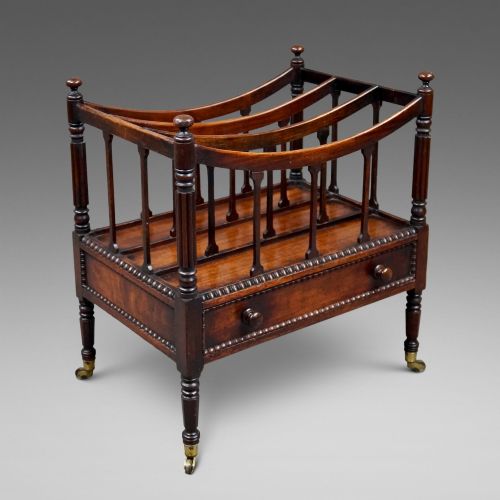
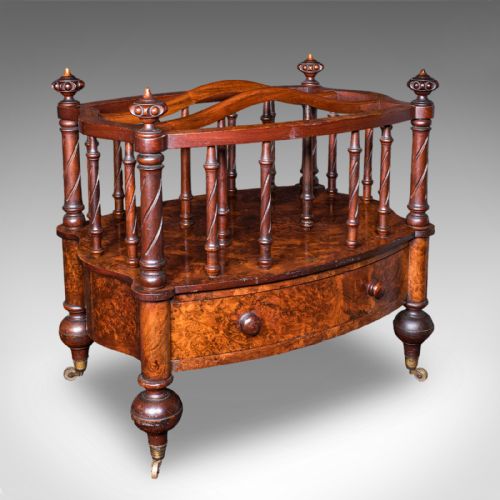
A regency furniture music stand encompasses various forms designed to hold scores, newspapers and books, frequently appearing as canuterburys, whatnots and reading tables. These pieces date primarily from the Regency, George III, George IV and William IV periods through to the Victorian era.
Origins span formal English workshops and country house commissions, executed in rich timbers suited to refined interiors. The selections combine display utility with compartmented storage for daily use.
Materials and construction methods
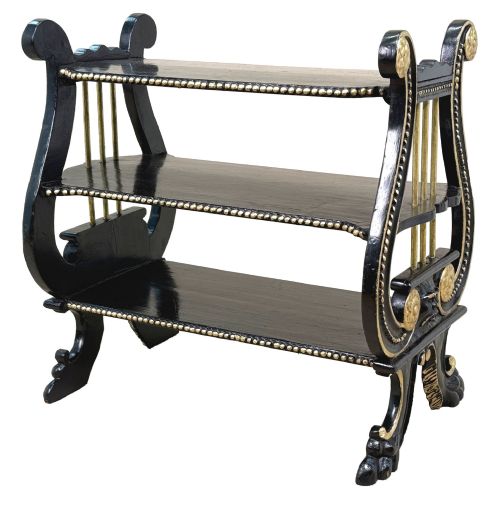
Cabinetmakers utilised dense timbers such as mahogany and rosewood, alongside burr walnut and walnut for figured grain patterns. Ebonised wood and parcel gilt finishes appear on later Victorian variants.
Brass fittings provide structural contrast and mobility via castors, while fine inlay decorates select surfaces. Structural joinery supports slatted partitions for music sheets and tiered shelves for books.
Listings feature mahogany, rosewood and burr walnut across pieces spanning the Georgian, Regency and William IV periods.
Distinctions in craftsmanship
Quality reveals itself in the selection of timbers, where richly figured mahogany or rosewood veneers and solid cuts elevate a piece above standard domestic output. Finer examples display meticulous turning on legs and precise joinery in the slatted divisions.
Design ambition separates basic utility items from superior creations attributed to prominent makers like Gillows. Integrated drawers, carved decorative elements such as Prince of Wales feathers, and balanced proportions signal high workshop standards.
Gillows
The Regency Furniture Music Stand Glossary
- Canterbury
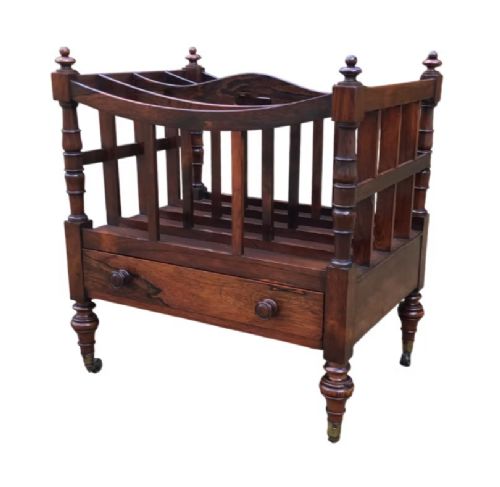
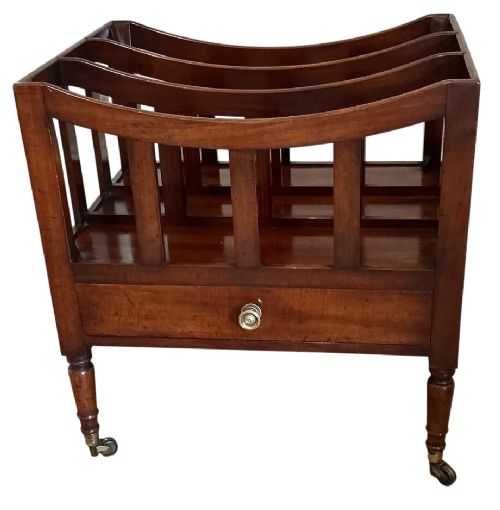
- A low stand featuring divided sections for holding sheet music, newspapers or magazines. It often includes a small drawer below and rests on castors.
- Whatnot
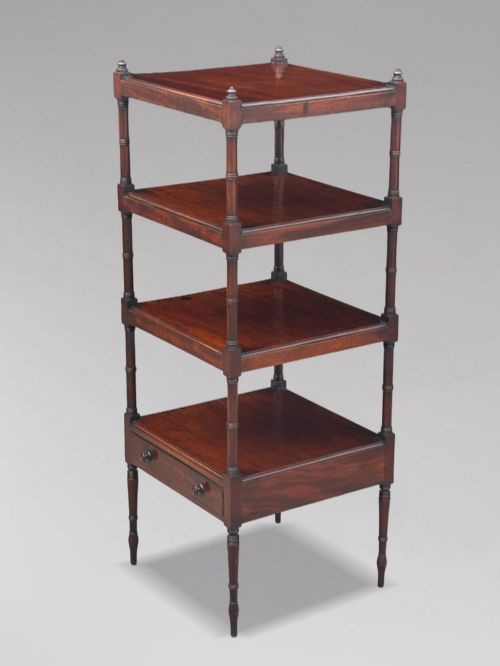
- An open set of tiered shelves used for displaying or storing books and decorative objects. These pieces developed multiple tiers supported by slender columns.
- Étagère
- A French term for a display stand with multiple levels for ornaments and small volumes. They emerged in ebonised wood and gilt finishes during the nineteenth century.
- Reading stand
- A specialised table or stand equipped with an adjustable rest for holding books or folios at a convenient angle. They frequently incorporate occasional table surfaces.
- Inlay
- A decorative technique where contrasting materials are inserted into wood surfaces to form patterns. This embellishment appears on tabletops and framing elements.
Regency Furniture Music Stand: Frequently Asked Questions
What is a regency furniture music stand used for?
These stands provide structured storage for sheet music, folios, newspapers and periodicals within the living space. Compartments keep paper goods sorted and accessible.
Many examples also incorporate reading surfaces or open shelves, serving a dual purpose as occasional tables or display etageres.
How do I identify a period piece?
Examine the timber selection, construction methods and hardware to determine age. Period pieces typically feature solid mahogany or rosewood, hand-cut dovetails and turned wooden supports fitted with original brass castors.
Stylistic cues such as boat-shaped frames or specific leg turnings align with Georgian, Regency or William IV design vocabularies.
Where should I place it at home?
Position these stands beside a piano, armchair or sofa where reading materials and music scores are frequently used. Their compact footprints suit placement in studies, sitting rooms and libraries.
Freestanding designs allow placement away from walls, displaying finished cabinet work from every angle.
What is the difference between a canterbury and a whatnot?
A canterbury focuses on partitioned compartments specifically sized for vertical storage of papers, scores and magazines, often with a low drawer underneath. They prioritise compartmentalised tidying.
A whatnot consists primarily of open horizontal shelves stacked vertically for displaying books and ornaments. They offer tiered surface space rather than divided slots.