





Regency Entryway Seating
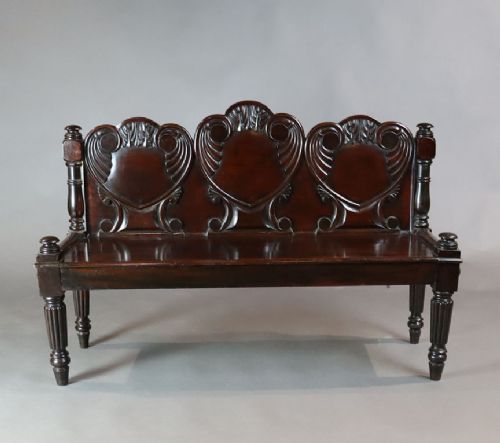
Regency entryway seating brings formal architectural presence to a hallway, offering solid mahogany benches and carved wooden chairs designed to anchor a transition space.
Regency Entryway Seating
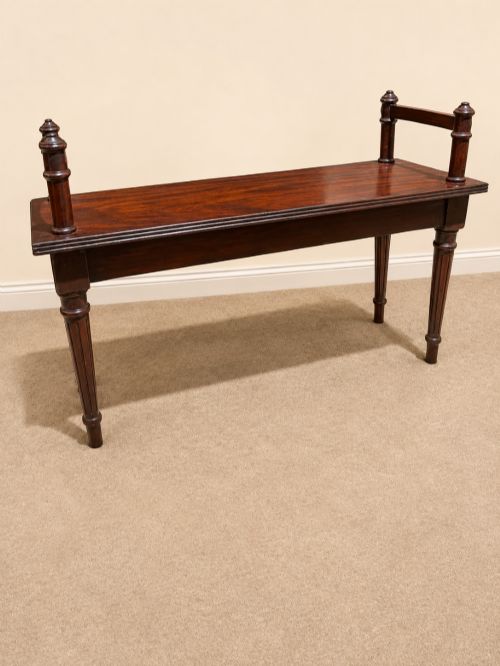
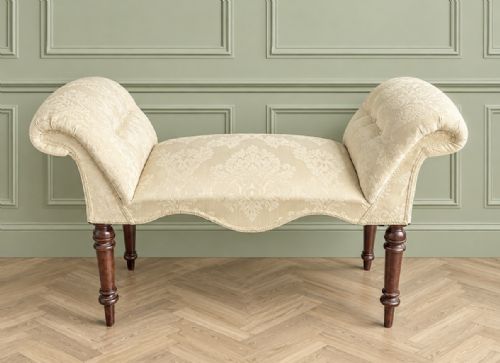
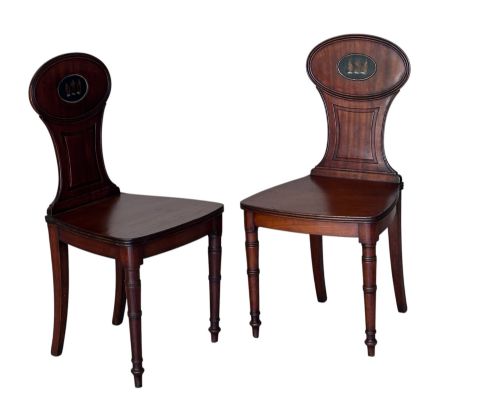
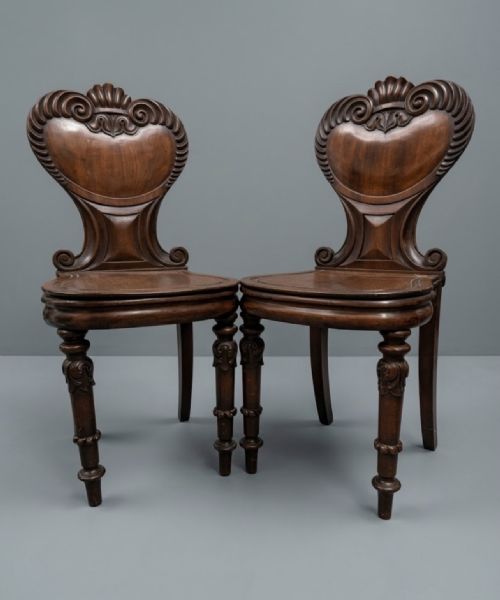
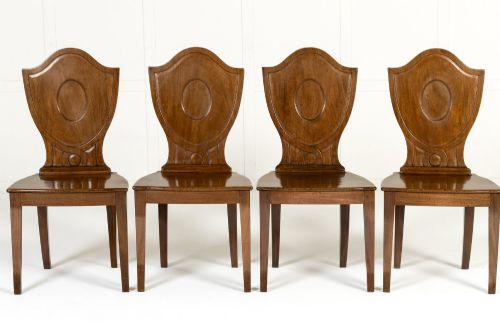
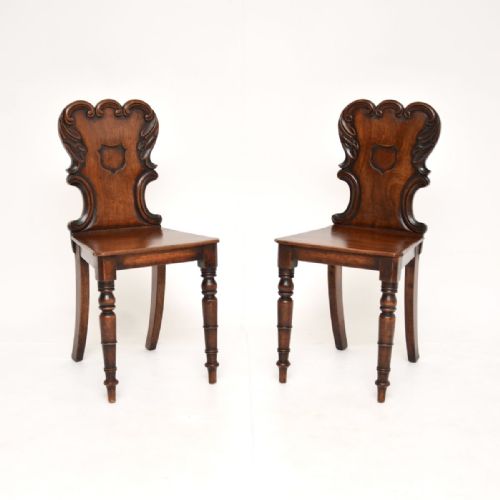
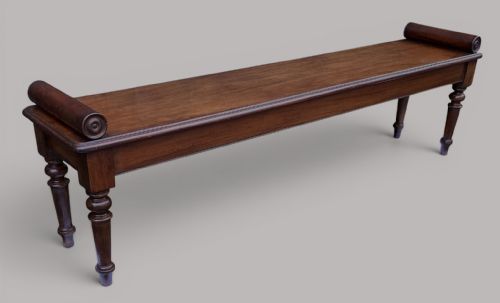
Regency entryway seating comprises firm wooden benches, window seats and individual hall chairs placed in corridors and reception rooms. These pieces serve as functional furniture for visitors waiting in a hall while displaying carved crests and heraldic shields.
The most common forms on this page are mahogany hall chairs, often found in matched pairs or larger sets. Alongside these rigid wooden seats, buyers encounter broader hall benches and window seats spanning several feet in width.
Originating largely from the nineteenth century, these objects bridge late Georgian austerity and the heavier styles of the William IV period. Oak and walnut also appear alongside the dominant mahogany, reflecting British and Scottish cabinet-making traditions.
Construction and materials
Cabinet-makers relied heavily on dense mahogany, shaping solid timber for the distinctive carved backs of hall chairs and the long frames of benches. Brass inlay and painted details occasionally accent the dark wood surfaces.
Joinery methods combined traditional mortise and tenon construction with detailed hand-carving for shell motifs, pelta shapes and armorial crests. Oak and walnut appear in alternative regional examples, shaped with similar attention to structural rigidity.
Regency Entryway Seating Retail Price Guide 2026
Typical asking prices for regency entryway seating among the pieces listed under this phrase on Sellingantiques today, from the lower quarter to the upper quarter. They describe what is for sale here now, not the wider market.
Object forms span individual hall chairs, matched pairs, larger sets, and long benches extending up to six feet in width.
Assessing quality and execution
The distinction between standard utility seating and high-end reception furniture lies in the depth and crispness of the timber carving. Superior examples feature sharply defined armorials, hippocampus motifs or shell backs carved directly from the solid wood rather than applied.
Timber selection dictates the finish, with well-figured mahogany and uniform grain marking superior workshop output. The integrity of the frame construction and the subtlety of brass inlay further separate basic provincial pieces from works attributed to prominent makers.
Gillows
The Regency Entryway Seating Glossary
- Hall chair
- A rigid wooden seat designed for a hallway or reception room, typically featuring a solid timber seat and a carved back bearing a crest or shield. These items were built for display and brief waiting rather than long periods of comfort.
- Pelta back
- A chair back shaped in the form of a classical shield or crescent, popular during the Regency period. This distinctive outline draws on ancient Greek and Roman design motifs.
- Armorial
- A design incorporating a family crest, coat of arms or heraldic badge carved into the wood of the chair back. Such markings indicated the lineage or status of the original owner.
- Window seat
- A long, bench-like form traditionally placed in the recess of a bay or sash window. These pieces share the timber construction and decorative carving of hall benches.
Regency Entryway Seating: Frequently Asked Questions
How were hall chairs used?
Hall chairs stood in the entrance spaces of grand houses to seat visitors waiting to be announced. They were intentionally unpadded and upright to discourage lingering.
Servants and messengers also used these sturdy wooden seats while attending the door. Their design prioritized formal presentation over physical comfort.
Where should I place a hall bench?
A hall bench suits narrow corridors, grand entryways or wide landings where furniture needs to sit flush against a wall. Their shallow depth allows them to occupy circulation space without blocking movement.
They also function effectively beneath windows or as accent pieces in large reception rooms. The linear form anchors empty wall space while offering a practical perch.
How do I identify a Regency piece?
Regency items exhibit classical revival motifs such as pelta backs, reeded legs and carved scrollwork inspired by ancient Roman and Greek archaeology. The timber is predominantly dark, dense mahogany with minimal upholstery.
Proportions remain restrained and architectural, steering clear of the heavy ornamentation found in later Victorian production. Construction relies on solid wood frames with hand-carved details.
Are these seats comfortable?
These seats are firm and upright, built with solid wood bases rather than sprung or stuffed cushions. They are intended for short periods of waiting in an entrance hall.
Adding a loose squab cushion in a complementary fabric can soften the wooden seat for everyday domestic use. Most buyers prioritize their sculptural silhouette and historical presence over lounging comfort.