

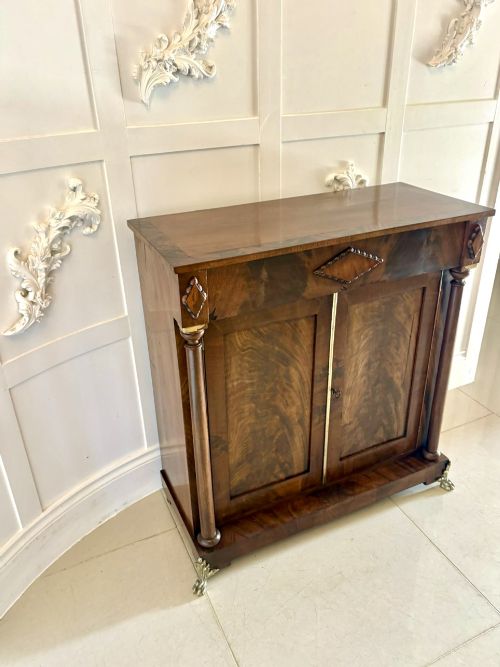


Regency Dining Room Storage
Regency dining room storage delivers serious architectural presence and timeless utility to the home, pairing rich timbers with classical proportions.
Regency Dining Room Storage
Regency dining room storage comprises case furniture designed for the formal dining rooms of the early nineteenth century. Sideboards, chiffoniers, wine coolers, cellarettes, and cupboards dominate this category.
Buyers most frequently encounter mahogany sideboards and chiffoniers from the Regency and William IV periods. These sturdy forms served to house silver, linen, and wine during grand dinners.
The objects span the nineteenth century, reflecting the evolution of dining customs from the year eighteen hundred through to mid-century designs. Rosewood and flame mahogany examples sit alongside palisander pieces on this page.
How they were made
Cabinet makers utilised solid mahogany and rosewood, often applying flame mahogany veneers to create striking grain patterns on drawer fronts and cupboard doors. Boxwood stringing and brass mounts provided sharp linear contrast against the dark timbers.
Specialised vessels like wine coolers and sarcophagus cellarettes required secure internal framing to hold heavy bottles safely. Ebonised wood details and fabric elements further enriched the construction of these refined dining room pieces.
Regency Dining Room Storage Retail Price Guide 2026
Typical asking prices for regency dining room storage among the pieces listed under this phrase on Sellingantiques today, from the lower quarter to the upper quarter. They describe what is for sale here now, not the wider market.
Object types span across sideboards, wine coolers, cellarettes, chiffoniers, credenzas, cabinets, and two-door cupboards.
What varies in quality
The selection of timber dictates the visual impact, with figured mahogany and book-matched rosewood veneers sitting at the upper end of the scale. Subtle details like boxwood inlay and finely cast brass handles distinguish superior examples from simpler utilitarian cupboards.
Proportion and execution define the difference between standard cabinet work and exceptional pieces. Well-balanced bow-front sideboards and sharply carved sarcophagus wine coolers show the hand of skilled workshops.
The Regency Dining Room Storage Glossary
- Sideboard
- A long dining room table or cabinet with drawers and cupboards used for serving food and storing tableware. These pieces anchor the dining room with substantial proportions.
- Chiffonier
- A low cabinet featuring shelves or enclosed storage, evolving during the nineteenth century into a versatile side piece. Rosewood and mahogany versions are common.
- Cellarette
- A lockable container designed to hold wine bottles securely beneath the dining table or sideboard. Sarcophagus shapes reflect classical architectural influences.
- Palisander
- A dense, dark exotic timber related to rosewood, utilised for its rich colour and distinctive grain. It appears on substantial nineteenth-century sideboards.
- Flame mahogany
- A veneer cut from the fork of the mahogany tree, producing a flickering flame-like pattern. Cabinet makers used this to draw the eye to primary surfaces.
Regency Dining Room Storage: Frequently Asked Questions
What is a cellarette?
A cellarette is a dedicated storage box or chest built to keep wine bottles cool and secure in the dining room. Many examples take a sarcophagus shape with heavy timber construction.
These containers sat beneath sideboards or near the dining table during formal meals. They combined practical utility with classical decorative motifs.
What timber was most popular?
Mahogany is the predominant timber found in these dining room storage pieces, appearing in solid form and as figured or flame veneers. Its rich red-brown tones defined the Regency interior.
Rosewood and palisander also feature prominently, offering darker hues and dramatic grain patterns for high-status commissions.
How do I style a sideboard?
A Regency sideboard functions well as a focal point in a traditional or eclectic dining room. Its deep drawers and cupboards offer practical storage for modern tableware and linens.
Pairing the piece with appropriate lamps or decorative ceramics highlights the figured wood grains and brass mounts.