

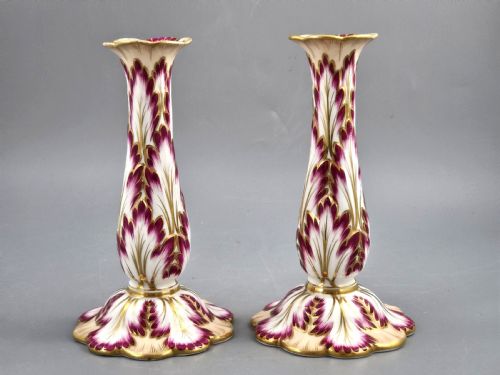


Regency Decorative Candlesticks
Regency decorative candlesticks bring the formal discipline and rich metallic contrast of the early nineteenth century straight onto the table.
Regency Decorative Candlesticks
When you search for regency decorative candlesticks, you encounter a focused group of lighting pieces dating predominantly from the Regency and nineteenth century periods. These items range from standard pairs designed for formal dining tables to single chambersticks and converted table lamps.
The prevailing form on this page follows Neoclassical and French Empire lines, drawing heavily on classical antiquity. You will find column shapes, figural bases such as putti and dolphins, and classical Athenienne forms that reflect the architectural tastes of the era.
Materials span cast metals and ceramics, often paired within a single piece to create striking visual contrast. Most entries represent matched pairs, intended originally for symmetrical placement on mantelpieces or sideboards.
Construction and materials
The physical construction relies heavily on cast bronze, brass, and copper, frequently enhanced by ormolu highlights and gold gilt. Patinated bronze surfaces provide a dark, matte contrast against polished gilding or bright brass components.
Ceramic elements appear in the form of porcelain bodies, enamel details, and occasional marbleised finishes on standard lamps. Old Sheffield plate provides a silvered alternative to solid brass, while porcelain pieces from makers like Ridgway and Minton incorporate moulded foliage and figural motifs.
Regency Decorative Candlesticks Retail Price Guide 2026
Typical asking prices for regency decorative candlesticks among the pieces listed under this phrase on Sellingantiques today, from the lower quarter to the upper quarter. They describe what is for sale here now, not the wider market.
Current listings feature items spanning the Regency, Georgian, and French Empire styles, executed in bronze, ormolu, brass, and porcelain.
Assessing quality
Quality in these pieces rests primarily in the crispness of the casting and the depth of the chasing. Finer examples exhibit sharp relief in foliage, figural limbs, and architectural fluting, whereas lesser pieces show softer, worn contours from repeated polishing or secondary moulding.
The handling of mixed materials also defines the tier of the piece. Superior items combine patinated bronze and fire-gilded ormolu with secure mechanical joins, while standard production relies on simpler single-metal construction or basic ceramic moulding.
Ridgway·Minton
The Regency Decorative Candlesticks Glossary
- Ormolu
- Gilded bronze produced through a mercury amalgamation technique, creating a durable, warm metallic lustre. This finish appears frequently on high-status nineteenth-century metalwork.
- Chamberstick
- A low candlestick fitted with a wide drip pan and a loop handle for carrying from room to room. These domestic items were essential for lighting bedchambers before gas and electric illumination.
- Patinated bronze
- Bronze that has been chemically treated to develop a dark, stable surface coloration. This finish reduces glare and highlights brighter gilded mounts.
- Athenienne
- A tripod stand or censer form adapted from classical Greek and Roman archaeology for domestic furniture and lighting during the Neoclassical revival. It remains a marker of high Regency design.
- Taper candlestick
- A slender candlestick specifically scaled for holding thin wax tapers used in sealing letters or lighting pipes. These items generally possess smaller sockets than standard dining candlesticks.
Regency Decorative Candlesticks: Frequently Asked Questions
How were these candlesticks used?
These pieces provided primary task lighting for dining rooms, drawing rooms, and bedchambers during the early nineteenth century. Paired examples stood symmetrically on mantelpieces or sideboards to reflect candlelight across the room.
Smaller variants such as chambersticks and taper candlesticks served portable functions, moving easily from room to room or resting on desks for sealing correspondence.
What defines the Regency style here?
The style draws directly from Neoclassical and French Empire vocabularies, favouring strict symmetry, architectural columns, and classical iconography. Motifs include dolphins, putti, and tripod Athenienne frames.
Metals are frequently contrasted through dark patinated bronze paired with bright ormolu or gold gilt, creating a formal visual rhythm.
Are these pieces electrified?
The selection includes original candlesticks alongside pieces that have been converted into table lamps or standard lamps. Conversions generally involve adapting the socket or running a cord through the central column.
Buyers should inspect the individual listing details to confirm whether a piece retains its original candle socket or houses modern electrical fittings.
How do I distinguish brass from ormolu?
Solid brass has a uniform yellow metallic composition throughout and polishes to a bright golden hue. Ormolu consists of a bronze base covered with a layer of gold gilt, producing a deeper, richer lustre that does not tarnish in the manner of brass.
Cast bronze beneath ormolu also yields much sharper sculptural detail than standard commercial brass casting.