




Regency Console Mirror
A regency console mirror brings classical elegance to a room, pairing reflective glass with substantial wood to anchor a formal interior.
Regency Console Mirror
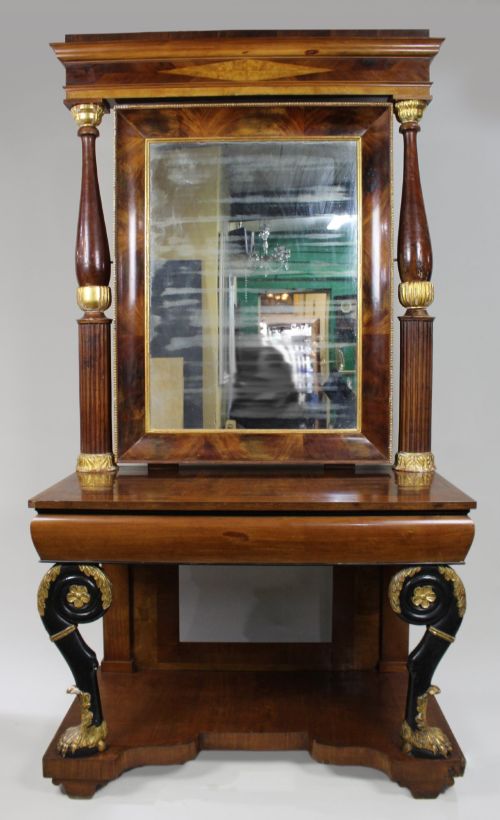
A regency console mirror arrangement typically pairs a wall-mounted or pier glass with a matching console table, side cabinet, or chiffonier beneath it. The pieces documented here span the nineteenth century, encompassing Regency, William IV, Victorian, and later revival styles.
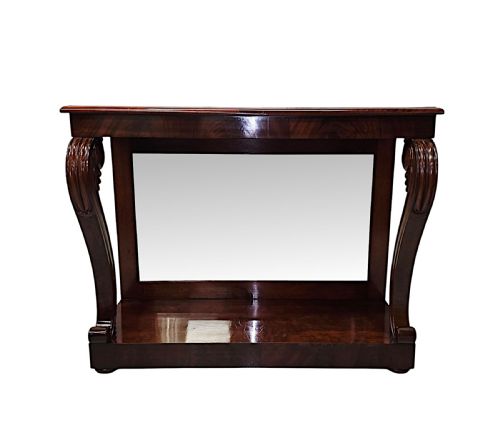
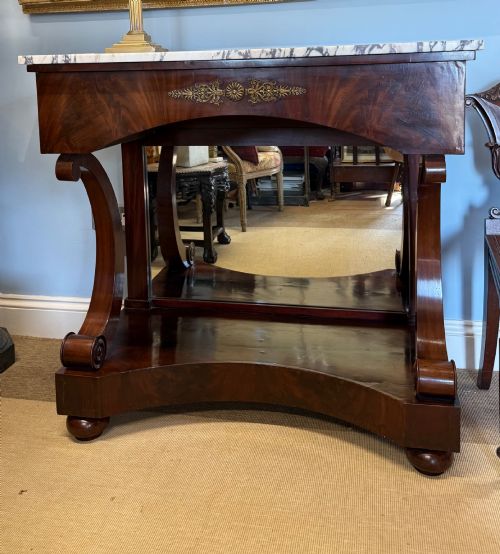
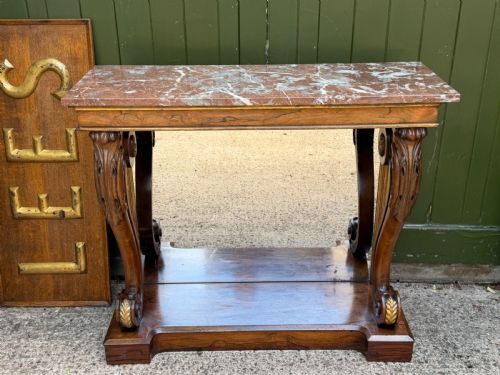
The most common forms on this page include mahogany and rosewood console tables featuring integrated mirror backs, marble tops, and giltwood accents. Variations extend to pier mirrors paired with console tables, alongside Irish Regency and Egyptian Revival interpretations.
Materials and Construction
Cabinetmakers utilised dense timbers like mahogany and rosewood, frequently incorporating flame veneers and satinwood details to create rich surface patterns. Structural designs often featured heavy marble tops supported by carved woodwork and parcel-gilt highlights.
Mirrors were constructed using silvered glass plates set within carved giltwood frames or integrated directly into cabinet backs. Brass mounts, water-gilding, and painted finishes further enhanced the decorative scheme of these tables and wall units.
Regency Console Mirror Retail Price Guide 2026
Typical asking prices for regency console mirror among the pieces listed under this phrase on Sellingantiques today, from the lower quarter to the upper quarter. They describe what is for sale here now, not the wider market.
Some tables feature carved wooden dolphins gazing steadfastly into the mirror, ensuring your room comes with its own aquatic sentinels.
Assessing Craftsmanship and Design
Quality separates pieces through the selection of timber veneers, such as richly figured flame mahogany and rosewood, paired with heavy marble slabs. Superior examples display crisp carving on giltwood elements and well-integrated mirror backs rather than plain construction.
Design complexity also defines the upper range, with distinct regional and revival characteristics like Egyptian Revival motifs, dolphin carvings, or attribution to notable workshops. The integration between the console base and the matching mirror demonstrates the maker's original intent.
Gillingtons of Dublin
The Regency Console Mirror Glossary
- Console Table
- A table designed to stand against a wall, frequently supported by brackets or front legs and paired with a matching mirror.
- Pier Mirror
- A tall glass mirror manufactured specifically to hang on the wall space between windows, often placed directly above a console table.
- Parcel Gilt
- A surface decoration technique where only specific carved details or raised ornaments are covered in gold leaf while the wood remains visible.
- Chiffonier
- A small sideboard or cabinet featuring shelves or a mirror back, common in nineteenth-century interiors.
- Water Gilding
- A traditional framing technique using liquid size and gesso to adhere thin gold leaf to a wooden substrate for burnishing.
Regency Console Mirror: Frequently Asked Questions
What is a regency console mirror?
A regency console mirror is a decorative furniture combination featuring a wall-hanging glass mirror displayed directly above a matching console table or base cabinet.
These pieces were designed to sit flat against a wall, frequently positioned between windows or beneath architectural cornices to reflect light around a formal nineteenth-century room.
How were console mirrors used originally?
In nineteenth-century interiors, these combinations served both practical and aesthetic functions by bouncing natural daylight from windows into darker corners of reception rooms.
The marble-topped tables below the glass also provided a surface for decorative ornaments, candelabra, or calling card trays in grand entrance halls and drawing rooms.
How do I live with a console mirror?
Living with these pieces involves anchoring them securely to a wall, especially when supporting heavy marble-topped console tables or tall pier glasses.
Keep them away from direct heat sources and strong sunlight to protect the fragile giltwood frames and delicate rosewood or mahogany polished finishes.
How do I identify different periods?
Distinguishing between Regency, William IV, and later Victorian revivals requires looking at timber choices, carving styles, and decorative motifs like Egyptian revival details.
Earlier nineteenth-century pieces often favor refined rosewood and delicate parcel-gilding, while later Victorian or mid-century examples incorporate heavier proportions and alternative regional interpretations.