





Regency Commode Tables
Regency commode tables bring functional elegance to the bedroom, offering clever storage disguised as fine cabinet-making.
Regency Commode Tables
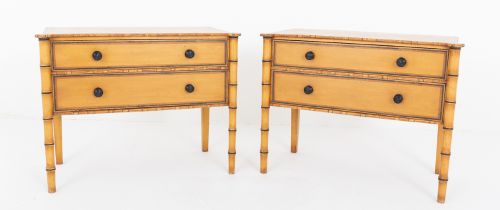
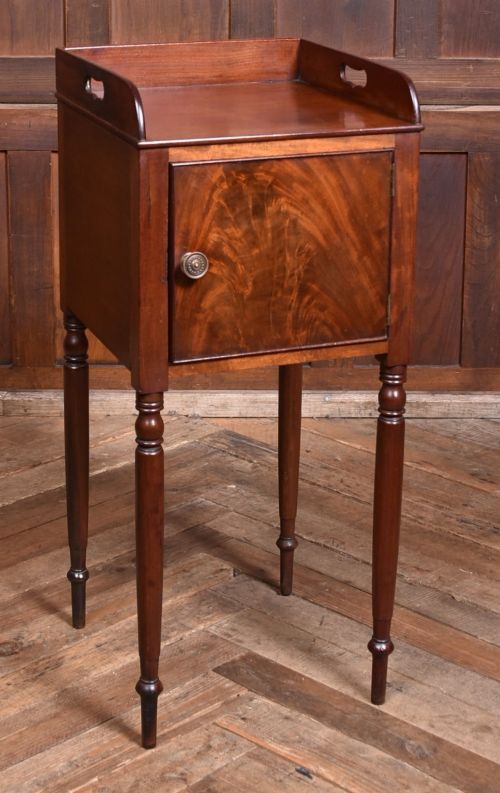
When you search for regency commode tables, you encounter compact bedroom furniture designed for practical use and discreet storage. These pieces bridge the late Georgian era through to the William IV period, appearing as bedside tables, cabinets, and nightstands.
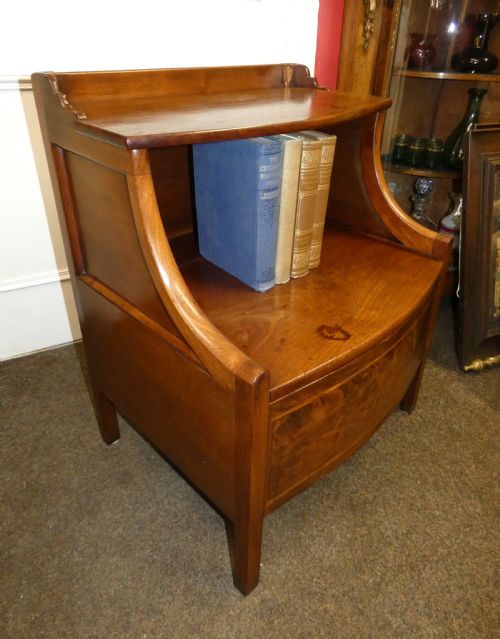
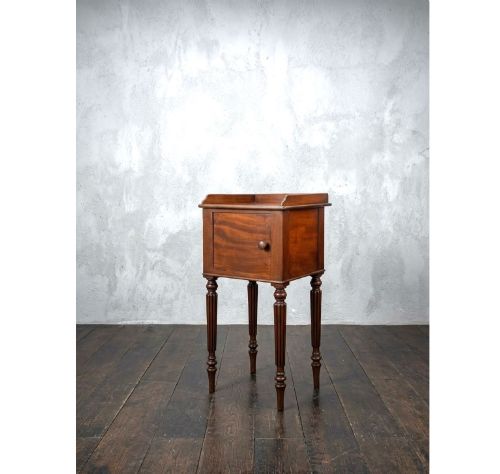
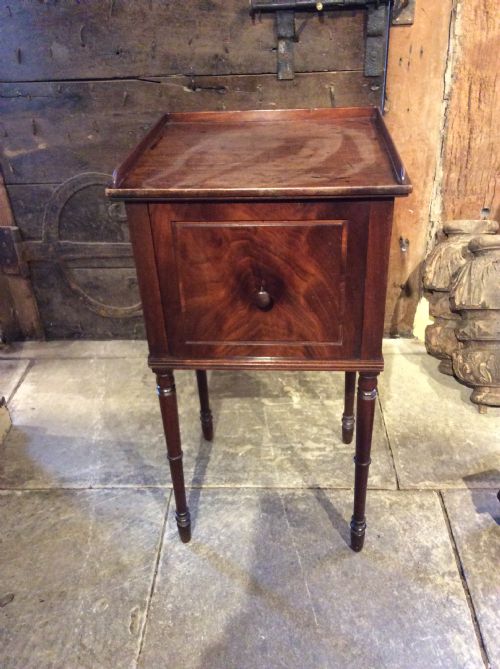
The most common formats on this page are cylindrical cupboards, tray top pot cupboards, and bow fronted commodes. Makers constructed these items to fit neatly beside a bed while concealing chamber pots or providing useful surface space.
How they were made
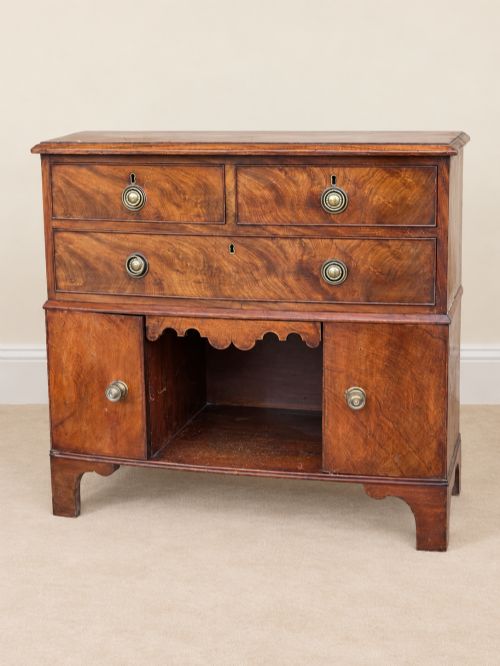
Cabinet-makers relied heavily on solid timber and rich veneers to build these pieces, utilising mahogany as the primary structural and visual medium. Craftsmen selected striking grain patterns for visible surfaces, applying flame mahogany veneer to doors and drawer fronts for dramatic visual depth.
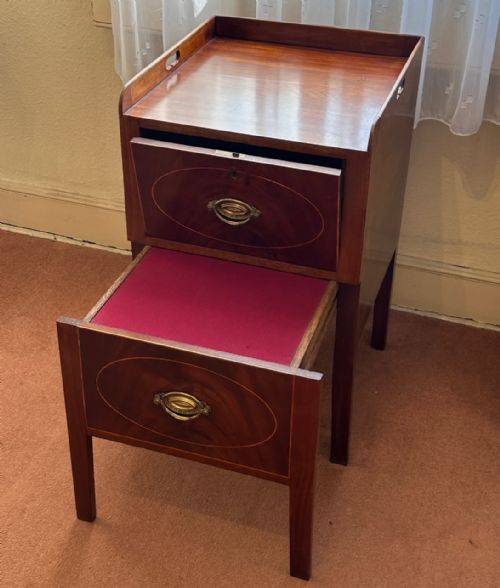
Detailing often included fine boxwood inlay and contrasting stringing, alongside functional brass handles and pull-out steps. Structural integrity came from traditional joinery suited to daily bedroom use, paired with enclosed cupboards and tray tops to contain spills.
Regency Commode Tables Retail Price Guide 2026
Typical asking prices for regency commode tables among the pieces listed under this phrase on Sellingantiques today, from the lower quarter to the upper quarter. They describe what is for sale here now, not the wider market.
One remarkably civilised Regency bedside cabinet even includes a hidden pull-out step, ready for those struggling to climb into a towering historical bed.
What varies in quality
Quality in these bedside pieces rests upon the choice of timber and the precision of the cabinet-maker. Superior examples display carefully matched flame mahogany veneers and crisp boxwood inlay that elevate a utilitarian object into high-style furniture.
Refinement also shows in thoughtful mechanical details, such as smooth-operating pull-out steps and well-fitted cylindrical doors. Simpler pieces rely on plain mahogany planks and straightforward joinery without decorative stringing or complex curves.
The Regency Commode Tables Glossary
- Commode
- A movable piece of furniture containing drawers or doors, historically used as a bedside cabinet or to house a chamber pot. In this context, it refers to compact bedroom storage.
- Flame mahogany
- A highly figured wood veneer featuring a distinct flame-like pattern caused by the grain intersecting at a branch junction. Cabinet-makers reserved this premium material for prominent exterior surfaces.
- Pot cupboard
- A small enclosed bedside cabinet specifically designed to hold a chamber pot. These pieces usually feature a door and a shelf inside.
- Boxwood inlay
- A decorative technique involving contrasting light-coloured wood inserted into recesses in the primary timber. This creates delicate borders and geometric lines.
- Tray top
- A raised rim around the upper surface of a table or cabinet. This design prevents items from rolling off the edge during daily use.
Regency Commode Tables: Frequently Asked Questions
What is a regency commode table?
A regency commode table is a small bedroom cabinet or nightstand produced during the early nineteenth century. These pieces typically feature enclosed storage behind a door and served practical functions in period bedrooms.
Craftsmen built them from mahogany, often incorporating flame veneer and boxwood stringing to match the fashionable interiors of the era.
How do I identify a Regency period piece?
Regency pieces date from the early nineteenth century and often exhibit classical restraint alongside rich mahogany surfaces. Look for specific stylistic cues such as cylindrical bodies, bow fronts, and refined boxwood inlay.
Construction methods also help, as nineteenth-century cabinet-makers used specific jointing and timber preparation techniques typical of the workshop.
Where should I place a bedside commode today?
These compact cabinets fit naturally beside a modern bed as functional bedside tables with enclosed storage. Their traditional proportions also allow them to serve as small accent tables in hallways or tight spaces.
The flat top provides a convenient surface for lamps while the interior cupboard conceals small personal items.