
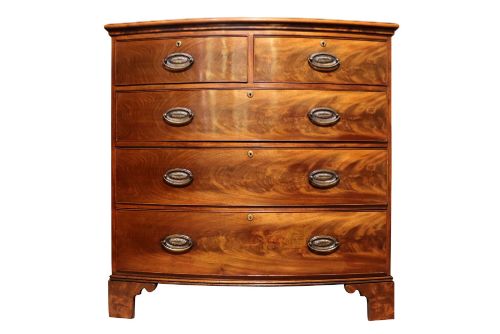
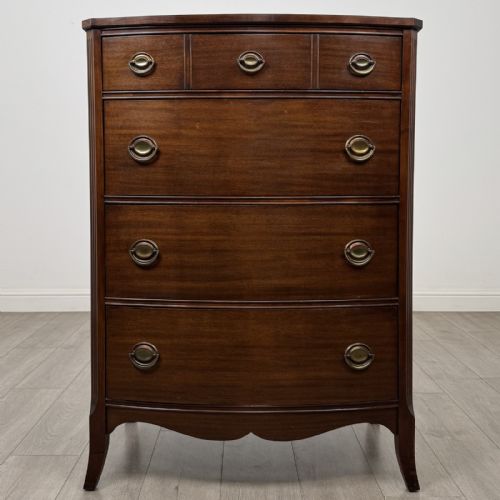
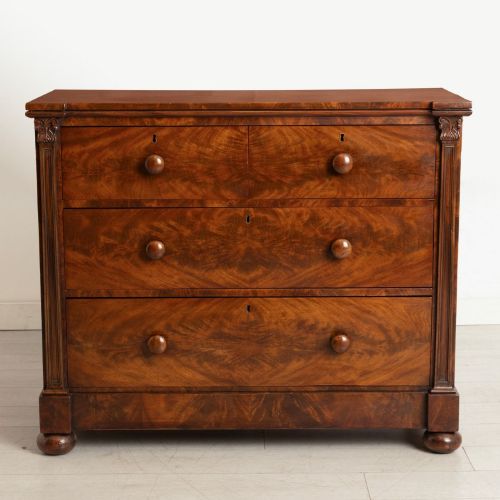
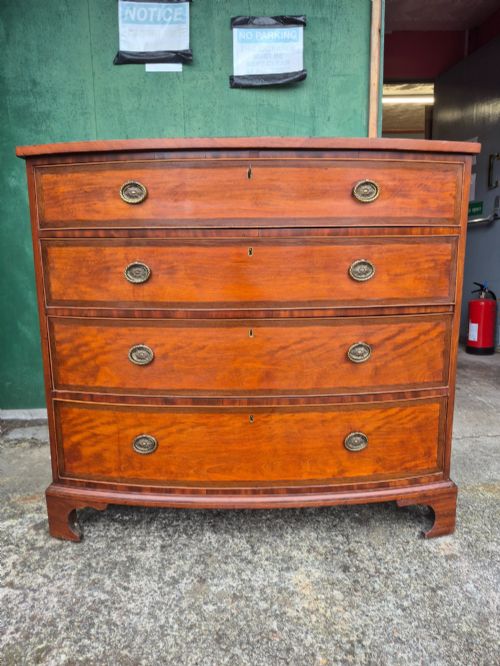

Regency Commode Chest
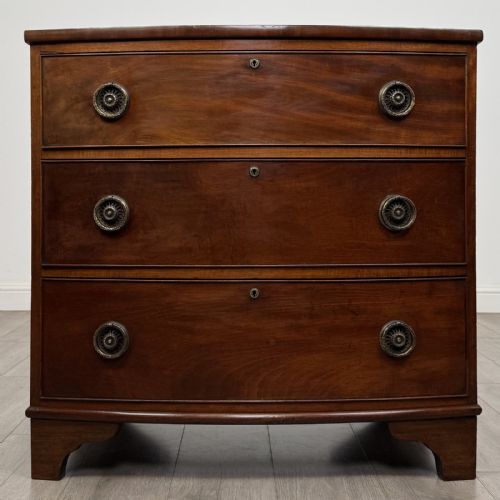
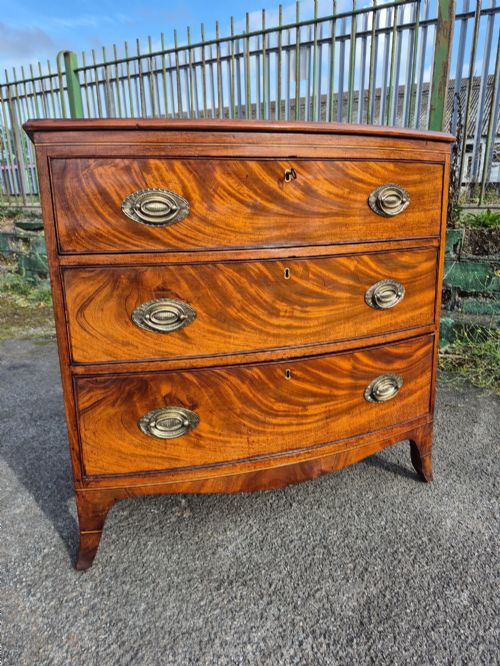
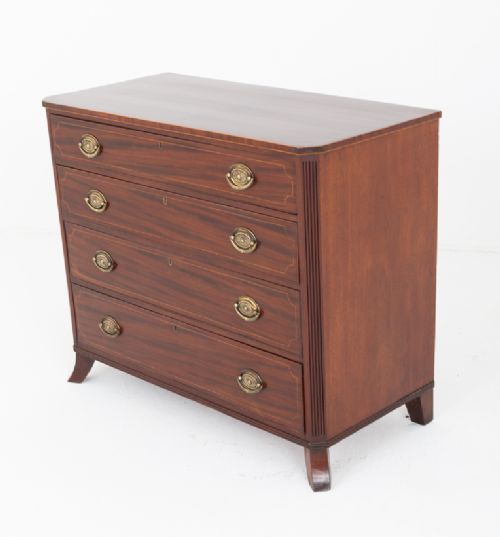
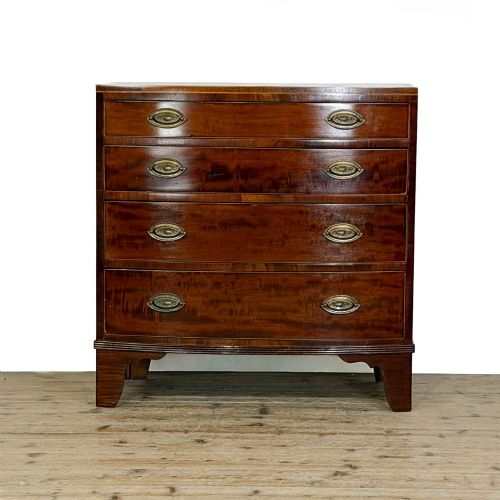
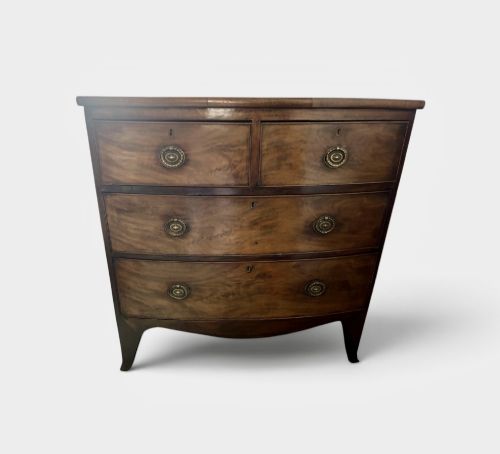
A regency commode chest offers refined storage through curved mahogany fronts and precise brass detailing.
Regency Commode Chest
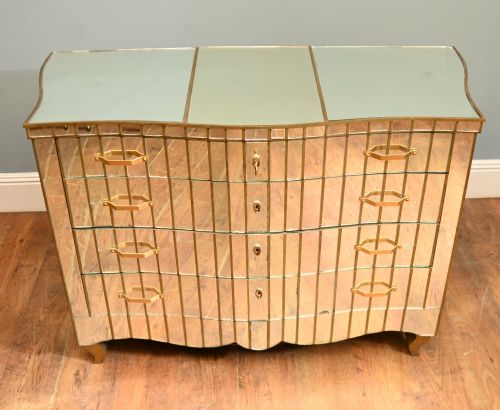
A regency commode chest provides practical bedroom or living space storage with distinctive period proportions. Buyers seeking this form encounter pieces primarily from the nineteenth century, including Georgian and Regency eras, alongside later revivals from the nineteen-twenties and nineteen-thirties.
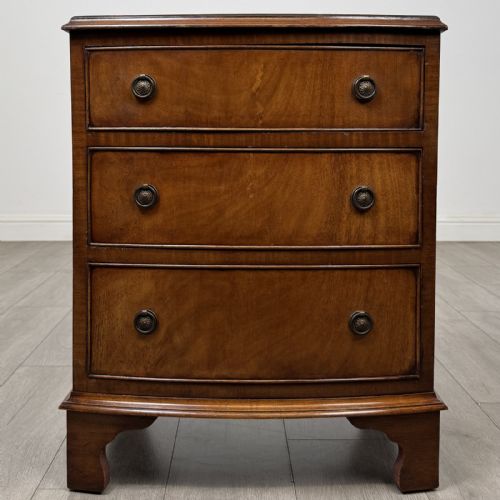
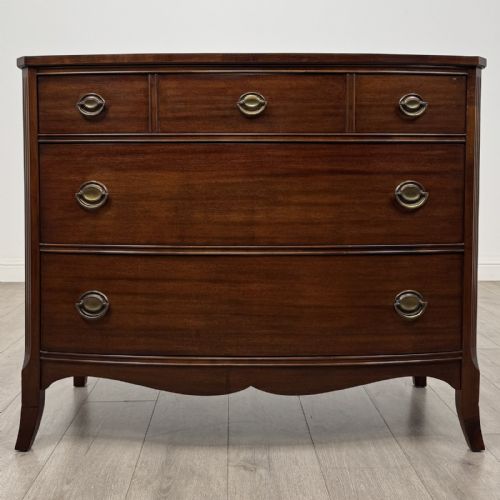
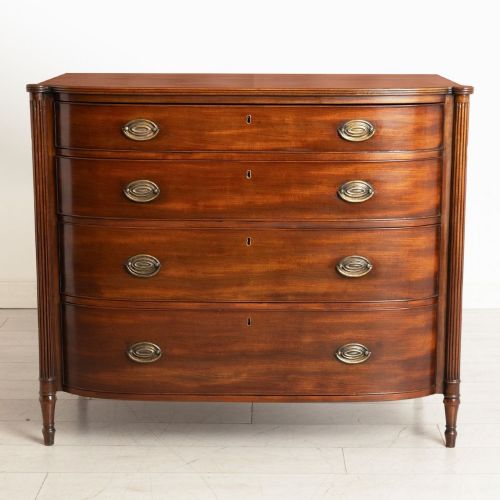
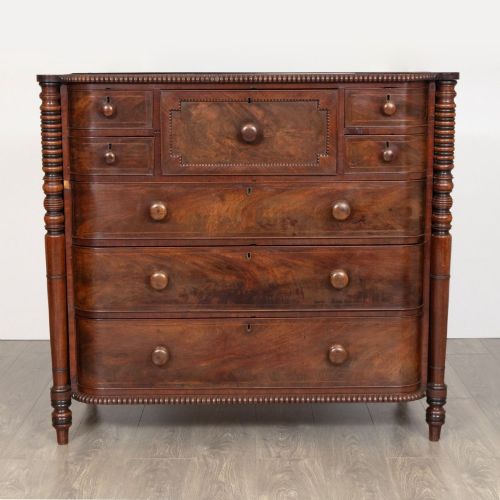
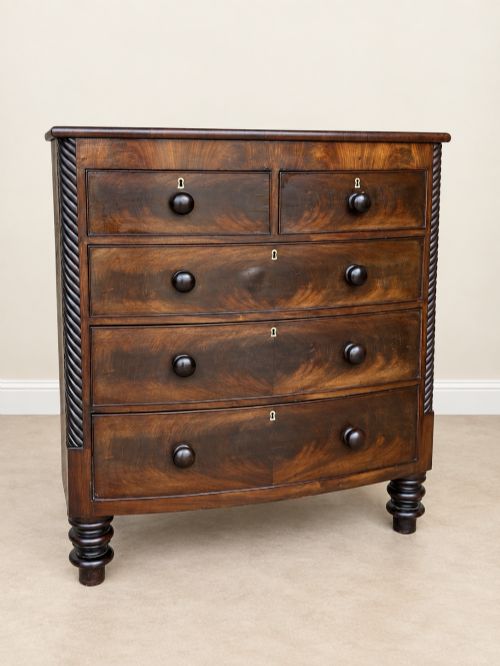
The prevailing format on this page is the bow-fronted chest of drawers, frequently constructed in mahogany and occasionally featuring satinwood banding. Variations range from small scaled examples to larger four-drawer and five-height storage configurations.
Origin points encompass English and Scottish workshops, utilising traditional carcases of oak or pine beneath fine cabinet timbers. Occasional stylistic alternatives include Empire, William IV, and Art Deco interpretations.
Materials and construction methods
Cabinet makers relied heavily on solid and veneered mahogany, often selecting figured or flame mahogany boards for drawer fronts to create striking grain patterns. Satinwood provided contrast through crossbanding and inlay work, while secondary woods such as oak and pine formed drawer linings and internal carcases.
Structural hardware typically involved cast brass handles mounted to bracket feet or swept apron bases. Surface finishes applied to painted wood examples utilised original pigments, while standard timber pieces received polished wax treatments to highlight the natural grain.
One unexpected variation steps away from timber entirely to embrace a whimsical faux bamboo finish.
Distinctions in craftsmanship
Quality diverges according to the precision of timber selection and the restraint of decorative banding. Superior pieces display carefully matched flame mahogany veneers and crisp satinwood crossbanding that follow the curve of the bow front without distortion.
Joinery standards separate standard production from exceptional cabinet work, particularly in the hand-cut dovetailing of drawer carcases and the retention of original brass handles. The integration of secondary timbers like oak for drawer linings indicates higher workshop origins.
Gillows
The Regency Commode Chest Glossary
- Bow front
- A convex curved cabinet front that projects outward from the centre, popular in Regency furniture design.
- Crossbanding
- A narrow strip of veneer laid perpendicularly to the grain of the surrounding surface, often in a contrasting wood such as satinwood.
- Flame mahogany
- A veneer cut from the fork of a mahogany tree that produces a distinctive, flickering flame-like grain pattern.
- Caddy top
- A raised or moulded table top with an indented profile, reminiscent of the lid found on tea caddies from the period.
- Bracket feet
- Small, foot supports projecting from the corners of a piece, shaped in an L-bracket profile.
Regency Commode Chest: Frequently Asked Questions
What defines a regency commode chest?
These pieces are formal storage chests featuring prominent curved or bow fronts, typically built during the early nineteenth century. They combine structural utility with decorative cabinet timbers.
They serve primarily as bedroom or hallway storage, providing deep drawer capacity while occupying minimal floor space due to their tapered proportions.
How do I identify a Regency period piece?
Look for characteristic timber choices such as figured mahogany paired with satinwood banding and original cast brass hardware. Proportions tend to be neat and architectural.
Check the internal drawer construction for hand-cut dovetails and secondary woods like oak or pine, which support authenticity.
Where were these chests made?
The majority originate from English and Scottish cabinet-making traditions, reflecting regional stylistic preferences. Scottish workshops frequently utilised striking flame mahogany.
Regional differences appear in the height of the carcase and the shaping of the bracket feet or apron bases.
How should I care for mahogany surfaces?
Maintain the timber by applying natural beeswax periodically and buffing with a soft cloth. Avoid placing pieces near direct heat sources or strong sunlight.
Keep humidity levels stable to prevent movement in the solid wood carcases and delicate veneer panels.