
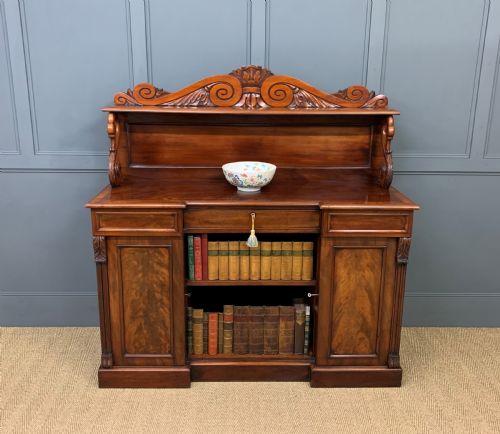
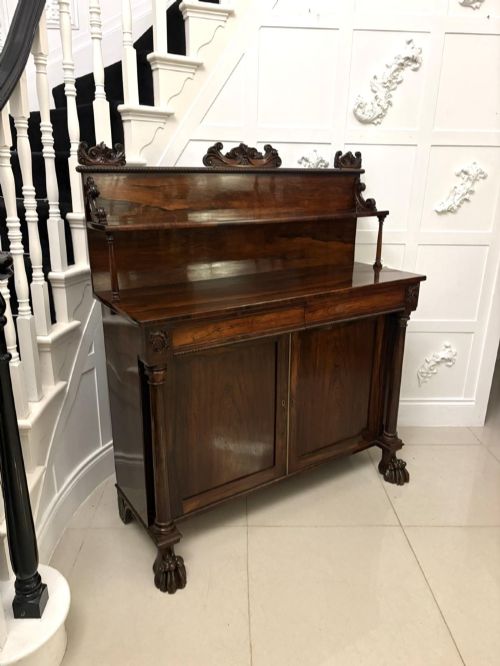
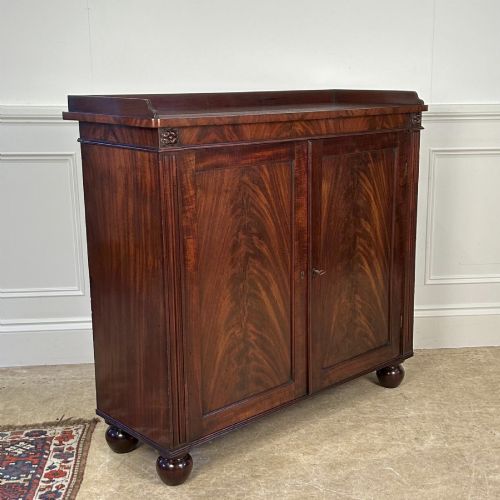
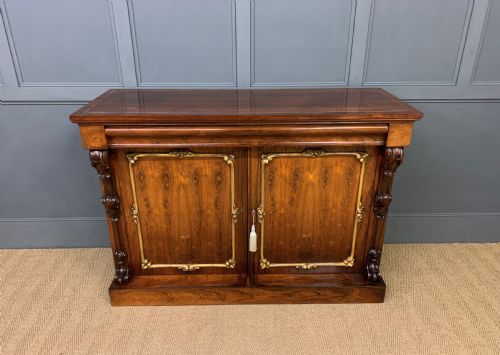
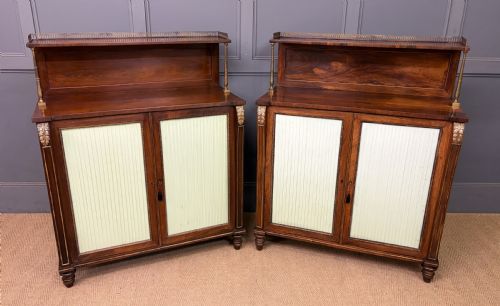


Regency Carved Chiffonier
A regency carved chiffonier brings the refined joinery of the early nineteenth century into a modern room with low cupboards and open shelving.
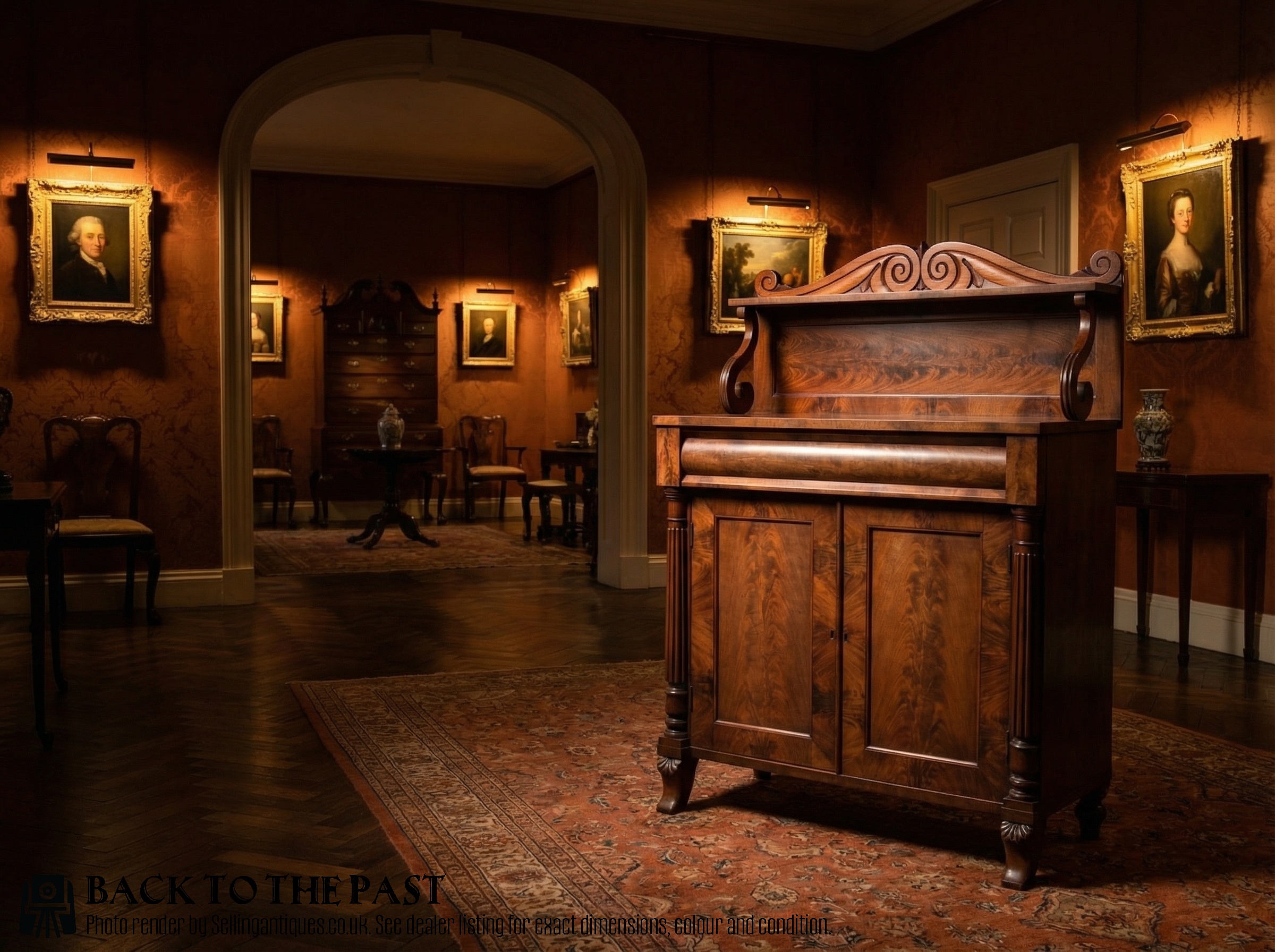
Regency Carved Chiffonier
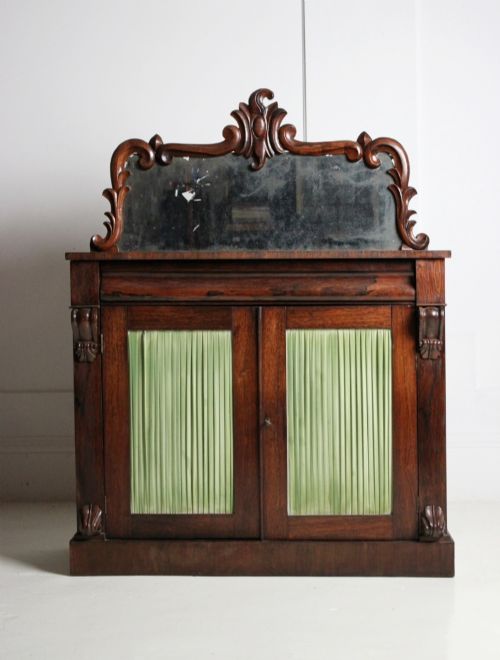
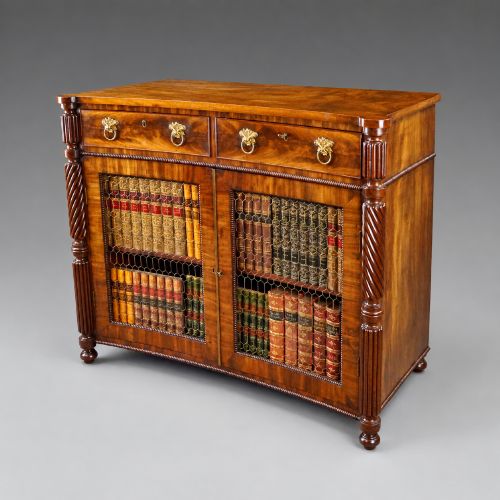
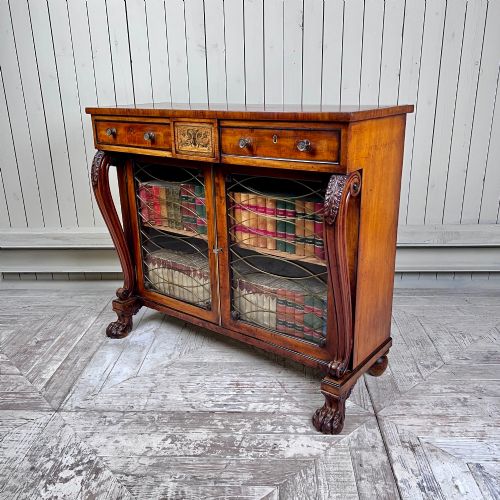
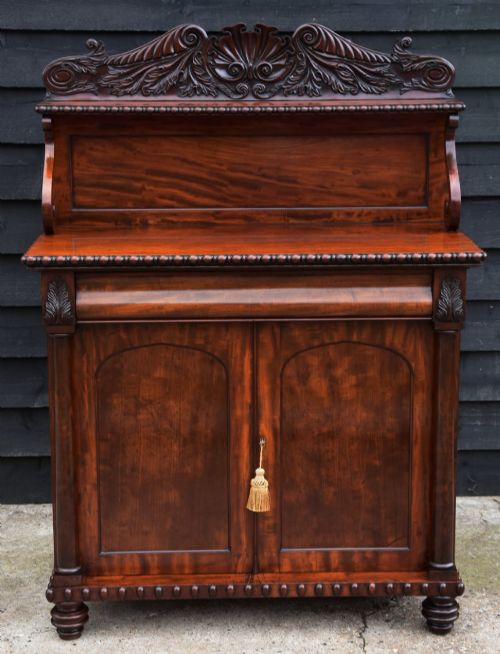
A regency carved chiffonier is a low side cabinet developed to serve the dining room or parlour during the early decades of the nineteenth century. These pieces combine enclosed lower storage behind two panelled doors with upper shelves or bookcase sections, often standing against a wall as a compact alternative to a full sideboard.
The examples gathered here span the Regency, George IV, and William IV periods, alongside later nineteenth century interpretations. Most pieces rely on rectilinear or breakfront carcasses, frequently finished with a stepped superstructure or a mirrored back for displaying porcelain and glass.
Makers working within these stylistic parameters also produced related forms such as dwarf secretaire cabinets and concave side cupboards. These variations share the same functional footprint, designed to fit snugly into smaller parlours without overwhelming the floor space.
How they were made
Cabinet makers constructed the primary carcass from dense native hardwoods like mahogany, alongside richly figured exotic timbers such as rosewood and palisander. Workshops frequently applied flame mahogany veneer to the primary door panels and drawer fronts to create dramatic grain patterns that caught the candlelight.
Decoration relied on contrasting materials embedded directly into the timber, utilising brass inlay, ebony stringing, and satinwood borders. Structural elements were augmented with marble tops on select rosewood variants, while carved details such as barley twists or Egyptian revival motifs added architectural weight.
The listings on this page span the Regency, George IV, and William IV periods, executed in mahogany, rosewood, pollard oak, and palisander.
What varies in quality
The standard of a regency carved chiffonier rests upon the selection of the timber veneers and the precision of the joinery. Pieces featuring symmetrical flame mahogany or dense burr oak display a higher grade of material choice by the original cabinet maker.
Refinement is also evident in the handling of brass inlay and carved decorative details such as pilasters and panel mouldings. Sharply chiselled carving and flush brass stringing indicate a workshop operating at the upper tier of nineteenth century production.
Gillows
The Regency Carved Chiffonier Glossary
- Chiffonier
- A low side cabinet equipped with cupboards below, frequently surmounted by shelves or a mirror. This form gained popularity during the early nineteenth century as a versatile dining room piece.
- Breakfront
- A cabinet design where the central section projects forward from the flanking wings. This architectural arrangement creates depth and shadow across the front elevation.
- Flame mahogany
- A veneer cut from the fork of a mahogany tree where the branches join the trunk. The resulting grain exhibits a flickering, flame-like pattern prized by period cabinet makers.
- Secretaire
- A desk component fitted with a drop-down writing flap concealing small drawers and pigeon holes. It turns a standard side cabinet into a dual-purpose writing station.
- Palisander
- A dense, dark timber resembling rosewood, often utilised for high-status cabinet work during the nineteenth century. Its rich grain accepts a high polish.
Regency Carved Chiffonier: Frequently Asked Questions
What is a regency carved chiffonier used for?
These cabinets served primarily in dining rooms and drawing rooms for storing china, glassware, and linens while displaying decorative objects on the upper surfaces.
Today, they function as compact sideboards in living spaces or hallways, offering concealed storage beneath a display shelf.
How do I tell Regency from William IV pieces?
Regency pieces generally display delicate classical proportions with restrained brass inlay and slender supports reflecting the influence of ancient Greece and Rome.
William IV examples tend to be heavier in scale, featuring bolder carved architectural details, robust scrollwork, and denser rosewood or figured mahogany.
Are these cabinets suitable for small rooms?
Their shallow depth makes them well-suited to narrow hallways, alcoves, and compact sitting rooms where a traditional sideboard would protrude too far into the floor space.
The low profile keeps sightlines open while providing practical storage behind two panelled doors.
What is Egyptian revival style?
Egyptian revival details draw inspiration from archaeological discoveries of the early nineteenth century, incorporating motifs such as sphinx heads, winged discs, and formal palm capitals.
On these cabinets, such elements appear carved into pilasters or executed in contrasting satinwood and ebony marquetry.