




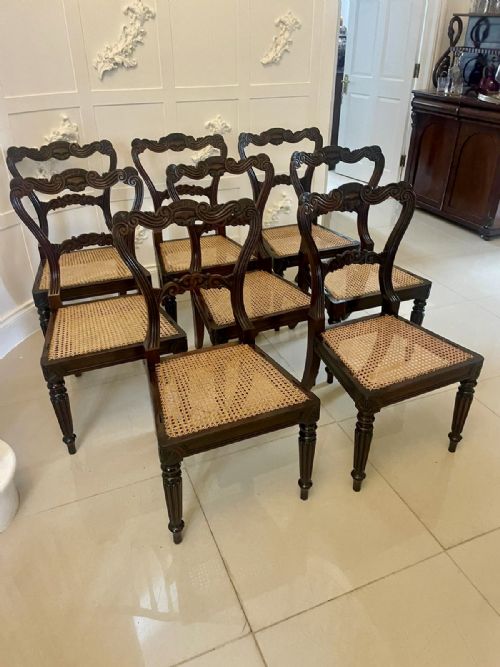


Regency Cane Back Chair
These regency cane back chair examples bring classical elegance and woven texture to a room.
Regency Cane Back Chair
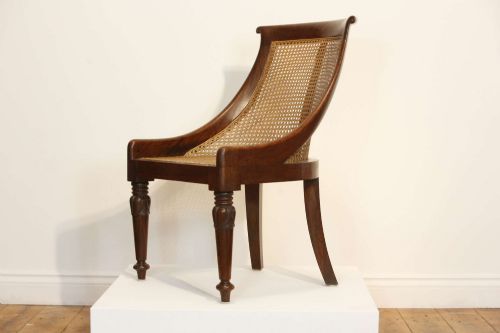
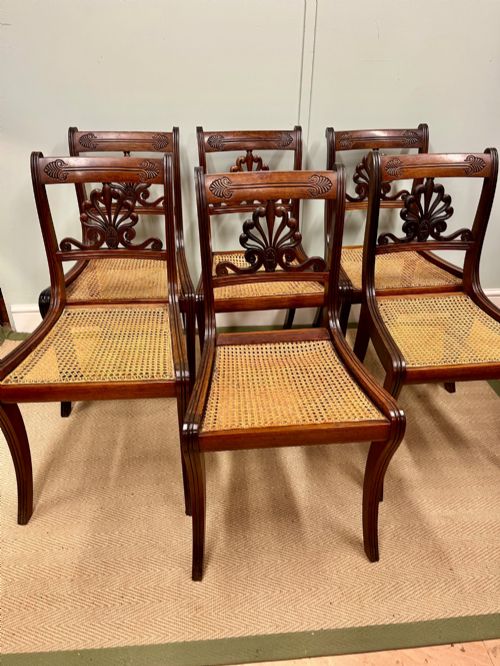
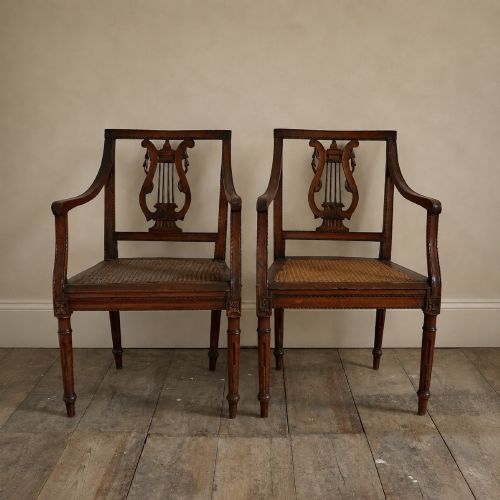
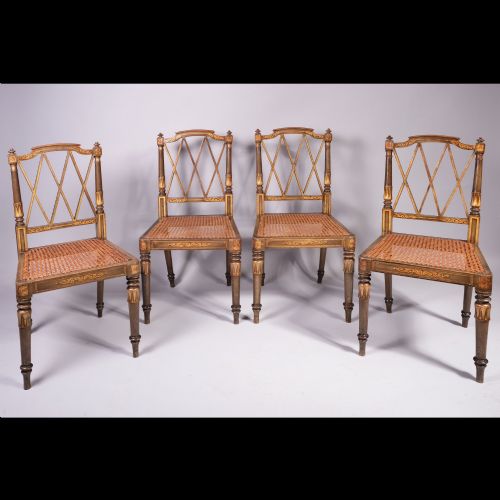
A regency cane back chair unites classical proportions with woven natural materials for seating that suits both formal dining and quiet reading corners. When you search for a regency cane back chair, you encounter forms ranging from single library armchairs to matched dining sets.
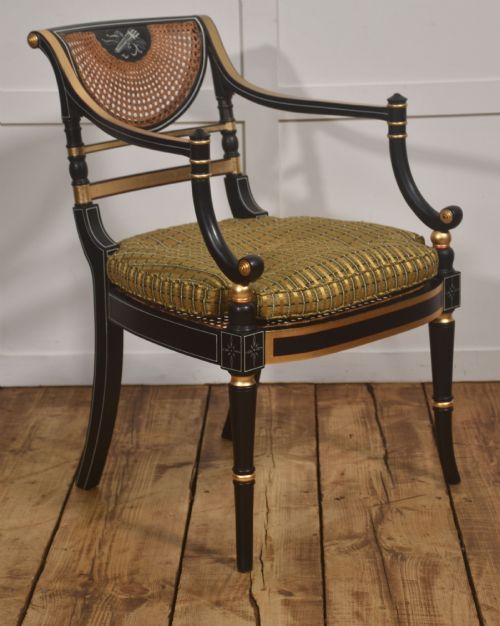
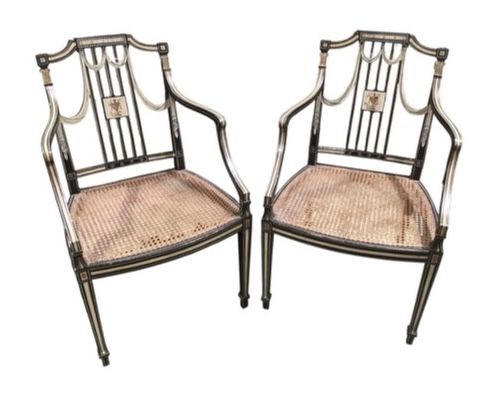
The pieces on this page span the original Regency period alongside later revivals from the nineteenth and early twentieth centuries. Mahogany, rosewood and ebonised or painted woods form the primary structures supporting woven cane seats and backs.
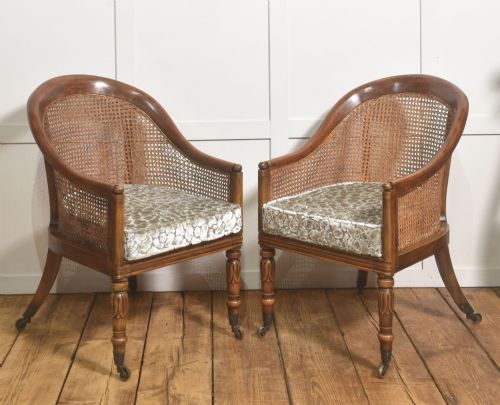
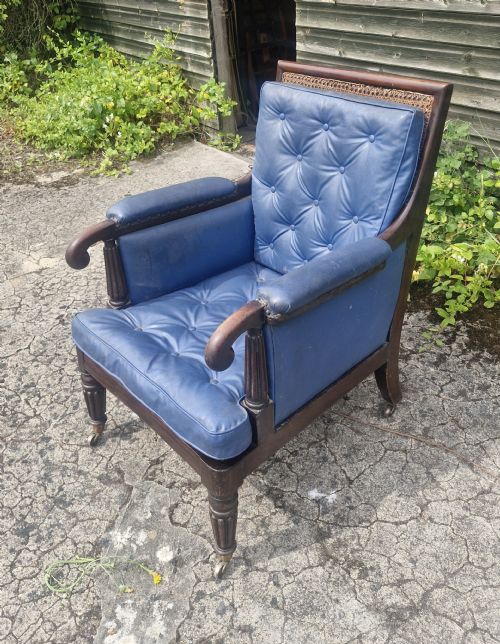
Dining chairs, open armchairs and heavy library bergères appear alongside settees and child chairs. Most examples follow the clean lines and classical revival motifs of the era.
How they were made
Cabinetmakers shaped dense hardwoods such as mahogany and rosewood, often applying ebonisation, paint or parcel-gilding to mimic exotic timbers. Timber frames received meticulous turning, carving and reeding along the legs and back rails.
Caning involved hand-weaving split rattan through holes drilled into the frame channels to create a resilient, flexible support. Brass inlays, castors and structural pins provided durable reinforcement for heavy library and dining pieces.
Regency Cane Back Chair Retail Price Guide 2026
Typical asking prices for regency cane back chair among the pieces listed under this phrase on Sellingantiques today, from the lower quarter to the upper quarter. They describe what is for sale here now, not the wider market.
One versatile design transforms instantly from a comfortable library armchair into a sturdy set of wooden library steps.
What varies in quality
The execution of the carved details and the tightness of the timber joints dictate the calibre of a piece. Finer examples display crisp reeding, well-proportioned curves and closely woven cane work that remains taut across the frame.
Original timber surfaces and untouched structural joinery elevate certain chairs above later revival pieces or those with extensive timber replacements.
Gillows
The Regency Cane Back Chair Glossary
- Bergère
- A fully or partially enclosed upholstered armchair featuring cane or rush sides and back panels. These deep seats often include loose cushions for added comfort.
- Klismos
- An ancient Greek chair style revived during the Regency era featuring outward-curving legs and a broad, sweeping concave backrest. The elegant silhouette mimics classical vase paintings.
- Ebonised
- Timber treated with a dark finish to imitate expensive ebony wood. This technique creates a dramatic, high-contrast surface popular in fashionable nineteenth-century interiors.
- Parcel-gilt
- Woodwork decorated with thin applications of gold leaf restricted to specific carved highlights or mouldings. The technique adds a touch of metallic warmth against dark wood.
- Reeding
- Parallel convex mouldings carved into furniture legs or rails to resemble clustered plant stems. This decorative carving defines classical Regency furniture.
Regency Cane Back Chair: Frequently Asked Questions
How do I identify a true period piece?
Examine the timber shrinkage, joinery methods and the hand-woven cane work for signs of age. Original pieces exhibit natural wear patterns and construction techniques consistent with the early nineteenth century.
Revival pieces from later decades often display different tool marks, machine-made uniformity or secondary woods that distinguish them from genuine Regency workshop production.
Where should I place a library armchair?
These deep-seated armchairs suit studies, drawing rooms or quiet corners where reading and relaxation take priority. Their substantial frames require adequate floor space to be appreciated from all angles.
Keep them away from direct heat sources and strong sunlight to protect the fragile cane weaving and polished wood surfaces from drying out.
Can I use cane chairs for daily dining?
Woven cane seating provides surprising resilience and flexibility for regular use around a dining table. Ensure the cane remains properly tensioned and avoid placing excessive point pressure on the mesh.
Adding thin custom squab cushions helps protect the woven surface while offering extra comfort during long dinner parties.
How do I care for antique cane?
Dust the woven panels regularly using a soft brush and keep the room humidity moderate to prevent the rattan from becoming brittle. Occasional light dampening can help maintain the moisture balance of the natural fibres.
Avoid harsh chemical cleaners and abrasive cloths that might strip the historic finish from the surrounding timber frame.