




Regency Brass Stringing Table
These regency brass stringing table examples combine dark figured timbers with fine metallic lines to bring striking contrast to a room.
Regency Brass Stringing Table
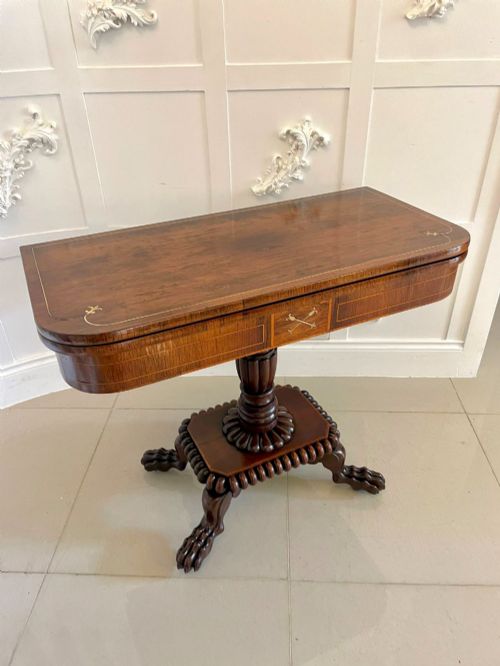
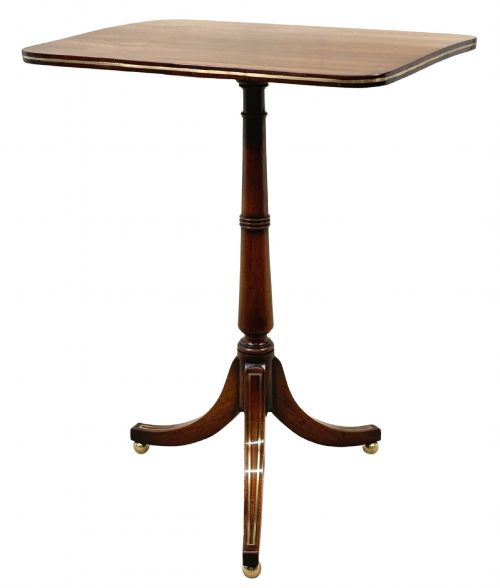
A regency brass stringing table brings together formal architectural lines and sharp metallic inlay, primarily appearing from the Regency period and the nineteenth century. These pieces include card tables, games tables, occasional lamp tables, and sewing tables constructed for domestic use.
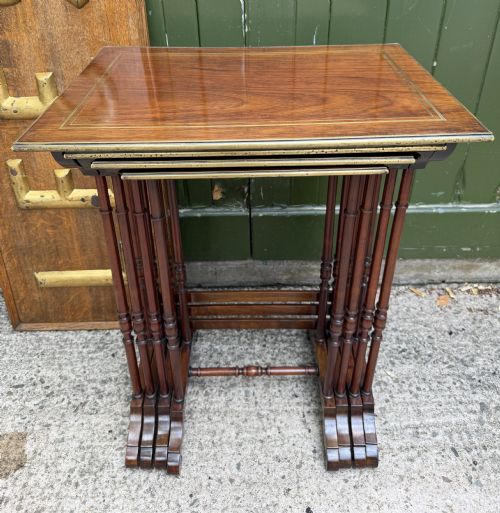
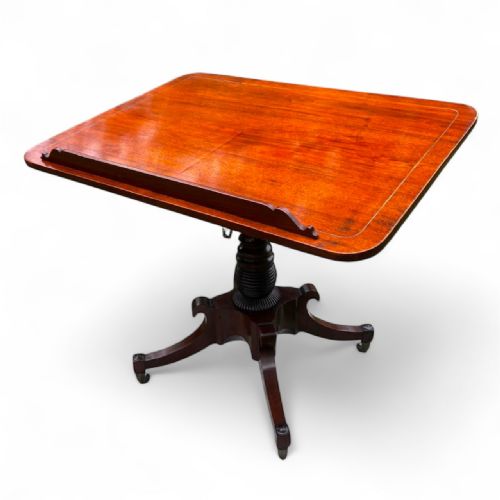
Rosewood and mahogany dominate the timber selection, frequently enhanced by fine brass lines that trace the edges of tops, aprons, and legs. Buyers will also encounter rarer forms such as nesting quartetto tables, teapoys, and music tables finished with similar contrasting stringing.
How they were made
Cabinetmakers constructed these pieces using dense tropical hardwoods like rosewood and mahogany, often laid as veneers over stable secondary woods. Channels were painstakingly routed into the timber surfaces to receive thin strips of brass, creating crisp geometric borders.
Ebony and specimen woods sometimes supplemented the brass inlay to add further tonal variation to the tops and friezes. Folding mechanisms on card and games tables relied on precise pivoting joints hidden within the structural aprons.
Listings feature pieces spanning the Regency period, nineteenth century, and nineteen-twenties revivals, predominantly utilising rosewood and mahogany.
What varies in quality
The precision of the brass inlay separates standard work from superior examples, particularly where the metal meets sharp corners and curves without gaps. Timber selection also dictates grade, with richly figured rosewood grain providing a more dramatic visual impact than plainer stock.
Subtlety of carved details on pedestals and feet indicates the skill invested by the original workshop. Well-executed pivot actions and stable pedestal bases show the durability built into the original construction.
The Regency Brass Stringing Table Glossary
- Brass stringing
- Thin lines of brass inlaid flush into channels cut into the wood surface. This technique frames the edges and panels of Regency furniture.
- Rosewood
- A heavy, dense tropical timber with dark brown and black figuring. It served as the primary surface wood for many high-status tables.
- Teapoy
- A small box table on a central pillar used for storing loose tea leaves. These containers often featured intricate brass inlay on the lids.
- Quartetto tables
- A set of four graduating occasional tables designed to nest together. They appeared during the Regency period for versatile entertaining.
Regency Brass Stringing Table: Frequently Asked Questions
How are card tables used?
These tables feature fold-over tops that open to reveal a baize-lined playing surface for evening card games. When closed, they function as console or side tables against a wall.
Their dual purpose made them central pieces in nineteenth-century drawing rooms where space-saving versatility mattered.
What is brass stringing?
Brass stringing involves setting slender metallic strips into narrow grooves cut into the wood. This method creates decorative borders that highlight the shape of the table top.
Craftsmen used the contrast between the bright metal and dark rosewood to define architectural panels.
How do I identify Regency pieces?
Regency items typically display classical restraint, balanced proportions, and dark timbers accented with brass lines. Look for pedestal bases with sabre legs and brass paw castors.
Later revivals from the twentieth century often adopt similar motifs but use slightly different internal construction methods.
Where should I place an occasional table?
Occasional tables suit small spaces beside seating or in hallways where a surface for lamps is useful. Their compact footprints allow them to sit easily in corners or against empty wall sections.
The reflective quality of the brass inlay catches light from nearby lamps in the evening.