
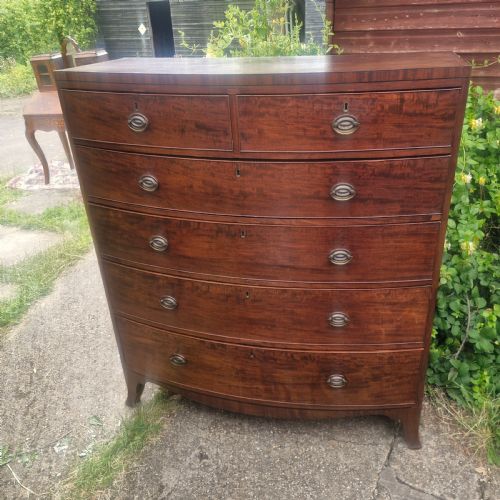
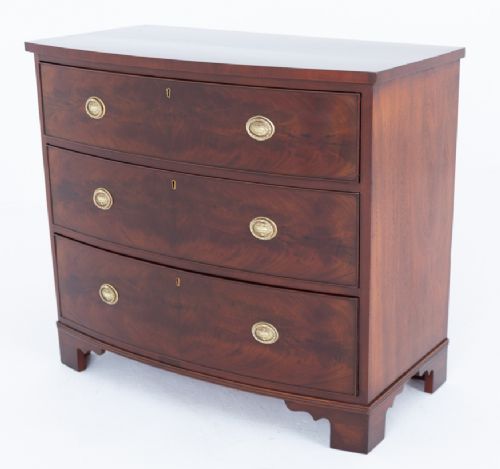
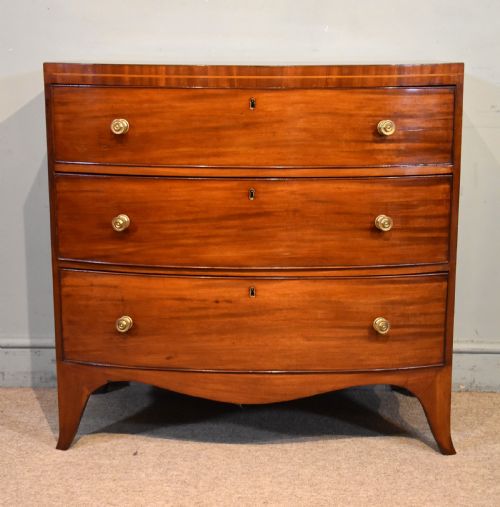

Regency Bow Front Dresser
A regency bow front dresser offers generous storage within a curved silhouette, bringing warmth and presence to a room.
Regency Bow Front Dresser
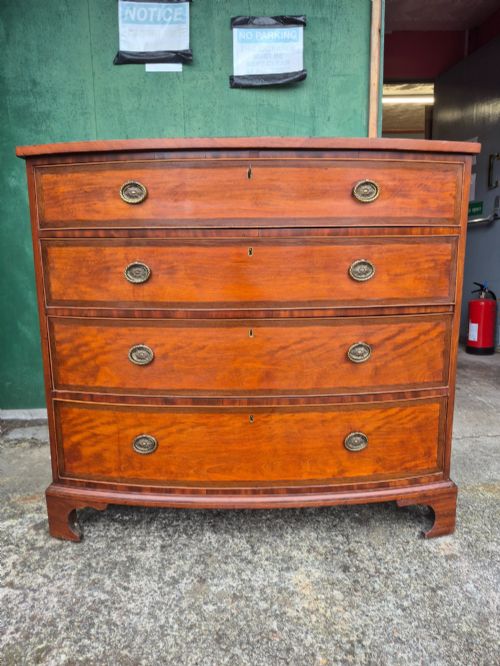
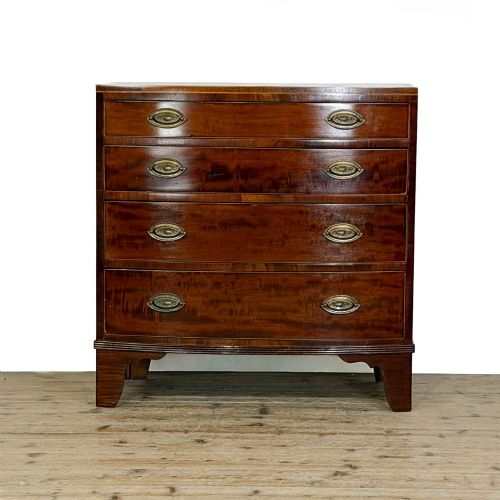
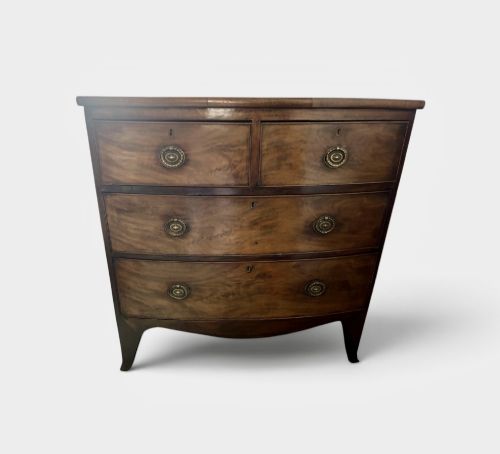
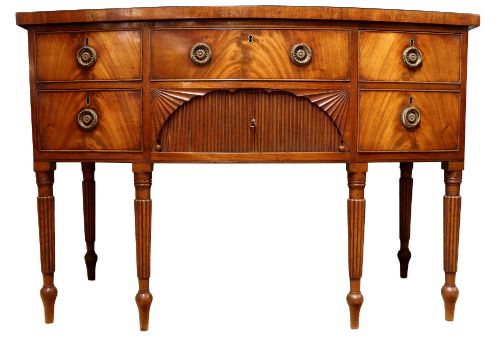
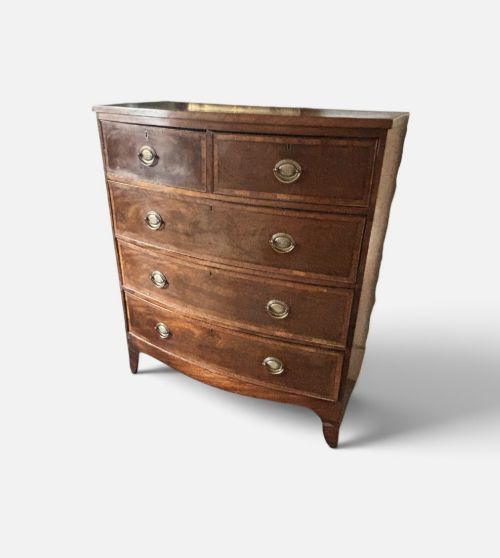
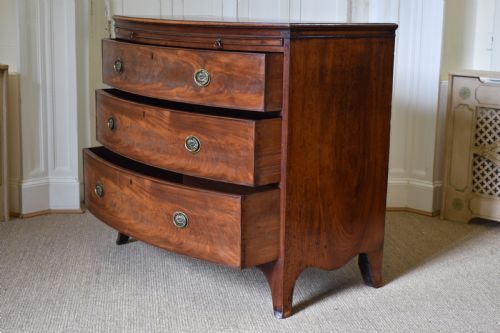
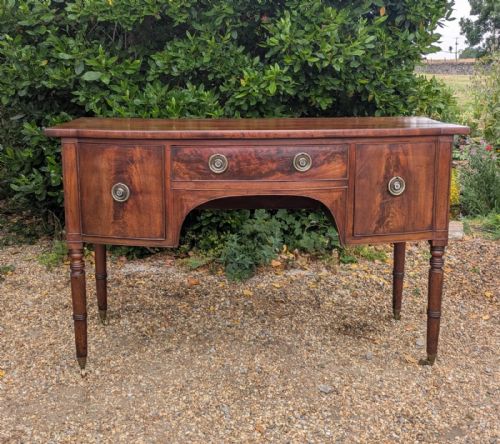
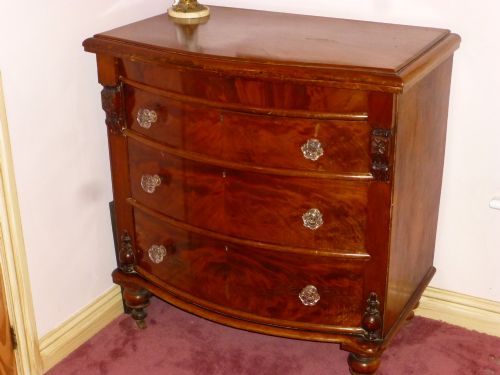
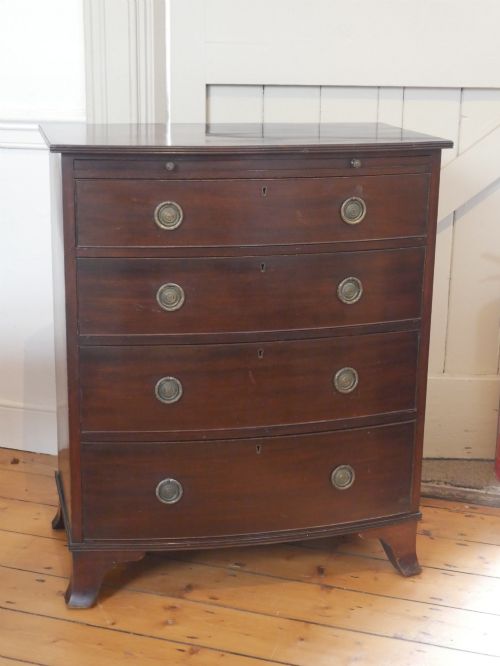
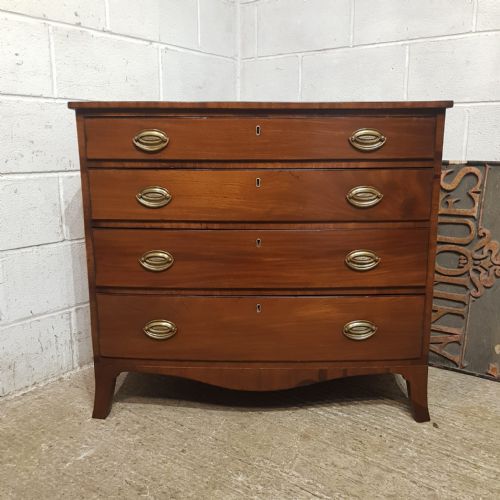
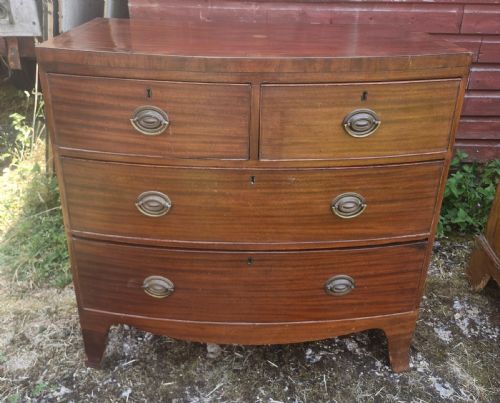
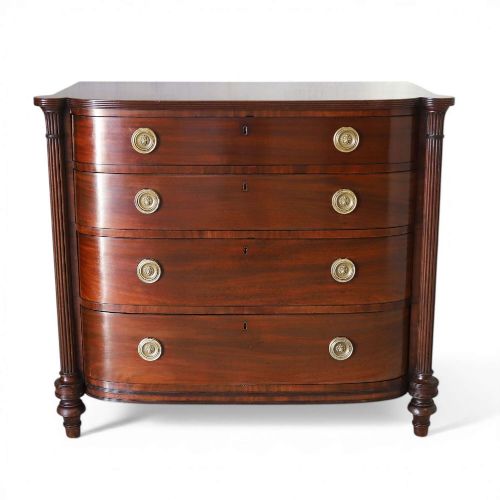
Buyers seeking a regency bow front dresser typically encounter case furniture designed with a convex curving front, most commonly taking the form of chests of drawers alongside occasional sideboards. These pieces span the Regency, Georgian, and wider nineteenth century periods, reflecting a distinct shift away from strict rectilinear forms towards softer, sweeping lines. The selection relies heavily on mahogany construction, with several variations appearing in flame mahogany, satinwood, walnut, and painted wood.
The practical function remains straightforward, providing multiple graduated drawers for domestic storage while presenting a striking decorative profile in a hallway or bedroom. Originating largely from English and Scottish workshops, the pieces range from compact models designed for smaller chambers to larger architectural chests and sideboards. Variations such as secret drawers or crossbanded borders reveal the attention given to utility and aesthetic refinement alike.
What varies in quality
The standard of a piece rests largely on the selection of timber veneers, where highly figured flame mahogany or finely contrasting satinwood crossbanding elevates the visual impact. The crispness of the inlay work and the harmonious proportions of the graduated drawers separate standard output from finer cabinetmaking. Graduated drawer depths must flow logically from top to bottom, maintaining balance across the curved front.
Construction integrity defines the upper tier, seen in the smoothness of drawer operation and the retention of original brass hardware. Subtle details such as hidden secret drawers or refined cockbeading around the drawer edges demonstrate a higher level of craftsmanship from the workshop.
Certain Welsh examples hide a secret drawer tucked away just beneath the top moulding, ready to guard small treasures.
Gillows
The Regency Bow Front Dresser Glossary
- Bow front
- A convex curved front facade characteristic of certain chests and sideboards. This shape softens the corners of case furniture.
- Crossbanding
- A border of veneer laid perpendicular to the grain of the surrounding surface. It frames the central panels with a contrasting wood stripe.
- Flame mahogany
- A highly figured cut of mahogany displaying a flickering flame-like pattern. Cabinetmakers reserved this timber for prominent drawer fronts.
- Graduated drawers
- A sequence of drawers decreasing in depth from bottom to top. This arrangement creates pleasing visual proportions.
- Satinwood
- A pale, hard wood with a satiny lustre used for inlay and banding. It provides a bright contrast against darker mahogany.
Regency Bow Front Dresser: Frequently Asked Questions
What is a bow front dresser?
A bow front dresser is a piece of case furniture featuring a convex curved front, primarily housing multiple drawers for storage. These items combine practical utility with a decorative silhouette that projects outward into the room.
They serve as focal points in bedrooms and living spaces alike, offering surface space on top in addition to the enclosed drawer storage below.
How do I date a piece?
Dating relies on observing construction methods, timber choices, and stylistic cues such as bracket feet, turned legs, or brass handle types. Pieces from the Regency and Georgian eras often display specific proportions and veneer patterns characteristic of early nineteenth-century workshops.
Secondary woods inside the drawers and the style of dovetailing further help narrow down the period of manufacture alongside any documented cabinetmaker marks.
Where should I place one?
These pieces suit bedrooms, living rooms, and hallways where their curved profile can be appreciated without obstructing walkways. The generous surface top also provides an ideal platform for mirrors, lamps, or decorative objects.
Because of their substantial depth at the centre of the bow, measuring the intended wall space carefully ensures the piece fits comfortably in the room.
How do I care for mahogany?
Maintaining mahogany furniture involves keeping pieces away from direct sunlight and heat sources to prevent the wood and veneer from drying out. Regular dusting with a soft, dry cloth preserves the finish without building up excess residue.
Occasional application of appropriate wax feeds the timber and enhances the natural lustre of the grain over time.