

Regency Bedroom Chest
A regency bedroom chest is a practical storage piece defined by clean proportion and timber warmth, built to anchor a period room.
Regency Bedroom Chest
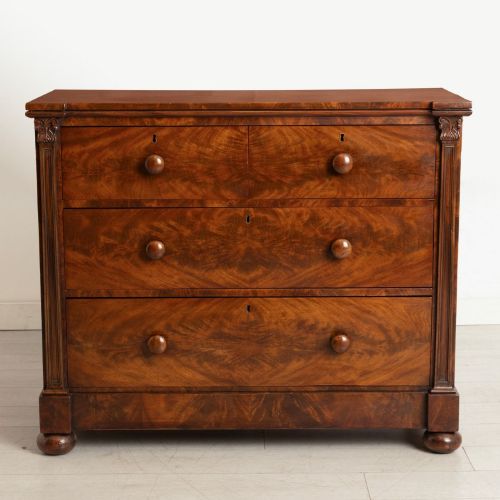
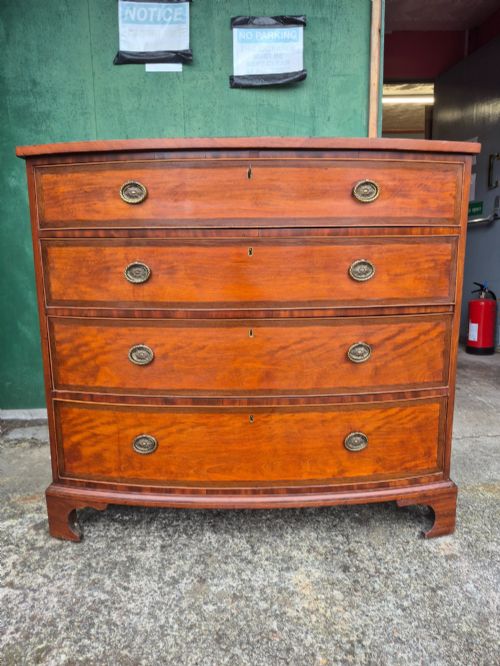
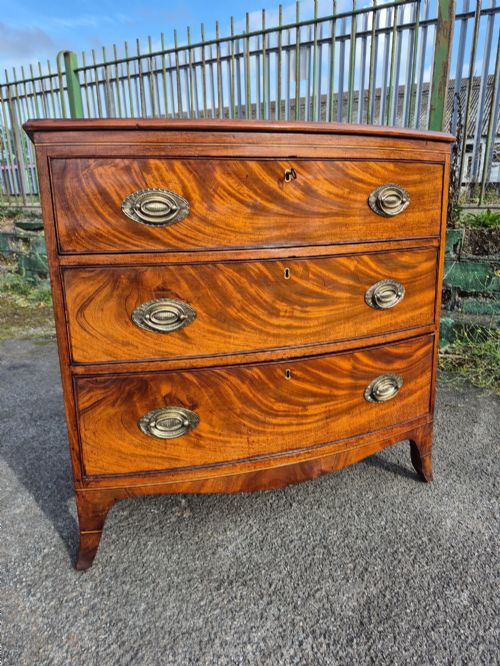
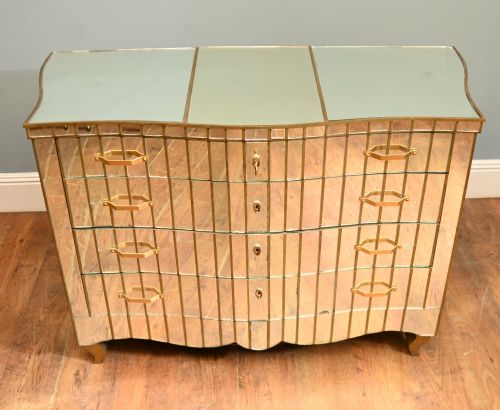
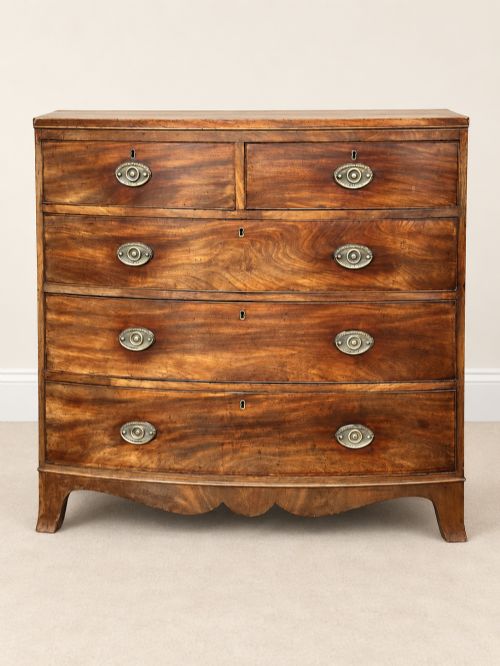
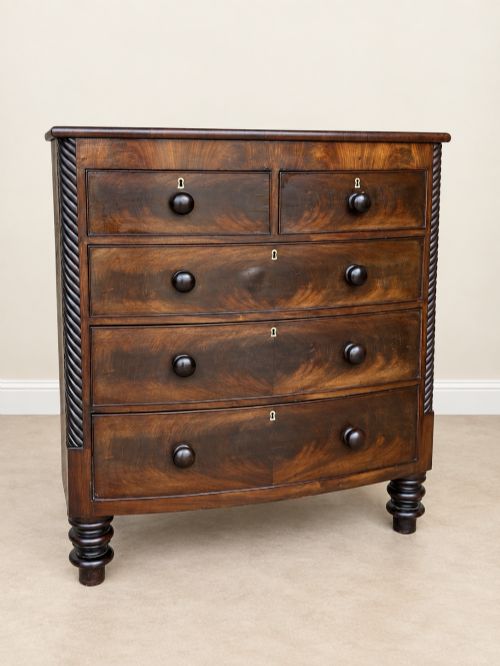
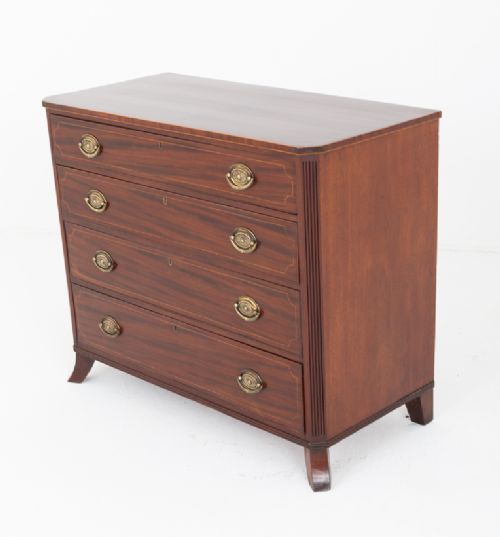
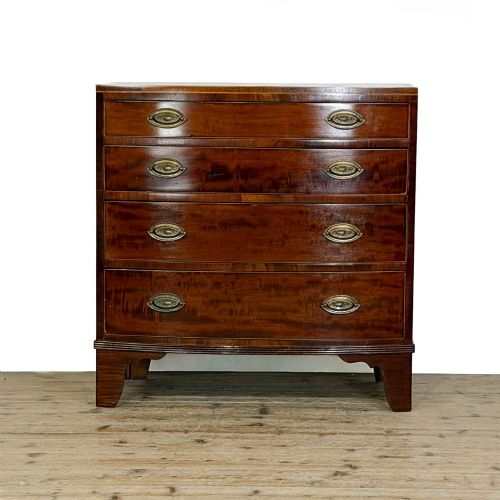
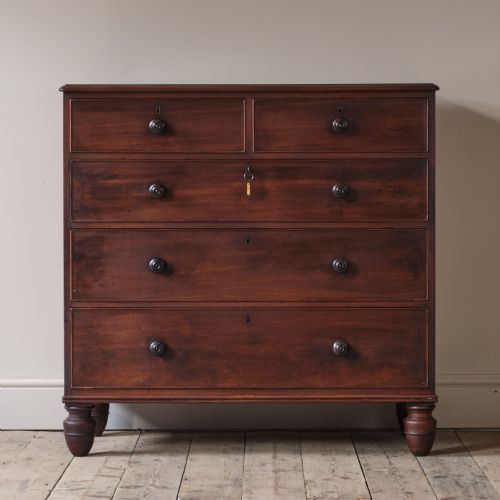
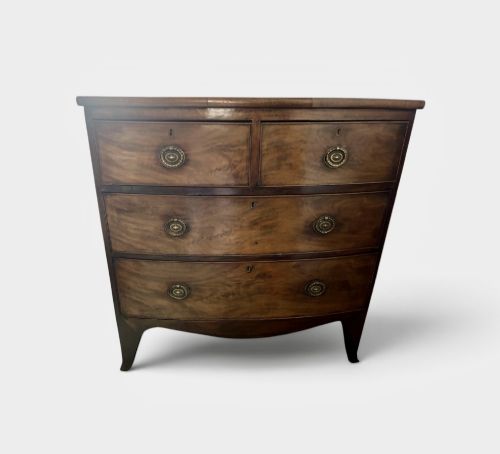
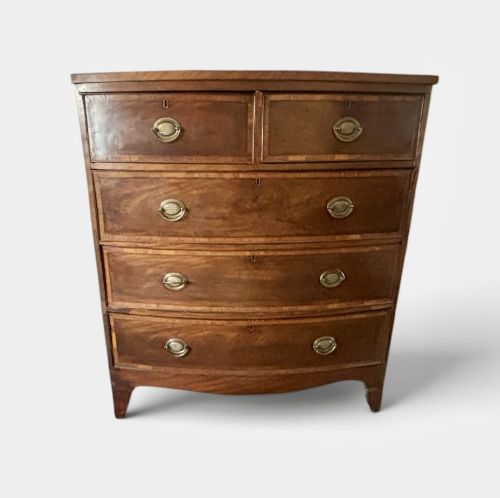
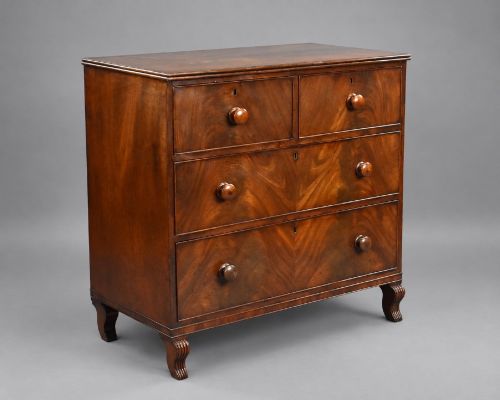
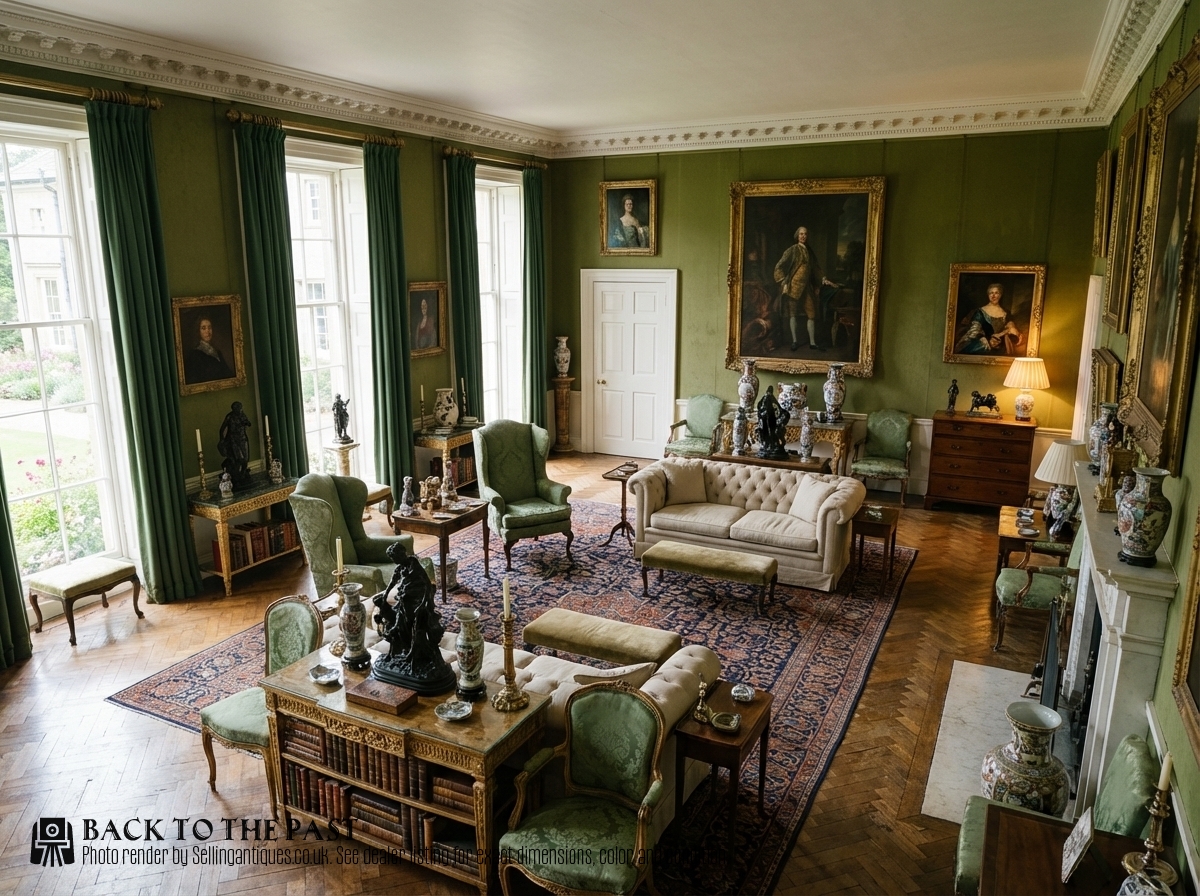
A regency bedroom chest typically takes the form of a chest of drawers or bow front chest designed for domestic chambers during the early nineteenth century and related Georgian periods. These pieces serve as primary bedroom storage, often standing on bracket feet or short legs while maintaining a structured rectangular or curved silhouette.
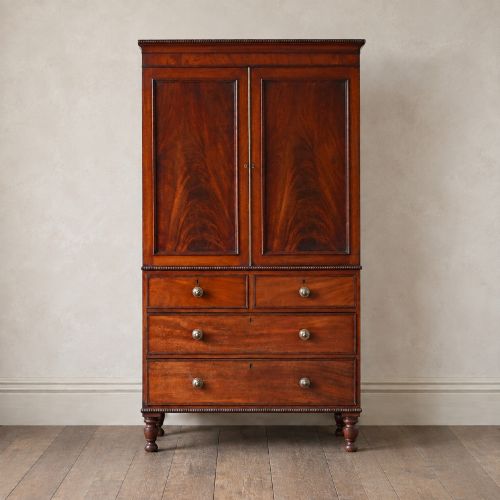
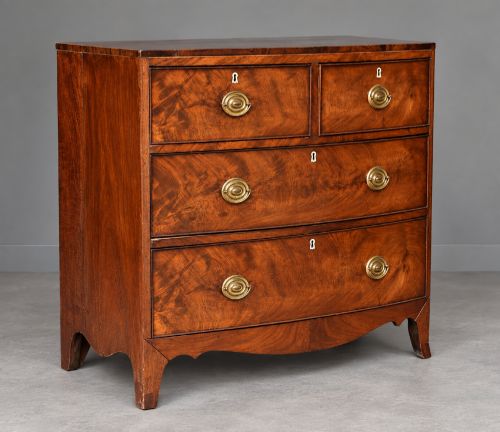
The most common examples encountered on this page feature mahogany or flame mahogany veneer, frequently constructed with boxwood or satinwood banding along the drawer edges. Variations range from compact bedside chests to taller linen presses and five-height drawer configurations.
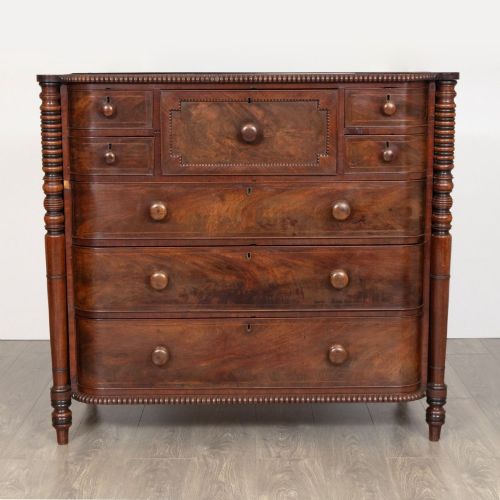
Origin points span English workshops as well as Scottish variants, reflecting both formal urban cabinet making and regional country traditions. Pieces frequently incorporate graduated drawers and occasionally secret compartments hidden within the upper structure.
Materials and Construction
Cabinet makers relied heavily on solid mahogany and rich flame mahogany veneers applied over secondary woods like oak and pine for drawer linings and internal framing. Timber selection dictated the visual movement across the drawer fronts, utilising the natural grain patterns of the wood.
Decorative detailing was achieved through contrasting inlay work, employing satinwood and boxwood banding or crossbanding to frame the drawer perimeters. Brass hardware, including ring pulls and escutcheons, completed the assembly alongside working locks.
Listings feature mahogany, flame mahogany veneer, satinwood, and oak across Regency, Georgian, and Victorian periods.
Assessing Quality and Execution
Superior execution shows in the careful matching of flame mahogany veneer across multiple drawer fronts, creating a continuous grain pattern that demands precise cutting and application. Lesser examples rely on plain timber or mismatched veneer cuts that disrupt the visual rhythm.
Structural refinement appears in the smoothness of drawer operation, the neatness of internal oak or pine linings, and the crispness of inlaid satinwood stringing rather than painted substitutes.
T & G Seddon
The Regency Bedroom Chest Glossary
- Bow front
- A convex curved front facade that swells outward from the corners, commonly seen on chests from the Regency and Georgian periods.
- Flame mahogany
- A veneer cut from the fork of the mahogany tree, producing a distinctive flickering flame pattern across the timber surface.
- Caddy top
- A raised or moulded table top profile with rounded edges, reminiscent of the lids found on tea caddies of the era.
- Linen press
- A tall storage piece featuring upper cabinet doors enclosing sliding trays, placed above a base section fitted with lower drawers.
- Crossbanding
- A decorative border of veneer laid with the grain running perpendicular to the surrounding wood, framing the primary panel.
Regency Bedroom Chest: Frequently Asked Questions
What is a regency bedroom chest?
A regency bedroom chest is an early nineteenth century storage item built primarily from mahogany, featuring multiple graduated drawers for domestic use.
These pieces often display bow front contours and fine satinwood banding, serving as both functional furniture and focal points in period interiors.
How do I spot a bow front chest?
A bow front chest curves outward in a convex shape across the front drawers, softening the sharper angles typical of rectangular cabinets.
This silhouette became a dominant style during the Regency and Georgian eras, adding movement and elegance to bedroom storage.
What woods were used in these chests?
Makers predominantly utilised mahogany and highly figured flame mahogany veneers, supported by secondary timbers like oak and pine for internal construction.
Decorative contrasts were frequently introduced through inlaid stringing in satinwood and boxwood along the drawer borders.
Where were these chests made?
Production took place across English workshops and regional centres including Scotland, where cabinet makers developed distinct local interpretations of the prevailing Regency style.
Regional variations often appear in the choice of secondary woods like oak linings and in the overall proportions of the carcass.