
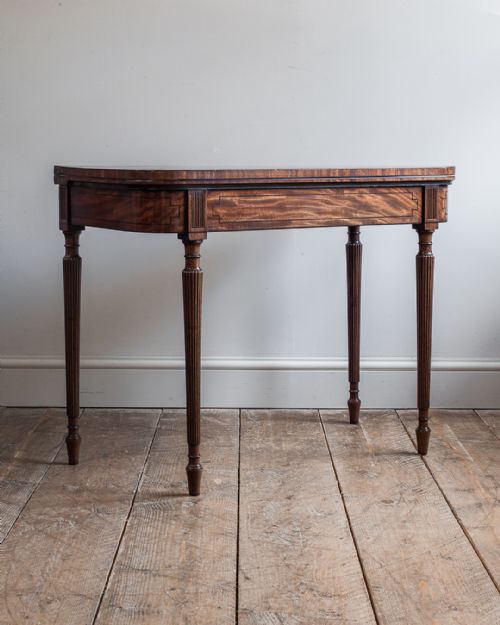


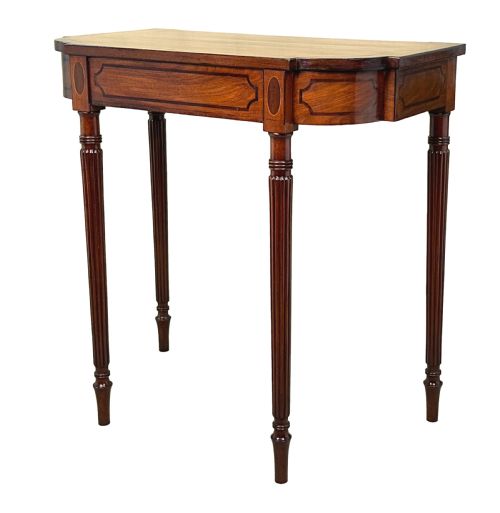
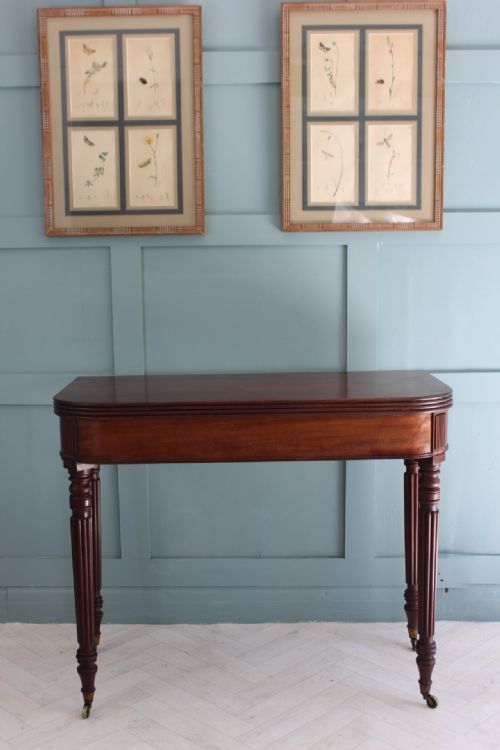


Reeded Leg Card Table
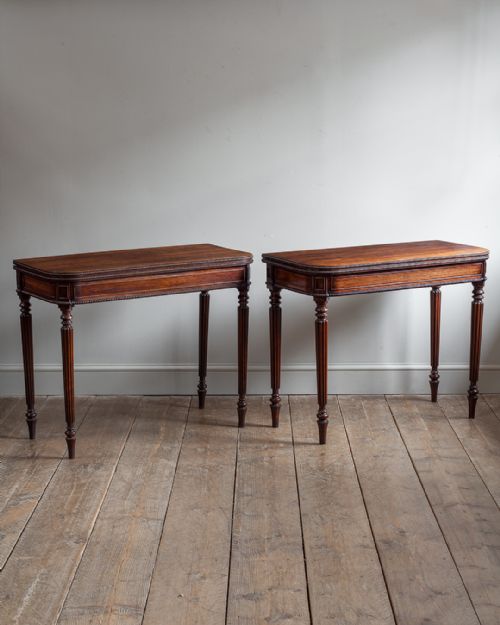
A reeded leg card table is a folding timber table from the Georgian and Regency eras designed for gaming and social use.
Reeded Leg Card Table
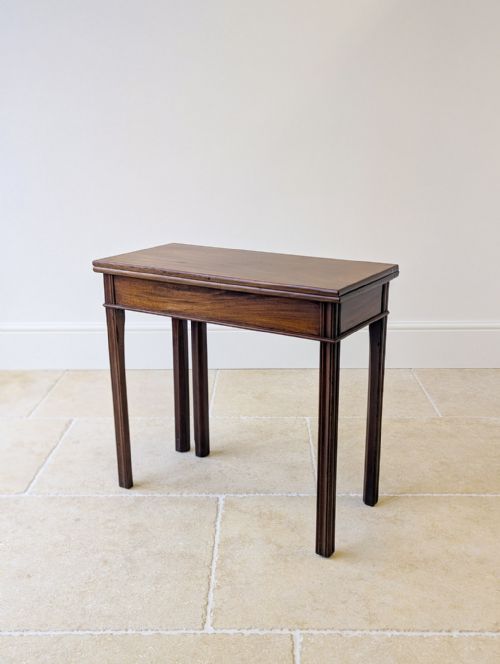
When you search for a reeded leg card table, you are looking at folding timber furniture primarily from the Georgian and Regency periods. These versatile pieces served as console, side, or tea tables when closed, opening to reveal a baize-lined surface for cards.
Makers of the era utilised specific regional characteristics, with some pieces showing strong connections to workshop traditions like Gillows. Their proportions range from neat occasional sizes to substantial console formats.
How they were made
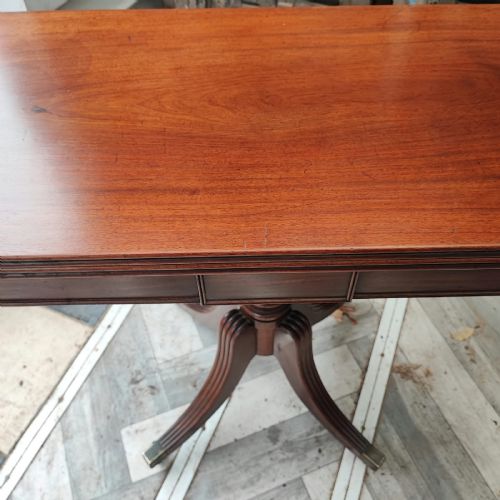
Cabinet makers constructed these tables using solid timbers and wood veneers, frequently employing mahogany as the primary structural wood. Boxwood inlay and satinwood accents provided decorative contrast on the better examples.
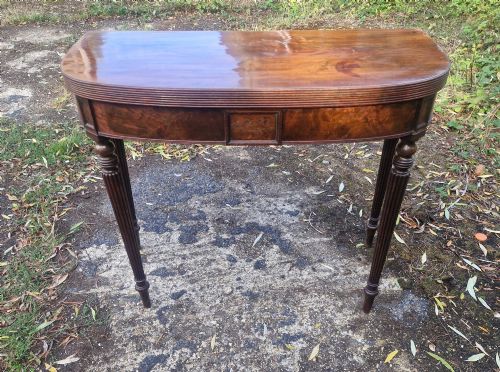
The defining feature, reeding, was hand-carved directly into the timber of the legs to create parallel rounded mouldings. Turning and joinery techniques ensured the fold-over top operated smoothly on hinged brass mechanisms.
Listings span the Georgian, Regency, and William IV periods, utilising mahogany, rosewood, satinwood, and boxwood inlay.
What varies in quality
The refinement of the hand-carved reeding on the legs separates standard examples from superior pieces. Crisp, deep carving demonstrates greater workshop skill than shallow or worn moulding.
Timber selection and secondary veneers also dictate overall grade, with richly figured mahogany and precise boxwood inlay marking out finer production. The integrity of the fold-over mechanism and the thickness of the top show the original tier of manufacture.
Gillows
The Reeded Leg Card Table Glossary
- Reeding
- Parallel convex moulding carved into timber legs or columns to resemble bundles of reeds. This decorative technique is characteristic of classical revival furniture.
- Turnover top
- A hinged wooden surface that folds out to double the table area for card playing or dining. It requires sturdy pivot or gateleg supports underneath.
- D-shaped
- Formed with a curved front and a flat back edge designed to sit against a wall when closed. This silhouette was popular in late eighteenth and early nineteenth-century dining and drawing rooms.
- Crossbanded
- Bordered with a narrow strip of veneer laid across the grain of the primary surface. It frames the top of the table to create a contrasting decorative edge.
Reeded Leg Card Table: Frequently Asked Questions
What is a reeded leg card table?
A reeded leg card table is a piece of antique furniture with carved vertical moulding on the legs and a hinged top. They were built during the Georgian and Regency periods to serve multiple functions in the home.
When closed, they functioned as side or console tables against a wall. Opening the top revealed a specialised surface for playing card games.
How were these tables used?
These tables were central items in the entertaining rooms of eighteenth and nineteenth-century houses. Guests gathered around them in the evening for card games and social discourse.
During the day, they stood against the drawing room or hallway wall holding decorative objects or tea equipment. Their dual purpose made them practical space-saving investments for polite society.
How do I live with a reeded leg card table?
Living with one of these tables involves placing it in a stable environment away from direct heat sources and strong sunlight. This protects the historic timber veneers and polished finish from cracking or fading.
They function well as console surfaces in modern hallways or sitting rooms where the fold-over top can remain closed. Occasional waxing maintains the moisture and lustre of the antique wood.
How do I tell the periods apart?
Georgian examples often display simpler classical proportions with restrained timber selection and straightforward architectural lines. They frequently date from the late eighteenth century around eighteen hundred.
Regency and George IV pieces tend to show bolder classical revival influences, incorporating rosewood, brass mounts, and crisper reeding. These later versions reflect a shift toward grander decorative schemes in British interiors.