

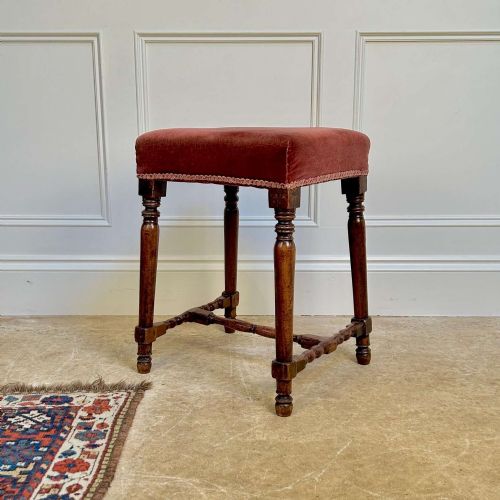


Red Velvet Table
A red velvet table brings rich texture and period elegance to a room, offering a tactile surface that catches the light beautifully.
Red Velvet Table
When searching for a red velvet table, collectors encounter a diverse group of nineteenth-century furnishings spanning Victorian, Edwardian, and Regency periods. The selection includes bijouterie display tables, occasional tables, dressing table stools, and work tables designed for both utility and presentation.
Mahogany and rosewood form the primary wooden structures for these pieces, often complemented by glass tops or glazed compartments intended for displaying small collections. The crimson textile inserts provide a soft, contrasting background that draws the eye toward the objects placed upon or within them.
Materials and construction
Makers utilised dense hardwoods such as mahogany and rosewood to build the structural frames, applying French polishing to achieve a deep, lustrous finish. Ormolu mounts and brass details frequently accent the corners and legs, reflecting revival styles popular in the nineteenth century.
Textiles like velvet and fabric were carefully fitted into table insets or upholstered onto seating frames, secured with close-nailing or neat piping. Glass panels in display tables and cabinets were set into rebated wooden frames to protect fragile items stored underneath.
Assessing quality and craftsmanship
The standard of a piece depends heavily on the crispness of its carving, the weight and finish of any ormolu mounts, and the integrity of the timber framing. Superior examples display precise joinery and well-selected wood grains that have aged evenly over the decades.
The condition and security of the velvet insert also influence the overall standard, alongside the clarity and thickness of the original glass panels. Pieces retaining their fitted interior compartments or original hardware stand apart from later replacements.
John Tesch
The Red Velvet Table Glossary
- Bijouterie table
- A glass-topped display table designed to showcase small valuables, medals, or jewellery. These pieces often feature hinged lids and velvet-lined interiors.
- Ormolu
- Gilded bronze ornamentation applied to furniture frames during the eighteenth and nineteenth centuries. It adds decorative contrast to dark woods like mahogany.
- Work table
- A small functional table containing compartments or hanging bags for sewing and needlework supplies. They frequently incorporate velvet or silk lined trays.
- Vitrine
- An enclosed glass cabinet intended for the display of fine porcelain or curiosities. They share similar presentation goals with tabletop bijouterie cases.
- Giltwood
- Timber treated with gold leaf or metallic paint to create a brilliant decorative surface. This finish appears frequently on revival furniture styles.
Red Velvet Table: Frequently Asked Questions
What is a red velvet table used for?
These tables served various domestic purposes ranging from needlework and sewing storage to the formal display of small precious objects. Glass-topped variants allowed collectors to view items safely while keeping them free from dust.
In modern settings, they function effectively as striking occasional furniture or focal points in a sitting room, combining practical surface space with rich textile colour.
How do I date a nineteenth century table?
Dating relies on examining the timber species, construction methods, and stylistic cues such as revival motifs or structural proportions. Cabinetmakers of different decades employed distinct joinery techniques and hardware styles.
Comparing the piece to documented examples from periods like the Regency or Edwardian eras helps narrow down its decade of origin.
Are these tables suitable for everyday use?
While sturdily built from hardwoods like mahogany and rosewood, pieces with delicate glass tops or antique velvet inserts require thoughtful placement. They benefit from gentle handling and protection from direct sunlight to preserve the textile colour.
Using coasters and avoiding heavy impacts keeps the wooden frames and decorative mounts secure for daily enjoyment.
How do I care for antique velvet?
Antique velvet requires gentle brushing with a soft tool to remove dust and maintain the nap without crushing the fibres. Keeping the textile away from moisture and intense light prevents fading and water marks.
Professional textile conservation advice proves useful if deep cleaning becomes necessary for older upholstered surfaces.