



Red Velvet Case
These red velvet case selections bring together period display cabinets, fitted boxes, and showcases lined in plush crimson textile, offering an immediate focal point for small collections.
Red Velvet Case
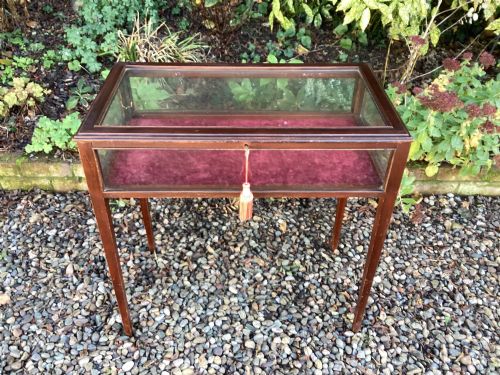
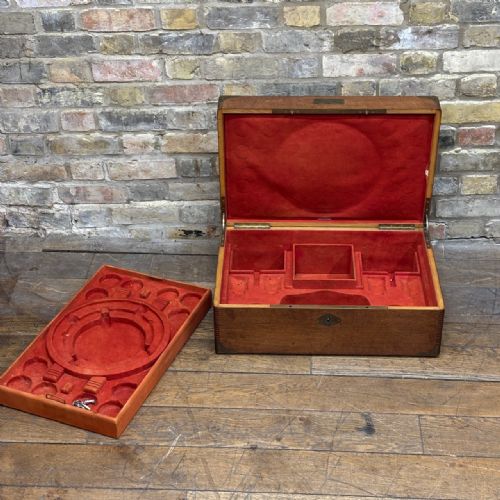
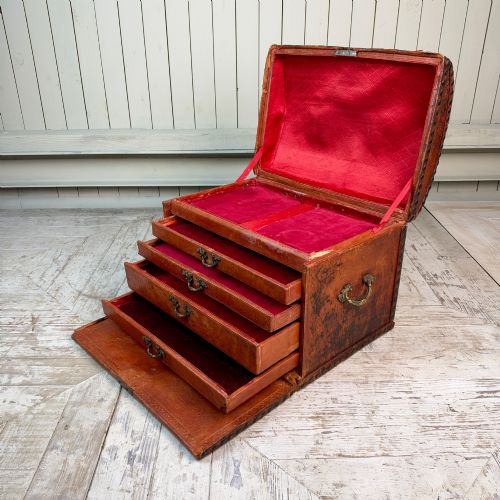
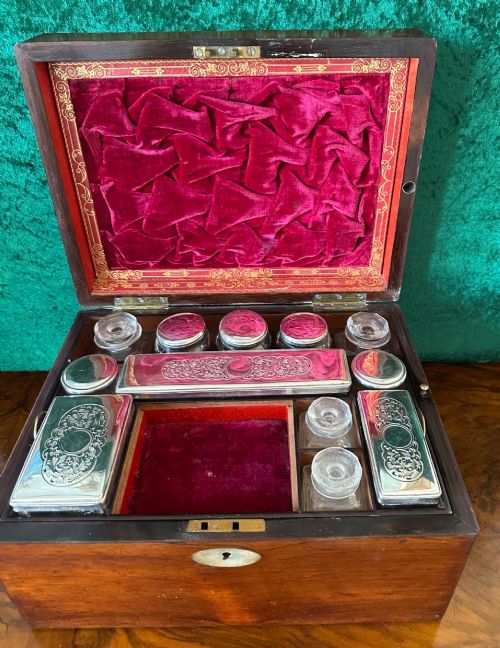
A red velvet case typically takes the form of a vitrine, a bijouterie table, a dressing box, or a fitted firearm container originating from the Victorian, Edwardian, or early twentieth-century periods. These pieces are designed to protect and display precious items, utilising rich crimson linings to provide a striking contrast against silver, glass, and polished wood.
The versions most frequently met on this page combine glazed display timber frames or portable wooden boxes with vibrant textile interiors. Whether encountered as a mahogany display cabinet, an ormolu-mounted bijouterie table, or a fitted silver dressing set, each object serves to elevate the presentation of contents within domestic and commercial settings.
Materials and construction
Construction relies heavily on traditional cabinet-making timbers such as mahogany, rosewood, cedar, and yew, paired with structural glass panels and textile linings. Wood is joined to form upright vitrines, pentagonal display counters, and portable boxes designed to house specific items.
Metal mounts in ormolu, brass, silver, and gilt bronze provide structural reinforcement and decorative enrichment to the exterior frames. Velvet is fitted tightly within the interior compartments, forming a soft bed for jewellery, accessories, and collector items.
Red Velvet Case Retail Price Guide 2026
Typical asking prices for red velvet case among the pieces listed under this phrase on Sellingantiques today, from the lower quarter to the upper quarter. They describe what is for sale here now, not the wider market.
Listings feature items spanning the mid-nineteenth century through the nineteen-twenties, incorporating French revival styles alongside British cabinet-making traditions.
Distinctions in quality
Quality reveals itself in the precision of the timber joinery, the clarity of the glazed panels, and the integration of metal mounts. Superior examples exhibit fluid lines in revival styles, robust structural integrity in large display cabinets, and careful preservation of the original textile lining.
The sophistication of the hardware and the weight of the framing materials separate standard commercial pieces from finer decorative items. Higher grade specimens show thoughtful proportion, harmonious use of ormolu or brass, and intact interior fittings tailored precisely to the intended contents.
The Red Velvet Case Glossary
- Vitrine
- A glass-fronted cabinet or display case used for showing fine objects and curiosities. These pieces often feature interior velvet lining to cushion the items on display.
- Bijouterie table
- A low display table with a glazed top and sides, specifically designed for housing small valuable trinkets and jewellery. The interior is commonly lined with velvet.
- Ormolu
- Gilt bronze ornamentation applied to the exterior of furniture and display cases during the nineteenth century. This decorative metalwork enhances the visual richness of the wooden frame.
- Cloche
- A bell-shaped glass cover used to protect delicate objects placed beneath it. It frequently rests upon a prepared base lined with textile materials.
Red Velvet Case: Frequently Asked Questions
What fits inside a red velvet case?
These cases and cabinets are designed to hold a variety of precious or decorative objects. Common contents include jewellery, silver dressing sets, collected curiosities, and antique firearms.
The textile lining protects delicate surfaces from scratching while providing a dark, contrasting background that highlights the objects placed upon it.
How do I clean the velvet lining?
Cleaning historic velvet requires gentle methods to preserve the pile and the underlying textile base. Light dusting with a soft brush or low-suction vacuum attachment is generally recommended.
Moisture should be avoided, as older textiles can water-mark easily or suffer degradation of the adhesive holding them to the wooden case.
Where should I place a display cabinet?
Display cabinets and vitrines are best positioned away from direct sunlight to prevent the fading of red velvet linings and the degradation of sensitive interior objects.
Stable indoor humidity levels help protect the structural integrity of period timbers such as mahogany, rosewood, and yew.
How do I identify the period of a case?
Dating relies on examining the construction techniques, timber choices, and stylistic revival influences visible in the framing. Victorian and Edwardian examples often display specific hardware types and characteristic proportions.
Comparing the joinery methods and decorative mounts to established nineteenth-century manufacturing standards assists in determining precise age.