


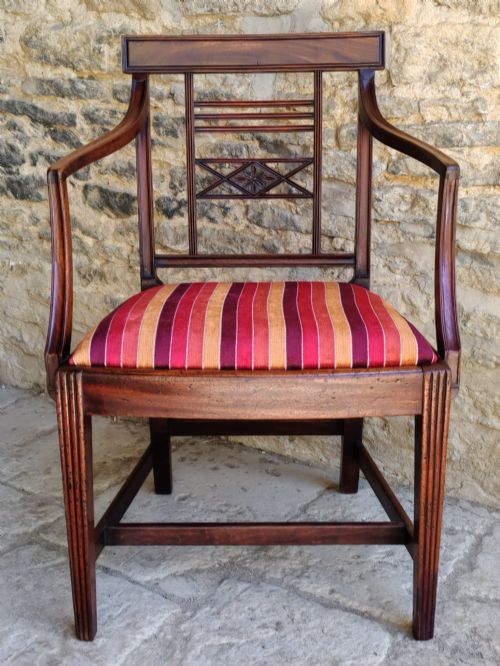
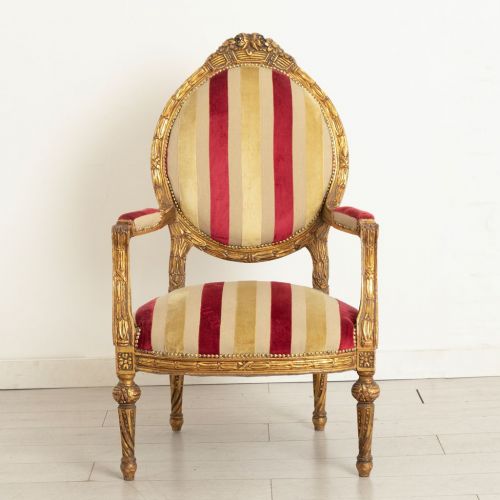


Red Striped Accent Chair
A red striped accent chair brings instant pattern and presence to a room, offering both a comfortable seat and a strong visual anchor.
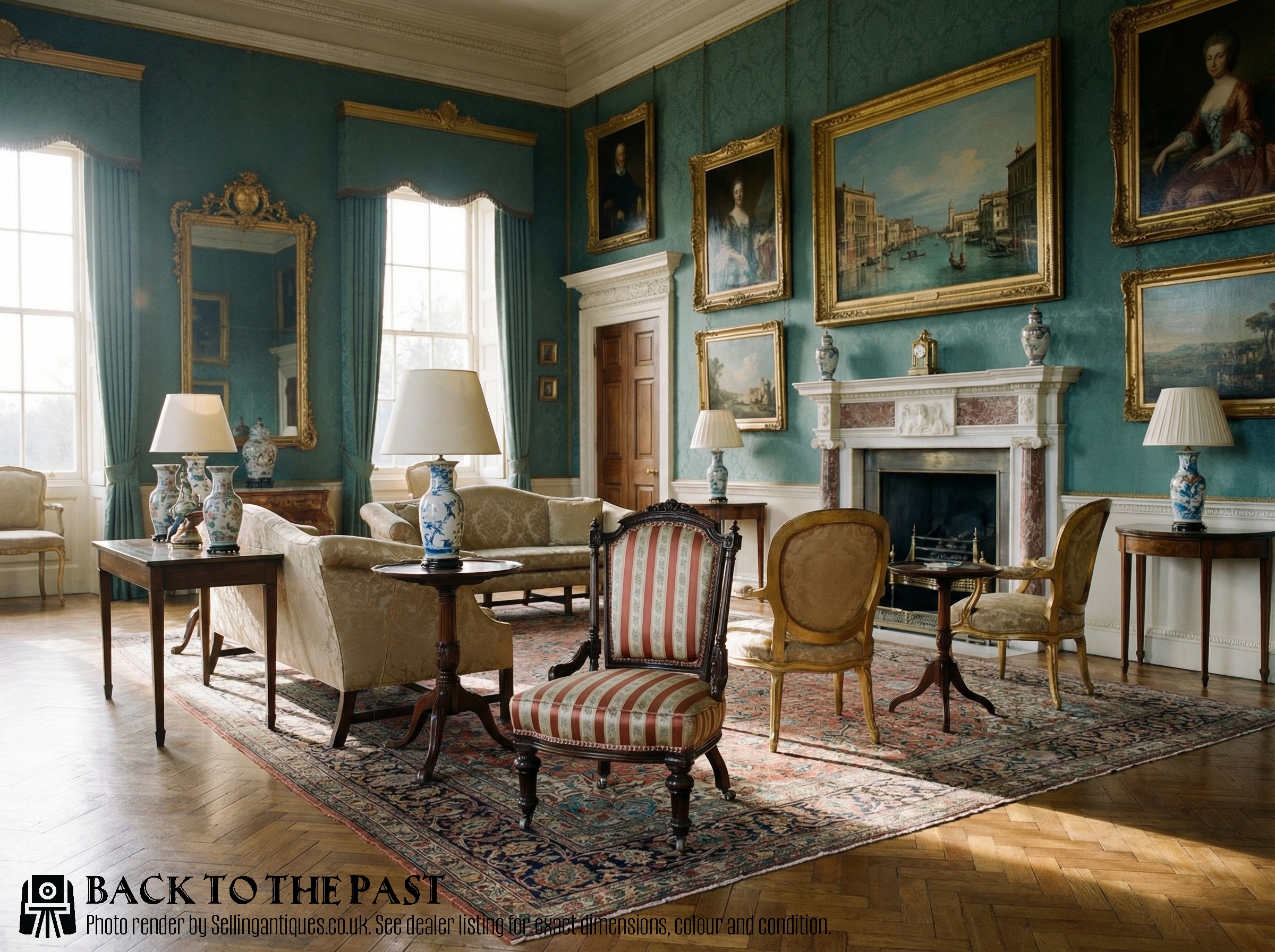
Red Striped Accent Chair
When you search for a red striped accent chair, you are looking at upholstered seating designed to stand out within a room rather than simply match a dining table. The pieces found here span centuries of design, covering forms from grand Georgian wingbacks to Victorian boudoir and nursing chairs.
The versions you are most likely to encounter on this page range from walnut and mahogany carvers to giltwood armchairs upholstered in textile, cotton, and velvet. These seating options combine functional support with decorative upholstery patterns that catch the eye immediately.
Originating across different European and American workshops, these chairs display styles as varied as Louis XVI, Italian Rococo, Regency, and Edwardian. Each example showcases how period frames were dressed in striped fabrics to create a striking focal point.
Construction and materials
The frames of these chairs rely on traditional hardwoods such as mahogany, walnut, and ebonized wood, often shaped with carved details and brass mounts. Giltwood examples display applied gold leaf over carved wooden bases, following classical French and Italian traditions.
Upholstery relies on traditional textiles, cotton, and velvet, secured over supportive interior padding to create shaped wingbacks, balloon backs, and armchair profiles. Inlaid woodwork and painted finishes further enhance the decorative construction of specific period pieces.
Red Striped Accent Chair Retail Price Guide 2026
Typical asking prices for red striped accent chair among the pieces listed under this phrase on Sellingantiques today, from the lower quarter to the upper quarter. They describe what is for sale here now, not the wider market.
Distinctions in quality
Quality in these chairs rests upon the crispness of the original timber carving and the architectural proportion of the frame. Finer examples maintain structural integrity in their joinery and display hand-carved details that remain sharp and deep.
The standard of upholstery and the choice of textile also separate ordinary seating from superior examples. Better pieces feature sympathetic period-correct fabrics and tight, precise stitching that respects the underlying antique frame.
The Red Striped Accent Chair Glossary
- Fauteuil
- An open-armed French armchair with upholstered back and armrests, typically featuring an exposed wooden frame. This style gained prominence during the seventeenth and eighteenth centuries.
- Carver
- A sturdy armchair, often designed to sit at the head of a dining table or serve as an occasional seat. These pieces usually feature substantial wooden armrests integrated into the frame.
- Giltwood
- Wood that has been coated with a thin layer of gold leaf or gold paint for decorative effect. This technique was widely utilised on formal European seating.
- Wingback
- An armchair with high back and flanking side panels designed to shield the sitter from drafts. Early versions appeared in the Georgian period for fireside comfort.
- Balloon-back
- A chair back shaped in a continuous oval curve resembling a balloon. This silhouette became especially popular during the Victorian era.
Red Striped Accent Chair: Frequently Asked Questions
How do I clean the fabric?
Maintenance depends entirely on the specific textile used on the upholstery. Professional cleaning is generally advised for delicate antique cottons and velvets.
Regular light vacuuming with a soft brush attachment helps prevent dust accumulation without stressing the underlying period fibres.
Are these comfortable for daily use?
Many of these seating forms were built for formal parlours rather than lounging. Their supportive frames and upright postures suit reading or occasional sitting.
Generous wingbacks and padded armchairs offer deeper support, though vintage padding may feel firmer than modern foam.
Where should I place it?
An accent chair works best in a bedroom, hallway, or corner of a living room where its pattern can stand alone. Pairing it with neutral surroundings allows the red stripes to draw the eye.
Ensure there is enough clearance around the arms and back to appreciate the carved woodwork.