
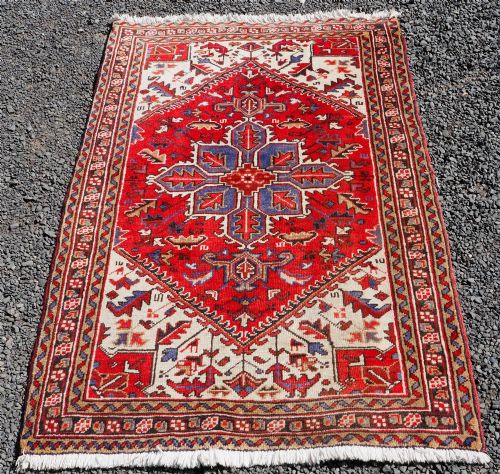
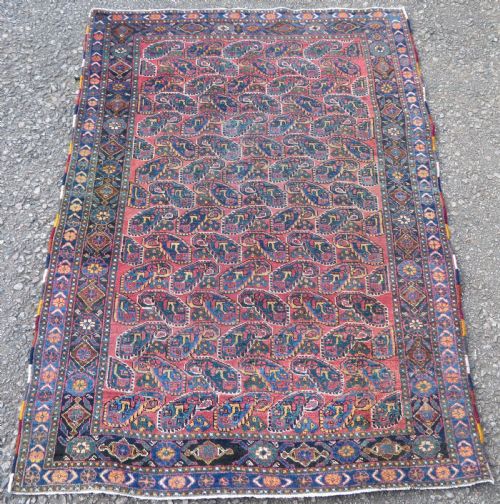


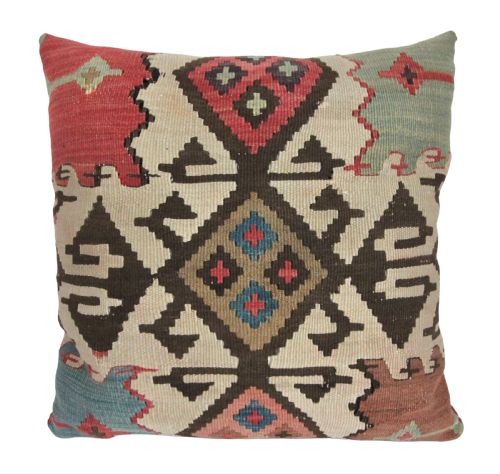


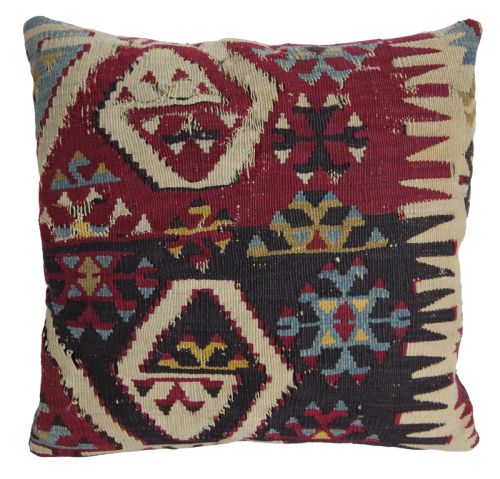

Red Scatter Rug
A red scatter rug brings warmth and grounded pattern to a floor, offering the dense pile or flatweave character characteristic of tribal and nomadic weaving traditions.
Red Scatter Rug
A red scatter rug sits comfortably in smaller spaces, bringing the rich hues and geometric motifs typical of tribal and nomadic production. When you search for a red scatter rug, you encounter hand-knotted room accents, small mats, and repurposed bag faces or kilim cushions.
The selection ranges across nineteenth-century and early twentieth-century examples, including Persian and Anatolian tribal work. Pieces from Afshar, Kirsehir, and Baluch traditions frequently appear alongside flatwoven kilim cushions and carpet fragments.
Sizes remain modest, designed originally for portable nomadic living or compact domestic areas. These textiles function equally well as functional floor coverings or decorative cushion covers.
How they were made
Weavers constructed these pieces predominantly from wool and cotton, utilising hand-woven techniques passed down through generations. Wool provided durable pile and flatweave structure, while cotton often served for foundations and structural warps.
Nomadic and tribal makers employed vegetable and early synthetic dyes to achieve deep red tones, patterning the surfaces with characteristic geometric and tribal motifs. Bag faces and kilim fragments demonstrate the resourceful repurposing of durable utilitarian textiles.
Nomadic weavers occasionally incorporated deliberate irregularities into their rugs to ward off the evil eye.
What varies in quality
The sophistication of the weave and the clarity of the natural or early synthetic dyes set superior examples apart from simpler work. Finer knot density and tighter flatweave construction indicate greater skill and time invested by the weaver.
Design integrity and the preservation of original tribal motifs dictate the visual impact of each textile. Pieces retaining strong structural integrity alongside rich red coloration represent the pinnacle of this nomadic craft.
The Red Scatter Rug Glossary
- Kilim
- A flatwoven carpet or rug produced without a pile by tightly interweaving warp and weft strands. These textiles often feature sharp geometric designs and served diverse nomadic functions.
- Bag face
- The decorative front panel of a nomadic storage bag, typically woven in pile or tapestry technique and later repurposed into cushions or small wall hangings.
- Pile
- The upright yarn loops or tufts that form the tactile surface of a knotted rug. This textured layer results from individual knots tied around the warp threads.
- Warp
- The stationary vertical threads stretched onto a loom before weaving begins. Weft threads pass horizontally through these structural cords to lock the design in place.
Red Scatter Rug: Frequently Asked Questions
Where should I place a scatter rug?
These smaller textiles suit entryways, hearths, and bedside areas where compact floor coverings make an impact.
Their modest dimensions also allow them to sit effectively beneath coffee tables or brighten narrow corridors.
How do I care for antique wool rugs?
Gentle vacuuming without a rotating brush roll helps remove embedded dust from the wool fibres. Professional cleaning remains recommended for deep maintenance to protect historic dyes and structures.
Keeping the textiles out of harsh direct sunlight prevents the rich red tones from fading over time.
How do I identify tribal designs?
Tribal rugs typically display geometric medallions, hooked motifs, and stylised animal or plant forms rather than courtly floral curves. Makers relied on memory and traditional regional patterns rather than printed cartoons.
Variations in symmetry and abrash colour shifts often reveal the hand of an individual weaver working within a distinct nomadic tradition.