





Red Lacquer Desk
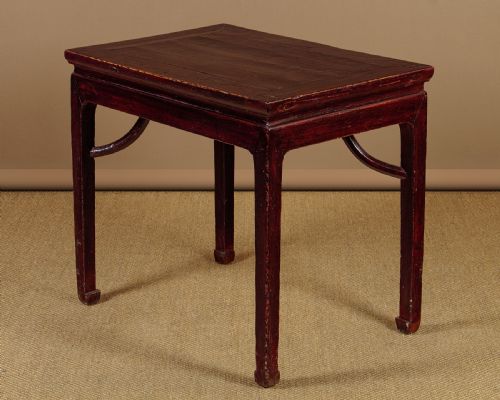
A red lacquer desk brings warmth and a striking narrative surface into a room, offering both a functional writing space and a distinct decorative presence.
Red Lacquer Desk
A red lacquer desk brings together form and vibrant colour, serving as both a practical workspace and a distinct decorative focal point. When exploring a red lacquer desk selection, buyers encounter pieces spanning the Georgian, Victorian, and early twentieth century periods, reflecting diverse global workshops.
Many examples incorporate wood cores such as elm or utilise brass hardware and gilt detailing to accent the rich red surfaces. These items bridge traditional craftsmanship and striking visual drama, suiting both period interiors and modern settings.
Materials and construction
Makers built these pieces using sturdy timbers like elm and general wood substrates, providing a stable foundation for multiple coats of lacquer. Artisans applied successive layers of lacquer, often achieving the signature red finish through traditional resin techniques.
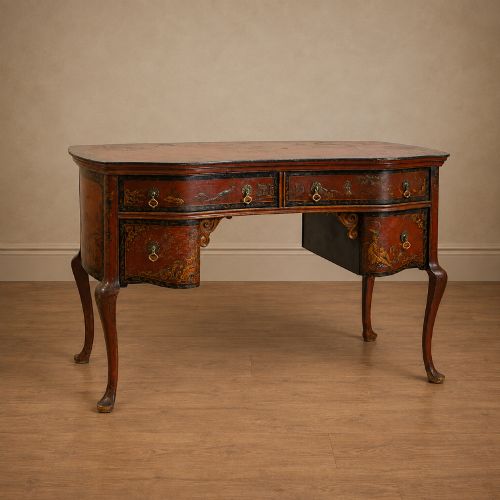
Decoration frequently involved hand-painted Chinoiserie motifs and gilt highlights, adding intricate pictorial detail across the writing surfaces and drawers. Brass fittings such as handles and escutcheons completed the construction, securing structural joints while contributing metallic contrast.
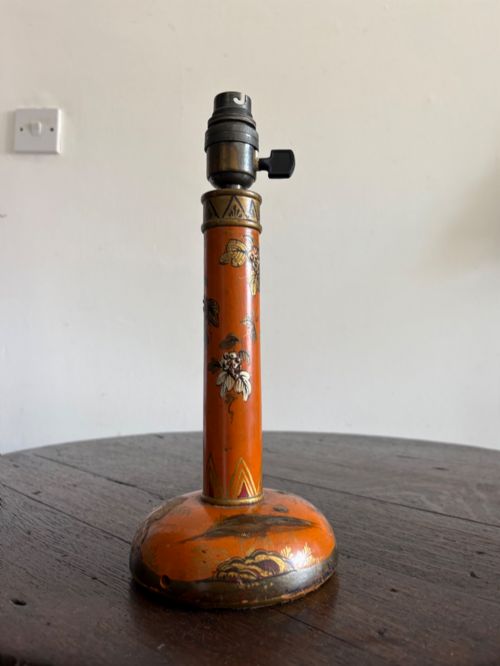
Bright mandarin orange hues and delicate hand-painted figures ensure these desks command attention, whether tucked into a quiet study or centre stage.
What separates the best examples
The depth and durability of the lacquered surface distinguish finer examples, showing careful layering and smooth polishing rather than flat, modern paint. Superior pieces retain crisp hand-painted details and gilt work that remain legible and well-preserved across centuries.
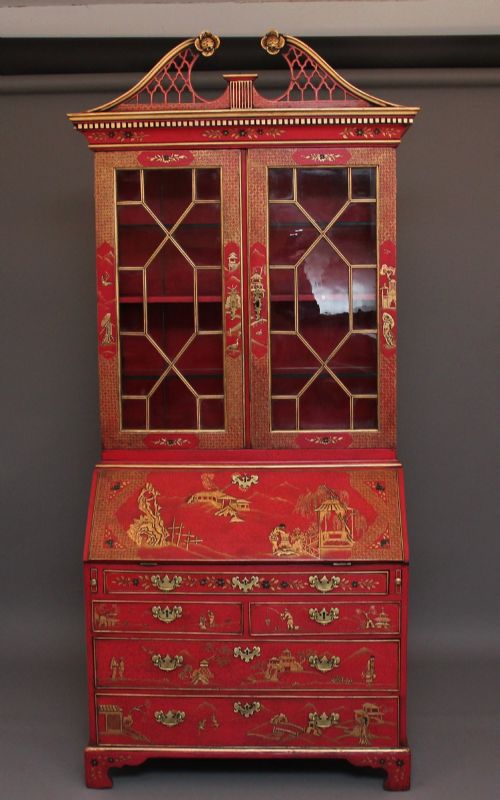
Structural integrity within the underlying woodwork, including solid joints in elm or secondary timbers, marks the work of skilled cabinetmakers. The harmony between the original form, such as a kidney shape or bureau bookcase configuration, and its decorative scheme dictates overall distinction.
The Red Lacquer Desk Glossary
- Lacquer
- A durable finish applied in multiple layers to a wooden base, creating a hard, glossy surface that resists wear. Historical pieces often utilise natural tree resins tinted with pigments.
- Chinoiserie
- European artistic styles reflecting Chinese artistic motifs and techniques, popular in furniture decoration during the Georgian and Victorian eras. This style frequently employs raised gilt figures and landscapes on coloured grounds.
- Bureau bookcase
- A writing cabinet featuring a sloping fall-front desk combined with upper shelving or book storage behind doors. These tall case pieces offer substantial storage alongside a fold-down writing surface.
- Bureau plat
- A flat-topped freestanding writing desk, typically featuring drawers beneath the main surface and finished on all sides. Originating in France, this form suited central placement within a room.
- Lowboy
- A small low dressing table or side table fitted with drawers beneath the top surface. These versatile pieces often rest on slender cabriole legs.
Red Lacquer Desk: Frequently Asked Questions
How do I clean red lacquer?
Dust surfaces gently with a soft, dry cloth to prevent scratching the delicate finish.
Avoid chemical polishes, abrasives, and excessive moisture, which can damage historical lacquer layers.
Where should I place my desk?
Position the piece away from direct sunlight and strong heat sources to prevent the lacquer from fading or cracking.
Allow enough space around freestanding bureau plat desks or bureau bookcases to showcase their detailed decoration.
Are these desks suitable for daily work?
Many historical writing desks offer functional surfaces and drawer storage appropriate for contemporary laptops and stationery.
Consider adding a protective glass top or a leather blotter if you use the writing surface intensively every day.
How do I date a lacquer desk?
Examine the secondary woods, construction joints, and the style of the brass hardware for period indicators.
Compare the painted Chinoiserie motifs and lacquer wear patterns against known examples from the Georgian, Victorian, and early twentieth century periods.