
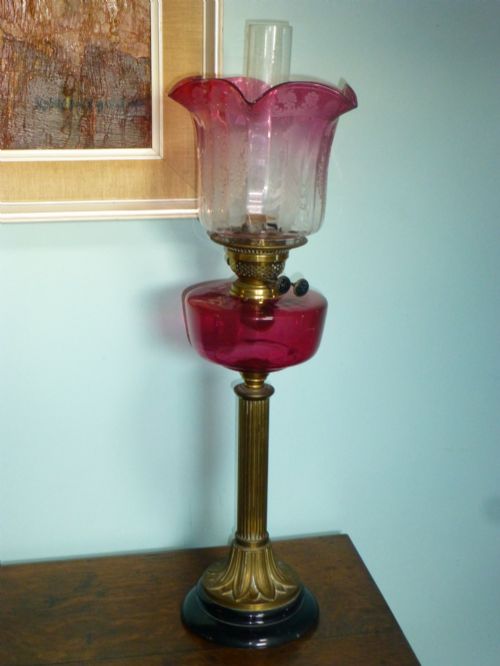


Red Glass Shade Light
These red glass shade light examples bring deep colour and warm illumination to interiors, uniting nineteenth-century oil lamps and Edwardian pendants.
Red Glass Shade Light
A red glass shade light encompasses everything from Victorian oil lamps with cranberry fonts to Edwardian pendant lamps and chandeliers. When searching for a red glass shade light, buyers encounter brass oil lamps, ceiling pendant shades, and cut glass components spanning the nineteenth century through the Art Deco period of the 1930s.
Victorian examples frequently pair ruby or cranberry glass with ornate brass columns and gas pole mountings. Edwardian and later pieces shift towards cut glass crystal, dimpled glass, and rise and fall ceiling fittings.
How they were made
Makers shaped these items using blown and cut glass, frequently employing cranberry or ruby glass alongside frosted finishes, enamel, and gold leaf detailing. Metalwork components utilise brass, coppered brass, gilt brass, and silver plating to support the glass shades and fonts.
Construction techniques include Corinthian column castings, botanical etchings on cranberry glass, and specialised gilding applied to chandelier bowls and metal frames.
Some Edwardian cut glass chandeliers feature unexpected red drips that add a playful splash of colour to the crystal.
What varies in quality
Quality differences emerge in the depth of the glass colour, the precision of the cut glass facets, and the weight of the brass or gilded metalwork. Hand-applied gilding, etched botanical details, and the complexity of fittings such as double burners set finer examples apart from standard production items.
Karl Palda
The Red Glass Shade Light Glossary
- Cranberry glass
- A transparent pinkish-red glass produced by adding gold chloride to the molten batch. It appears frequently in Victorian oil lamps and Edwardian ceiling lights.
- Ruby glass
- A deep red glass coloured with copper or gold, often heavier and darker than cranberry glass. It provides a rich glow when lit from within.
- Plafonnier
- A bowl-shaped ceiling light mounted close to the ceiling. These shades distribute diffused light downward into the room.
- Duplex burner
- A double-wick mechanism found on nineteenth-century oil lamps. It produces a brighter flame than single-wick burners and required larger glass shades.
- Cut glass
- Glass decorated by grinding facets or patterns into the surface using a wheel. This technique creates sparkling refractions when used in chandelier components and pendant shades.
Red Glass Shade Light: Frequently Asked Questions
How do I hang a pendant light?
Ceiling pendant lights suspend from wiring or chains attached to the ceiling rose. Many period fixtures use rise and fall mechanisms to adjust the height.
Ensure the ceiling structure supports the weight of the brass and glass components before installation.
Are old oil lamps converted?
Many oil lamps transition to electric table lamps or hanging lights while retaining their original brass columns and cranberry glass fonts.
Conversions allow these historical lighting items to function safely in modern homes.
What is cranberry glass?
Cranberry glass is a red or pink transparent glass created by introducing gold into the molten mixture. It became particularly popular during the Victorian era for oil lamps and decorative shades.
The colour intensity varies depending on the specific manufacturing process used.
How do I clean antique glass?
Clean glass shades using lukewarm water and a mild detergent, taking care around gilded or enamelled surfaces. Avoid harsh abrasives that might damage etched patterns or gold leaf.
Remove shades from their metal fittings before washing to prevent damage.