


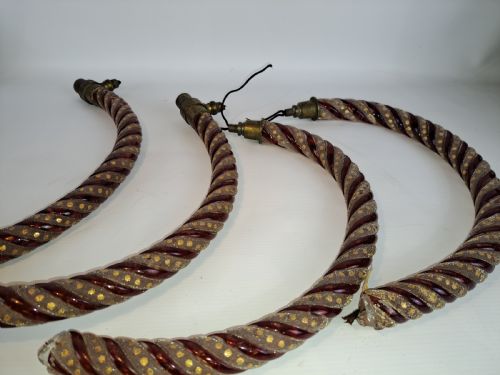


Red Glass Lamp
These red glass lamp pieces bring rich colour and warm light to a room, spanning Victorian oil lamps to Art Deco designs.
Red Glass Lamp
A red glass lamp brings distinct character to a room, drawing the eye through deep crimson and ruby tones. When searching for a red glass lamp, buyers encounter a variety of forms ranging from tall oil lamps to table lights and hanging fixtures.
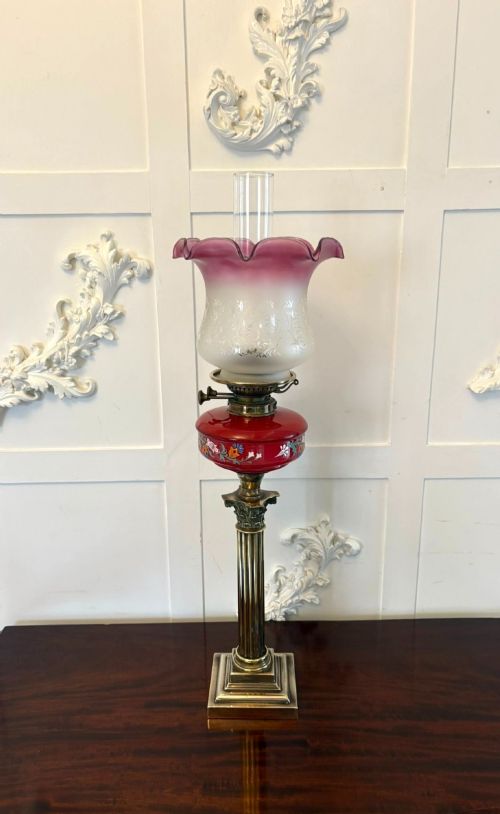
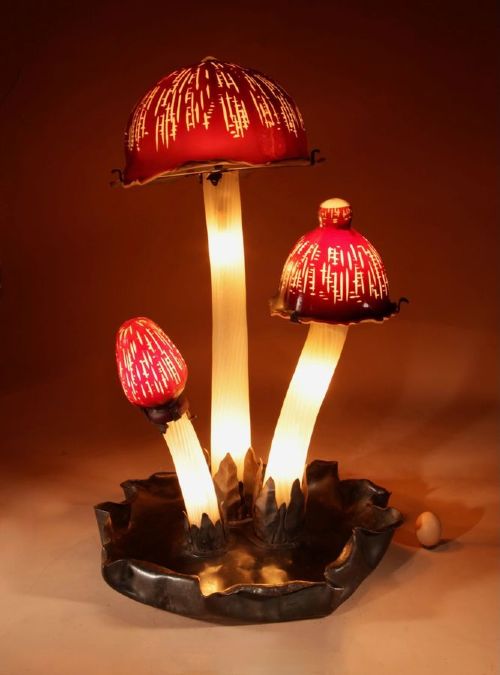
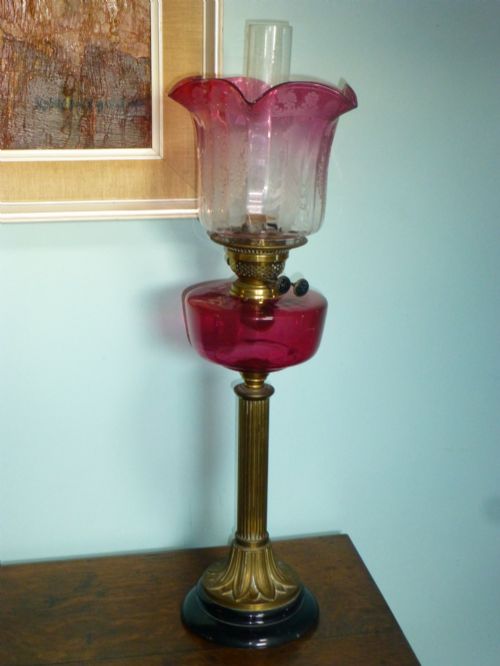
The selection on this page leans heavily towards Victorian oil lamps with cranberry glass fonts alongside 1930s Art Deco pieces. Makers utilised contrasting materials like brass columns and silver plated mounts to support the striking red vessels.
Origins stretch across the nineteenth century into the Edwardian era and the 1930s, encompassing Bohemian glasswork and British domestic lighting. Buyers find complete lighting units alongside specific components like replacement shades and chandelier arms.
How they were made
Glassmakers created the vibrant hues by incorporating gold or copper into the molten batch, producing distinct cranberry and ruby shades. Artisans often applied surface decoration through etching, enamelling, and gilding to enhance the visual depth of the glass.
Metalwork components relied on cast brass, silver plating, and gilded metal to form weighted bases and structural columns. Makers combined these metals with the glass fonts using threaded collars and secure mounts.
Red Glass Lamp Retail Price Guide 2026
Typical asking prices for red glass lamp among the pieces listed under this phrase on Sellingantiques today, from the lower quarter to the upper quarter. They describe what is for sale here now, not the wider market.
What varies in quality
Depth and saturation in the glass set finer examples apart from standard production, particularly in how the material catches light. Crisp detail in the hand-etched or gilded motifs indicates superior craftsmanship by the decorator.
The integrity of the structural metalwork, from heavy brass Corinthian columns to silver plated mounts, determines the overall solidity of the piece. Complete lamps retaining their original matched shades and burners hold greater integrity than composite examples.
The Red Glass Lamp Glossary
- Cranberry glass
- A transparent pinkish-red glass created by adding gold chloride to the molten batch. It appears frequently in nineteenth-century lighting and tableware.
- Duplex burner
- A double-wick mechanism common on late nineteenth-century oil lamps designed to provide increased illumination. These burners often sit atop brass columns and glass fonts.
- Corinthian column
- An architectural column style featuring an ornate capital decorated with acanthus leaves. Lamp makers adopted this classical form for brass table lamp bases.
- Finial
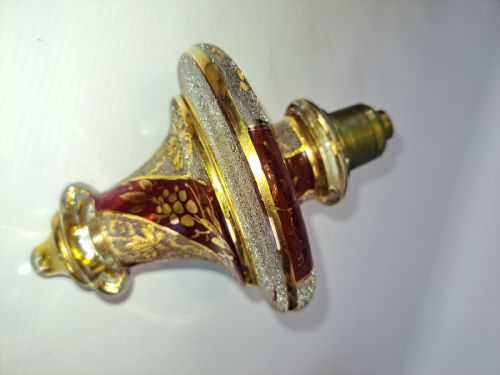
- A decorative terminal element used to secure a lamp shade or component in place. Examples in the evidence include gilded and etched glass designs.
Red Glass Lamp: Frequently Asked Questions
How do I clean a red glass lamp?
Wash the glass gently in warm soapy water using a soft cloth, avoiding abrasive pads that might scratch the surface. Keep moisture away from any metal mounts, electrical fittings, or paper-lined components.
Dry the glass thoroughly with a lint-free cloth to restore its clarity and shine. Polish brass or silver plated sections separately with appropriate metal cleaners, taking care not to touch the red glass.
Can antique oil lamps be electrified safely?
Many period oil lamps are converted for modern use by running a discreet flex through the original burner mechanism. This preserves the historical appearance while allowing safe everyday illumination in a home.
Have a qualified professional handle any electrical conversion to ensure the internal wiring meets current safety standards. Retaining the original burner parts ensures the aesthetic remains unchanged.
What is the difference between cranberry and ruby glass?
Cranberry glass possesses a lighter, pinker translucent quality achieved through gold melting techniques. It was widely utilised during the Victorian era for decorative lamp shades and oil fonts.
Ruby glass is a darker, more saturated crimson that often absorbs more light. Bohemian makers frequently used ruby glass for heavy, etched, and gilded decorative components.
How do I identify a Victorian oil lamp?
Victorian oil lamps typically feature a heavy brass or ceramic base supporting a coloured glass font. They often incorporate maker-marked double burners designed to use flat cotton wicks.
Look for period manufacturing marks on the brass turning knobs and structural stability in the column. The presence of hand-etched decoration on the glass font further points to nineteenth-century production.