

Red Gemstone Engagement Ring
A red gemstone engagement ring brings together rich crimson stones and bright diamonds in durable mountings spanning the Victorian era to the mid-twentieth century.
Red Gemstone Engagement Ring
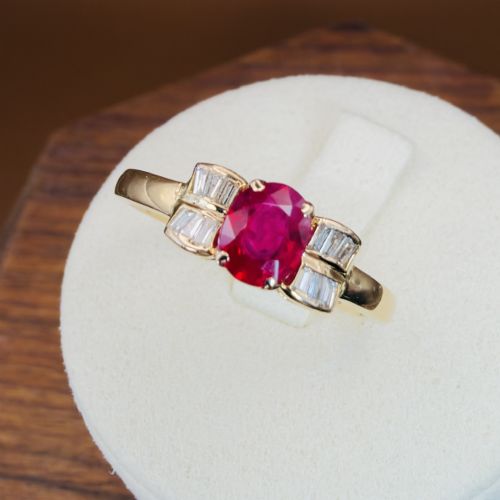
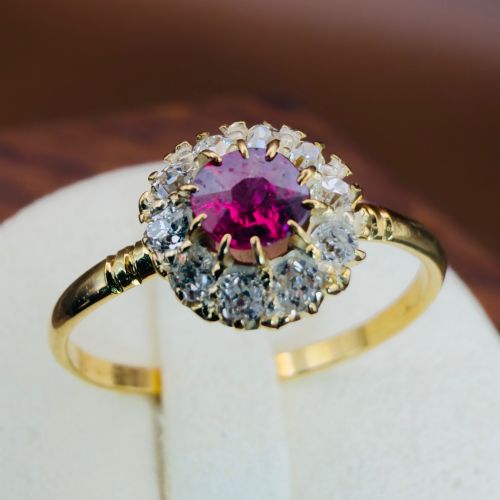
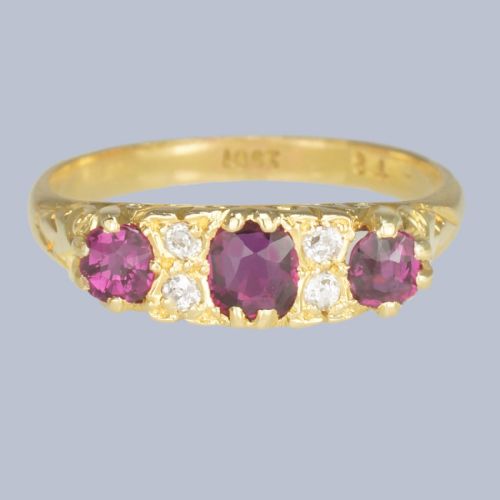
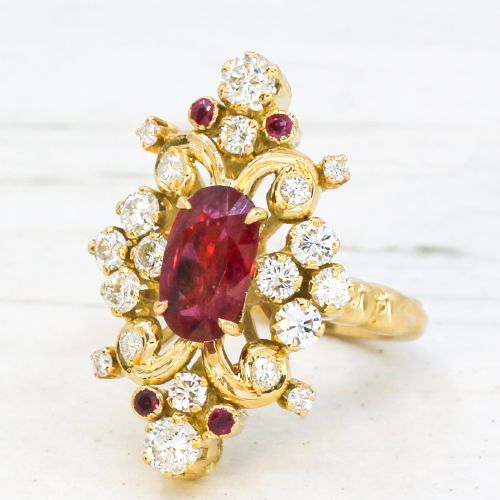
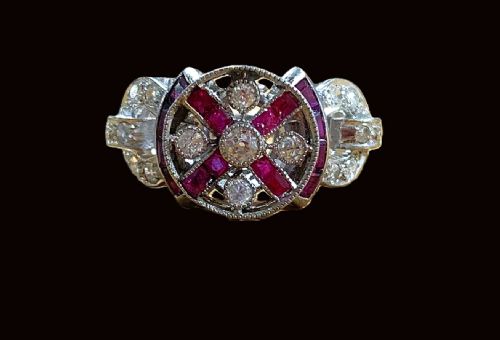
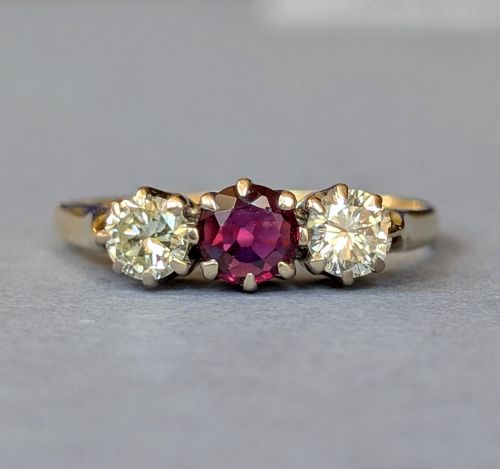
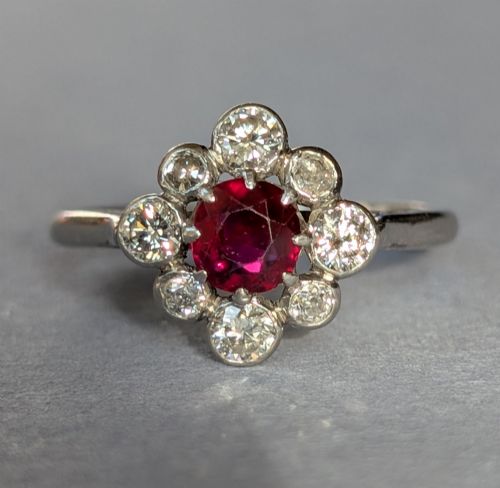
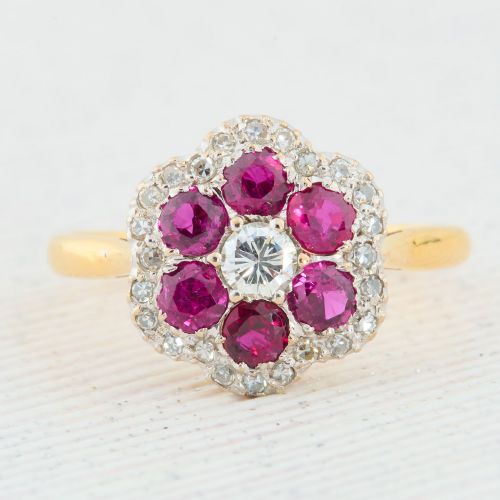
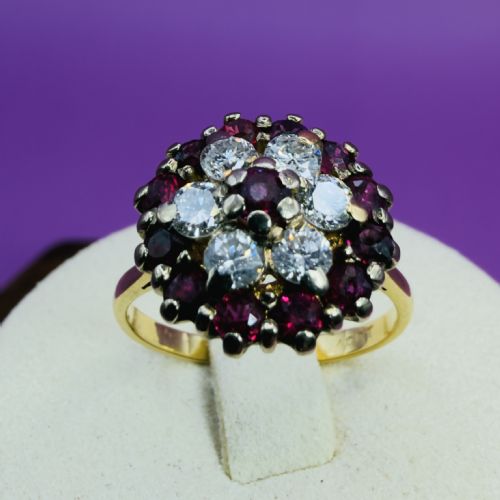
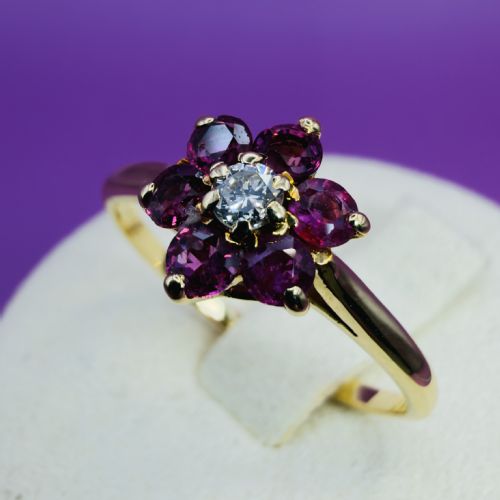
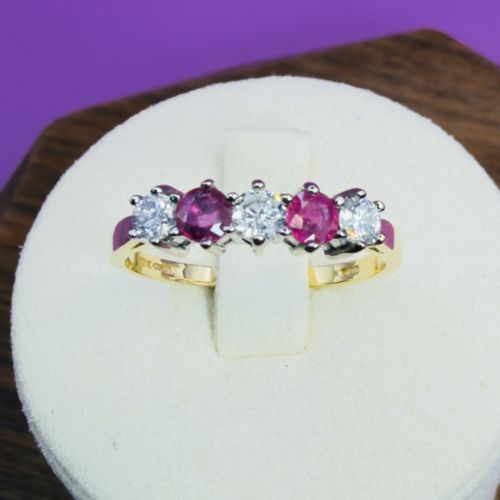
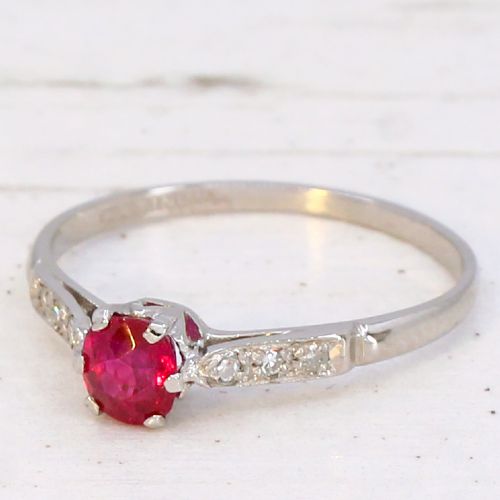
A red gemstone engagement ring relies primarily on rubies and garnets set alongside diamonds, appearing frequently in cluster, halo, and trilogy configurations. Buyers encounter traditional styles ranging from late nineteenth-century Victorian designs to geometric Art Deco creations and mid-century pieces.
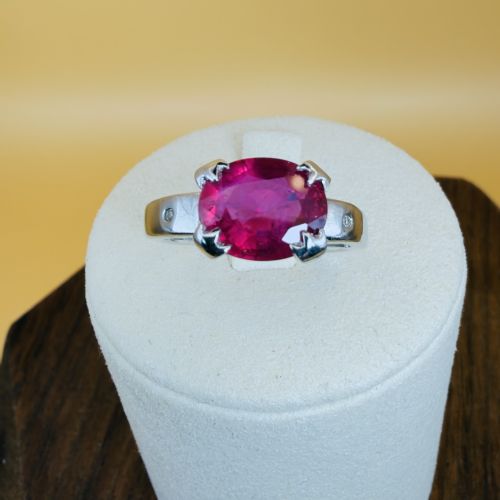
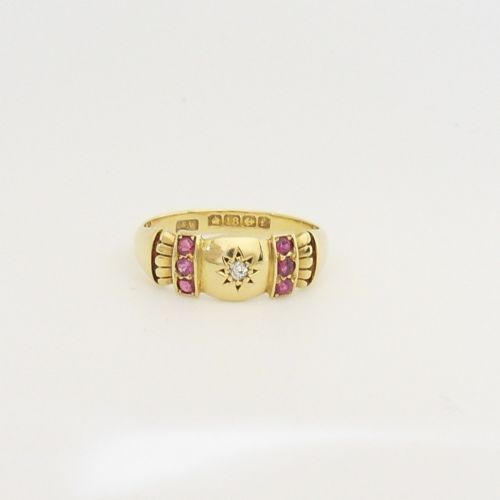
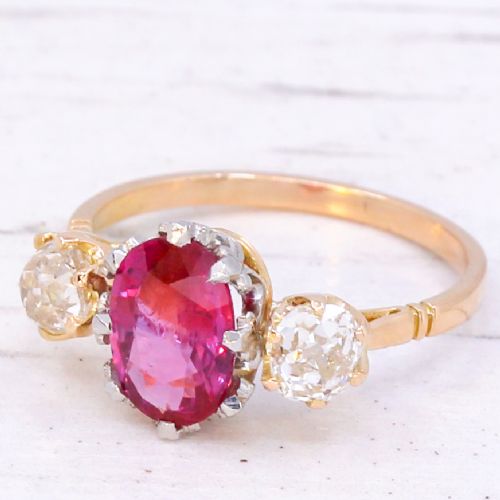
The selection encompasses yellow gold, white gold, platinum, and higher-carat bands such as 18ct and 22ct gold. Forms include floral daisy clusters, starburst settings, and elongated oval cuts designed to showcase the central red stone.
How they were made
Goldsmiths utilised durable precious metals including platinum and 18ct yellow or white gold to construct secure settings for softer red gemstones and diamonds. Stones were shaped using oval, old-cut, baguette, and marquise cuts before being secured in claw or halo arrangements.
Craftsmen incorporated detailed metalwork such as carved half-hoop shoulders and starburst engravings into the bands. Gemstones often originated from Burmese sources like Mogok and Mong Hsu, accompanied occasionally by historical gemmological reports.
Several rings proudly display secret starburst engravings hidden beneath the gemstone bezels.
What varies in quality
Quality separates pieces by the natural origin, unheated status, and saturation of the central red gemstone, alongside the carat weight and clarity of the surrounding diamonds. Burmese rubies of significant size command attention for their depth of colour and lack of thermal treatment.
The integrity of the mounting also dictates worth, with substantial platinum and high-carat gold settings demonstrating superior craftsmanship compared to lighter commercial mounts. Preservation of original hand-cut facets on both diamonds and rubies indicates higher-tier manufacture.
The Red Gemstone Engagement Ring Glossary
- Cluster ring
- A setting where a central gemstone is surrounded by a group of smaller stones, typically diamonds encircling a ruby.
- Old cut
- An early diamond cutting style featuring a smaller table, higher crown, and open culet, common in antique pieces.
- Unheated
- A descriptor for natural gemstones that have not undergone thermal enhancement to improve their colour or clarity.
- Trilogy ring
- A three-stone ring design representing the past, present, and future, frequently featuring a ruby flanked by diamonds.
- Halo cluster
- A mounting where smaller accent stones form a continuous ring directly enclosing a larger focal gem.
Red Gemstone Engagement Ring: Frequently Asked Questions
How do I care for a ruby engagement ring?
Clean the ring gently using warm soapy water and a soft brush, avoiding harsh chemical dips or ultrasonic cleaners if the stones are treated.
Store the piece separately in a fabric-lined box to prevent the diamonds from scratching the softer gold or platinum band.
Are all red gemstones in these rings rubies?
While the majority of red stones in these rings are rubies, some antique and vintage examples feature garnets set in platinum or gold.
Gemmological reports often accompany Burmese rubies to confirm their natural origin and differentiate them from other red minerals.
What periods do these rings come from?
The selection spans the Victorian, Edwardian, Art Deco, and mid-century eras, reflecting changing design preferences from the nineteenth century onward.
Victorian and Edwardian pieces often feature intricate floral or starburst motifs, whereas Art Deco rings favour geometric lines and platinum settings.