




Red Enamel Jewellery
Red enamel jewellery brings together bright crimson glass surfaces and precious metals across periods from the Georgian era to the mid-century.
Red Enamel Jewellery
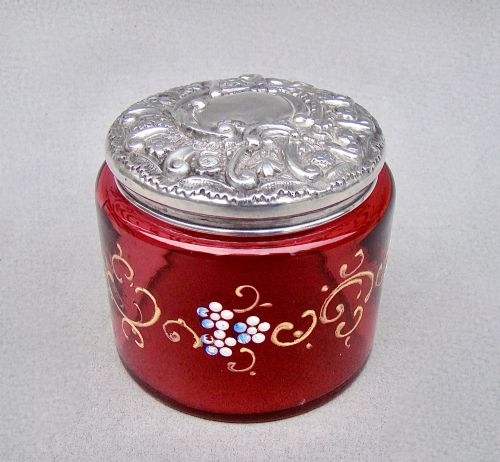
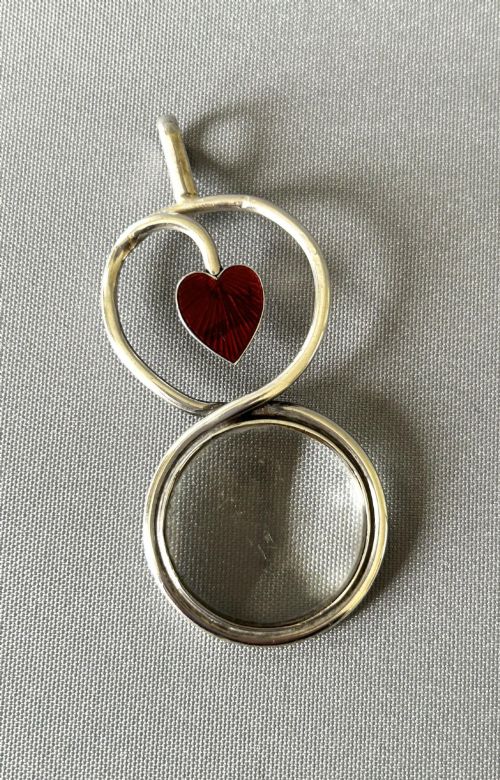
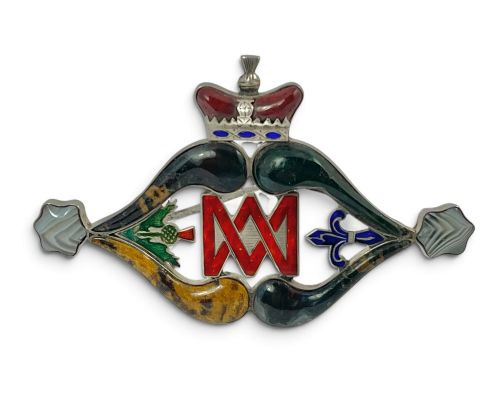
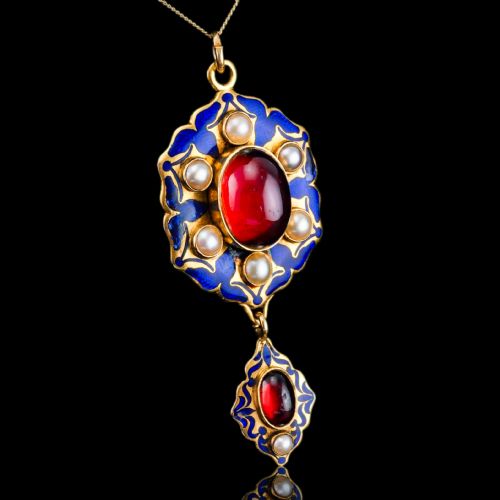
Red enamel jewellery covers a varied selection of brooches, pendants, cufflinks, and bracelets spanning the Georgian, Victorian, and twentieth-century periods. When searching for red enamel jewellery, a buyer encounters pieces executed in silver, gold, and base metals, often incorporating stones such as garnets, pearls, and coral alongside the vitreous coating.
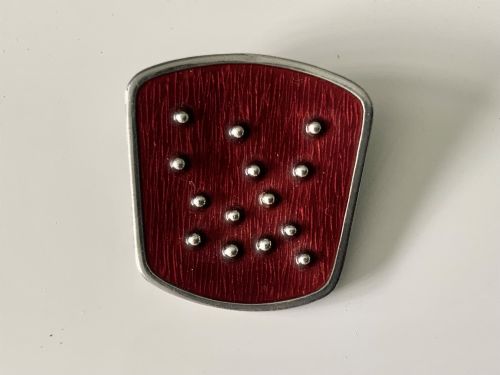
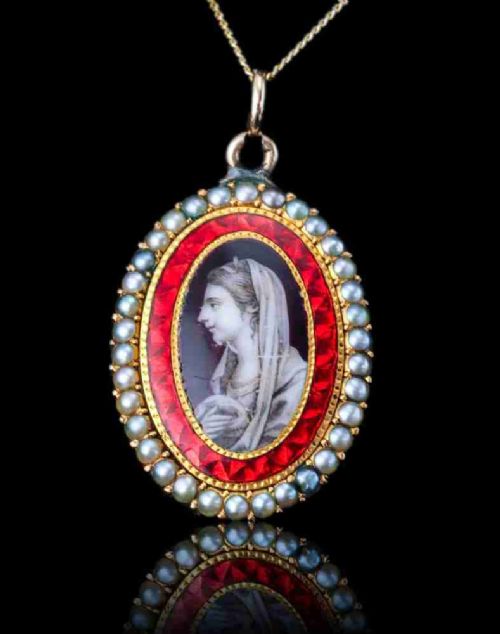
The objects on this page range from nineteenth-century silver brooches and gold pendants to Art Deco geometric cufflinks and mid-century Norwegian butterfly brooches. Styles shift from ornate Victorian revivals and Arts and Crafts designs to clean modernist lines of the 1930s and 1950s.
Materials and technique
Maker's workshops fused powdered glass onto metal bases under high heat to create the smooth coloured surfaces seen on these pieces. Sterling silver, yellow gold, and platinum form the structural supports, frequently paired with decorative elements like seed pearls, garnets, and coral.
Techniques varied from traditional guilloche engraving beneath translucent red enamel to plique-a-jour work and applied Maltese cross medals. Artisans utilised silver plating and gilt bronze alongside solid high-carat gold depending on the workshop and period.
Red Enamel Jewellery Retail Price Guide 2026
Typical asking prices for red enamel jewellery among the pieces listed under this phrase on Sellingantiques today, from the lower quarter to the upper quarter. They describe what is for sale here now, not the wider market.
Several items showcase miniature dice and tiny cross medals, proving that historical dress codes still allowed for playful accessories.
Assessing the pieces
Quality in red enamel jewellery rests upon the precision of the metalwork and the condition of the fused glass surface. Pieces originating from known designers or established workshops demonstrate superior finishing in the mountings and detail of the enamel.
The depth of the colour and the complexity of the underlying technique, such as engine-turned guilloche patterns beneath translucent red layers, distinguish finer examples from simpler production items.
Aksel Holmsen·Knox for Liberty and co·Murrle Bennett·Fahrner and Bennett
The Red Enamel Jewellery Glossary
- Guilloche
- A decorative mechanical engraving technique that etches precise geometric patterns into a metal surface before a translucent enamel layer is applied. This allows light to reflect through the coloured glass.
- Plique-a-jour
- An enamelling technique where the enamel is applied within a wire framework without a backing metal, creating a stained-glass effect that lets light pass directly through.
- Holbeinesque
- A nineteenth-century revival style inspired by Renaissance jewellery designs, typically featuring heavy gold settings, enamel work, and hanging pearls or gemstones.
- Secessionist
- An early twentieth-century Central European design movement focused on geometric forms and rejection of historicism, closely linked to the Wiener Werkstatte.
Red Enamel Jewellery: Frequently Asked Questions
How do I clean red enamel jewellery?
Vitreous glass enamel is durable but sensitive to harsh chemical cleaning agents and sudden temperature changes. Use a soft damp cloth with mild soap and dry thoroughly.
Avoid soaking antique silver or gold mounts with pearls or coral in water, as moisture damages organic gemstones and weakens historic settings.
Is red enamel fragile?
Enamel is essentially fused glass set onto a metal base. While resilient to daily wear when properly mounted, sharp impacts can cause chipping or cracking.
Store pieces individually in soft pouches to prevent scratching against other items in your collection.
What periods feature red enamel?
Red enamel appears across Georgian, Victorian, Arts and Crafts, Art Deco, and mid-century pieces in this collection. Each era applied the material differently, from delicate portrait miniatures to geometric modernist cufflinks.
Twentieth-century examples often utilise sterling silver or chrome bases, whereas earlier items frequently employ high-carat gold.
How do I date a piece?
Dating relies on stylistic markers, metal purity stamps, and specific manufacturing techniques. Art Deco pieces display geometric patterns from the 1930s, while Victorian items often incorporate heavier revival motifs.
Maker's marks and hallmarks provide further clues to the exact workshop and decade of production.