

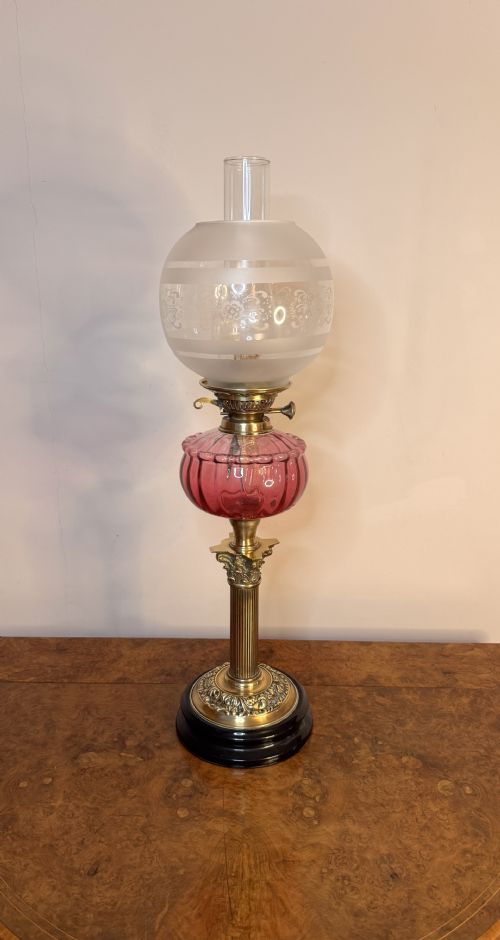
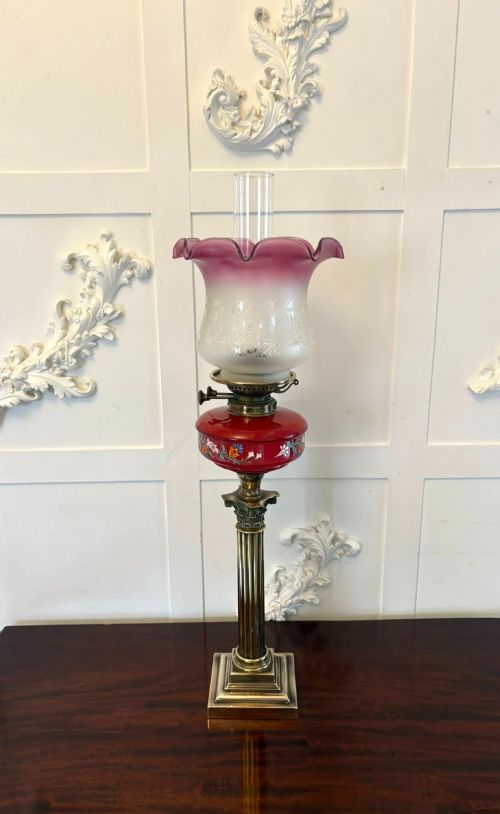
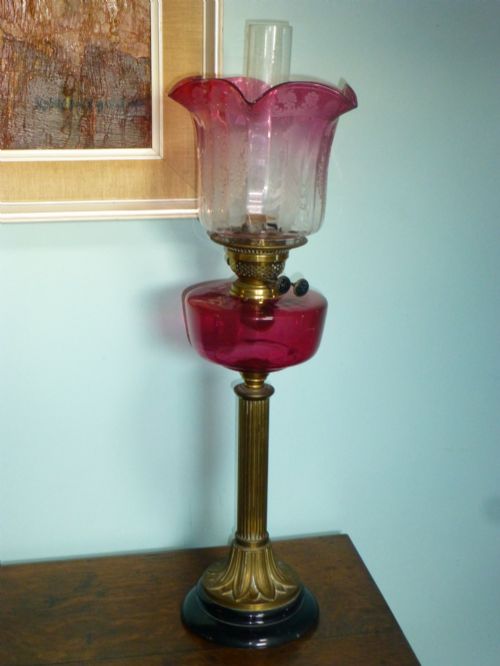
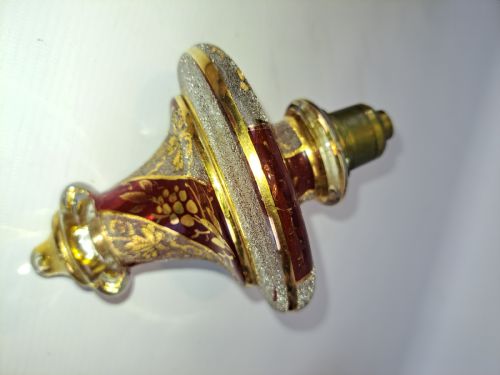


Red Cranberry Glass Lamp
These red cranberry glass lamp pieces bring a warm, rich tone to a room, offering the striking coloured lighting that collectors seek.
Red Cranberry Glass Lamp
A red cranberry glass lamp brings together striking coloured glass and functional lighting, taking forms such as oil lamps, table lamps, pendant lights, and candle holders. These pieces primarily date from the Victorian and Edwardian eras, spanning periods from the 1860s through to 1900.
The most common examples on this page are oil lamps featuring cranberry glass fonts paired with brass columns, alongside table lamps with ruby etched glass shades. Items range from complete duplex double burner setups down to individual lampshades, finials, and hanging lights with dimpled red glass.
Makers and designers worked within the Victorian and Bohemian styles, applying decoration like etching and gold leaf. The collection also includes matching pairs of ruby glass and silver plated candle holders from around 1900.
How they were made
Cranberry and ruby glass formed the vibrant vessels and shades, shaped by skilled glassmakers using gold to achieve the characteristic deep red hue. Clear glass also appears alongside these red tones in various components.
Metalwork played a structural role, utilising brass, silver plating, and gilded metal work to support the glass fonts and shades. Corinthian columns and decorative finials added architectural detail to the heavier lamp bodies.
Surface ornamentation involved etching intricate patterns into the ruby glass, complemented by the application of gold leaf and enamel details. Double burners and specialised fittings completed the functional assembly of the lighting pieces.
Red Cranberry Glass Lamp Retail Price Guide 2026
Typical asking prices for red cranberry glass lamp among the pieces listed under this phrase on Sellingantiques today, from the lower quarter to the upper quarter. They describe what is for sale here now, not the wider market.
Listings feature items spanning the Victorian and Edwardian eras, specifically highlighting pieces dated across the 1860s, 1870s, 1880s, 1890s, and 1900.
What varies in quality
The sophistication of the glasswork dictates the upper tier of these pieces, where skilled etching and rich, even cranberry or ruby coloration display greater depth. Simpler, unadorned glass forms sit at the more straightforward end of the scale.
The pairing of materials defines the refinement of the construction, with substantial brass columns, Corinthian capitals, and silver plated mounts offering a more resolved design than basic metal fittings. Complete setups featuring double burners and matching shades represent a higher standard of preservation than isolated components.
The Red Cranberry Glass Lamp Glossary
- Cranberry glass
- A transparent, pinkish-red glass created by adding gold chloride to the molten batch. It gained popularity during the Victorian era for tableware and decorative lighting.
- Ruby glass
- A deep red glass similar to cranberry glass, often achieved through similar metallic colourants. It frequently serves as the base for etched and gilded ornamentation in Bohemian pieces.
- Duplex burner
- A double-wick mechanism found on Victorian oil lamps. It provided a brighter illumination than single-wick designs and required a wider font collar.
- Finial
- A decorative terminal knob used to secure a lampshade or architectural element. In these listings, they appear in etched and gilded glass.
- Corinthian column
- A classical architectural column style featuring ornate, acanthus-leaf capitals. Victorian lamp makers adopted this form for brass lamp pedestals.
Red Cranberry Glass Lamp: Frequently Asked Questions
What is a cranberry glass lamp?
A cranberry glass lamp is a Victorian or Edwardian lighting piece that incorporates transparent pinkish-red glass, usually found in the fuel font or the shade.
These lamps often combine the coloured glass with brass columns, ceramic elements, or silver plated mounts to create decorative table and oil lamps.
How do I date an antique oil lamp?
Dating relies on examining the materials, burner mechanisms, and manufacturing styles recorded across the Victorian and Edwardian periods.
Earlier examples from the 1860s often feature classic architectural brass columns, while pieces from 1890 onwards frequently introduce etched ruby shades and paired table lamp formats.
Where were Bohemian ruby glass lamps made?
Bohemian glass was produced in the historical region of Bohemia, now part of the Czech Republic, known for skilled glassmaking traditions.
Craftsmen in this region specialised in deep ruby glass decorated with detailed etching and gold leaf application.
How do I clean antique glass lamps?
Cleaning requires gentle handling of the delicate materials, particularly where gold leaf, enamel, or etching is present on the glass surface.
Metal components like brass and silver plating benefit from being kept separate from moisture and harsh polishes to preserve their original finish.