



Red Chinese Cabinet
These large storage pieces and smaller table chests bring bright colour and historical presence into a room.
Red Chinese Cabinet
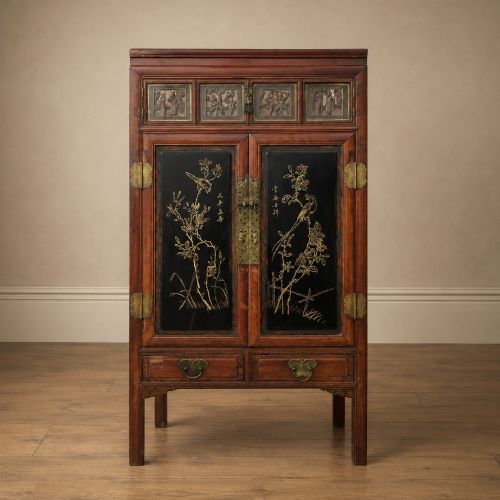
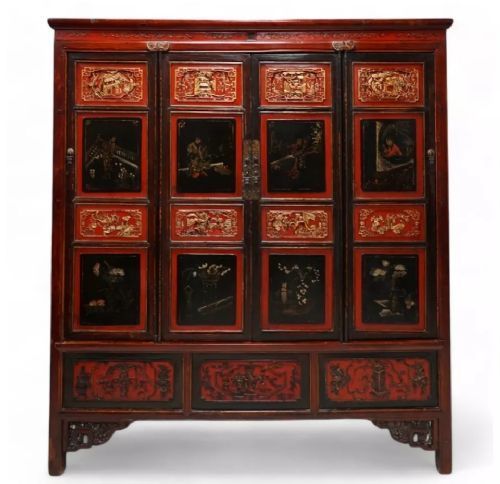
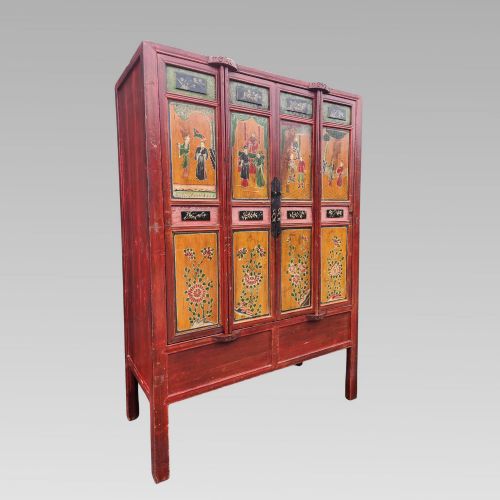
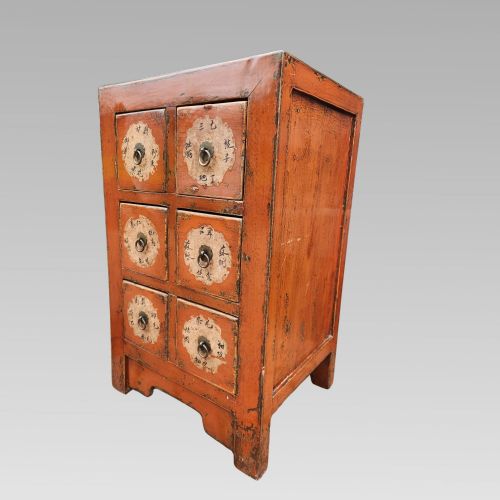
A red chinese cabinet encompasses substantial marriage and wedding storage units, provincial cupboards, and compact apothecary chests originating from periods spanning the eighteenth to the early twentieth century. Buyers seeking this phrase encounter large wardrobe cabinets alongside smaller side cabinets, bedside chests, and tabletop boxes.
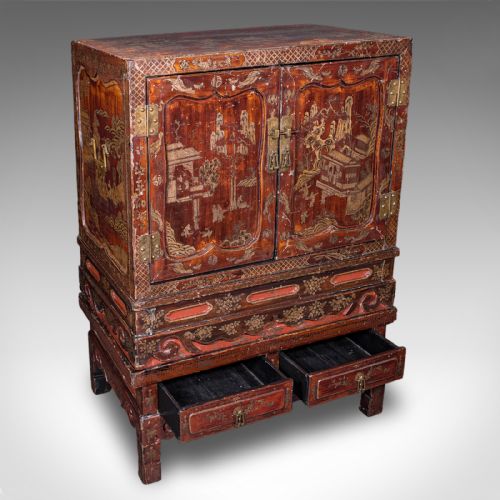
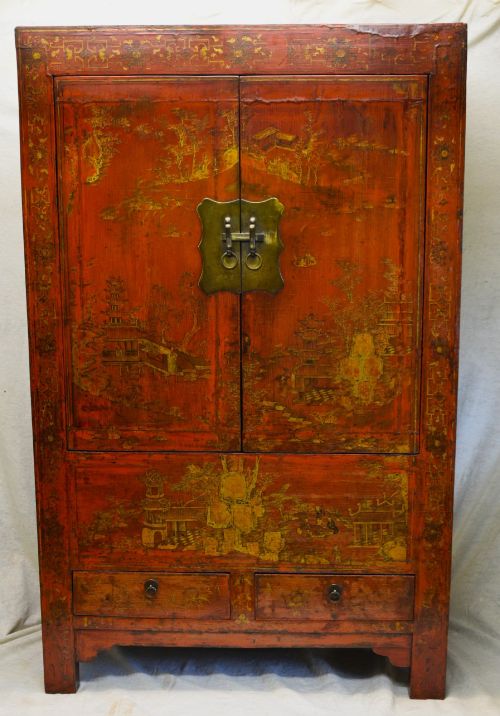
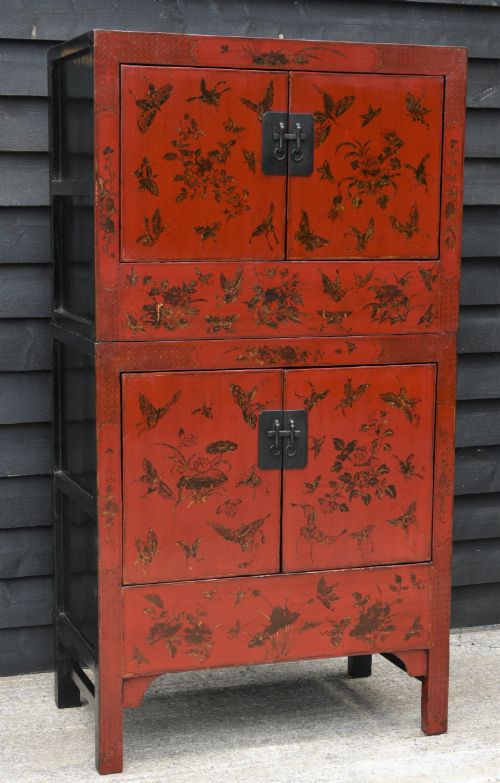
The selections reflect traditional Chinese forms, including Qing Dynasty provincial pieces from regions such as Shanxi and Fujian, alongside later Chinoiserie interpretations. Large double-door wedding cupboards dominate the larger formats, while multi-drawer apothecary chests and noodle cabinets provide alternative storage scales.
How they were made
Construction relies heavily on native timbers such as elm and general hardwood, providing sturdy frames for elaborate surface finishes. Artisans applied successive layers of lacquer to the wood, frequently incorporating gold leaf detailing and carved elements.
Hardware details incorporate brass and iron hinges, lock plates, and drawer pulls that contrast with the red surface lacquer. Certain examples utilise intricate relief carving or cinnabar finishes to create textured decorative panels.
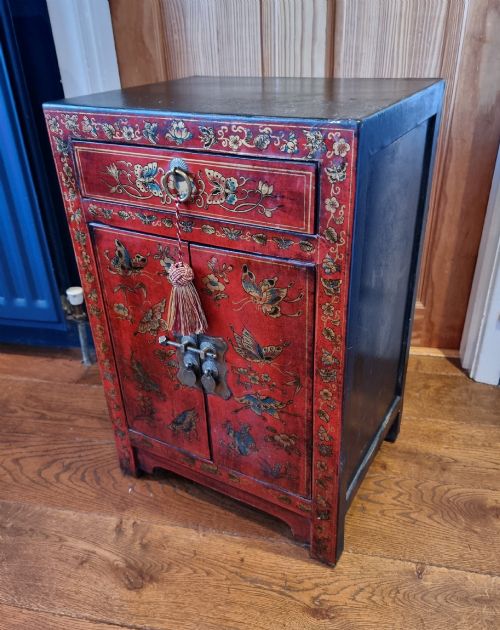
Object forms range from monumental marriage wardrobes and side cabinets down to compact apothecary chests and tabletop jewellery boxes.
What varies in quality
The distinction between tiers rests upon the depth of the lacquering process, the preservation of the original surface, and the fineness of any carved or gilded detailing. Pieces featuring rich layering and untouched provincial character command greater attention than heavily restored equivalents.
Structural integrity of the timber framing and the original placement of brass or iron hardware also separate standard items from exceptional examples. The crispness of carved motifs and the stability of the wood determine the overall standard.
The Red Chinese Cabinet Glossary
- Lacquer
- A durable resin finish applied in multiple coats to wooden furniture to provide a hard, glossy protective surface. This technique forms the primary visual characteristic of these storage pieces.
- Chinoiserie
- European decorative style reflecting Chinese artistic influences, frequently seen applied to British and continental furniture of later periods. It employs motifs inspired by East Asian design.
- Marriage cabinet
- Large freestanding wardrobe piece traditionally given as a wedding gift in China to store clothing and valuables. These items often feature prominent brass lock plates and red finishes.
- Apothecary chest
- Cabinet fitted with numerous small drawers originally designed for storing herbs and medicines. They offer compartmentalised storage in tabletop or floor-standing formats.
- Qing Dynasty
- The final imperial dynasty of China, lasting from sixteen-forty-four until nineteen-home-and-twelve, encompassing many provincial red cabinets seen today. Pieces from this era display traditional joinery and decorative conventions.
Red Chinese Cabinet: Frequently Asked Questions
How were red chinese cabinets used originally?
These pieces served primarily for domestic storage, holding clothing, linens, and personal valuables within the household. Large wedding cupboards held textiles gifted to brides, while smaller chests organised medicines and documents.
Over time, specific forms evolved to suit provincial homes, ranging from tall floor-standing wardrobes to compact bedside units and tabletop storage boxes.
How do I style a red chinese cabinet at home?
The striking red finish allows these storage pieces to function as focal points in modern living spaces, hallways, or bedrooms. Pairing them against neutral walls lets the lacquer colour and hardware details stand out without visual competition.
Smaller side cabinets and apothecary chests integrate easily as bedside tables or accent surfaces, combining practical storage with historical character.
How do I distinguish between periods?
Dating relies on observing construction methods, timber selection, and the wear patterns within the lacquer layers. Eighteenth-century Qing Dynasty examples typically show deeper patination and specific regional joinery traits.
Nineteenth and early twentieth-century pieces often display brighter red tones and varied brass hardware configurations, reflecting shifts in provincial production over time.
What is the difference between wedding cabinets and apothecary chests?
Wedding cabinets provide tall, enclosed vertical storage behind large doors, designed for garments and textiles. They present a commanding presence with prominent brass hardware plates.
By contrast, apothecary chests feature grids of small exterior drawers intended for sorting herbs, powders, or small objects, resulting in a distinct multi-compartment facade.