



Red and White Staffordshire
These red and white staffordshire figures are the cheerful earthenware dogs, cows, and cats that bring nineteenth-century shelf presence into a room.
Red and White Staffordshire
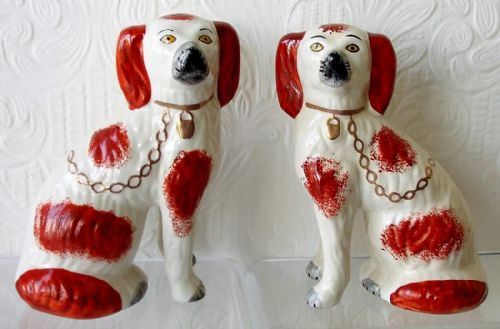
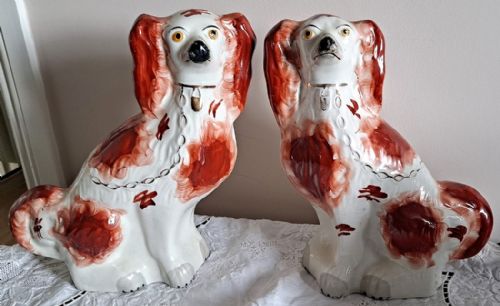
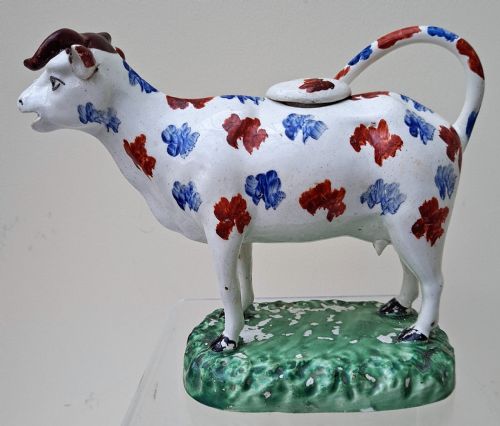
When buyers search for red and white staffordshire, they encounter a distinct group of nineteenth-century ceramic figures including spaniel dogs, cow creamers, and cats. These decorative objects range from Georgian folk art pieces to later Victorian mantel ornaments.
The most common examples on this page are pairs of seated spaniel dogs, often modelled as comforter spaniels. Alongside these dogs appear cow creamers with calves and flat-back spill holders, reflecting domestic rural themes.
Originating primarily from the nineteenth century, these earthenware pieces span Regency and Victorian eras. Their forms are designed specifically for display on mantels and sideboards.
How they were made
Gilt accents occasionally highlight collars, chains, and facial details on the better figures. The combination of ceramic, glaze, and enamel creates the familiar glossy finish seen across the nineteenth-century output.
Red and White Staffordshire Retail Price Guide 2026
Typical asking prices for red and white staffordshire among the pieces listed under this phrase on Sellingantiques today, from the lower quarter to the upper quarter. They describe what is for sale here now, not the wider market.
Some nineteenth century cats gaze out with expressions so stern they appear to judge every visitor in the room.
What varies in quality
The distinction between standard commercial output and finer pieces lies in the crispness of the modelling and the precision of the enamel painting. Stronger examples display clear facial expressions and carefully applied colour rather than rushed brushwork.
Pairs show greater desirability when the two figures match closely in scale and decoration. The depth of the glaze and the preservation of any gilt details further separate the ordinary items from the superior ones.
The Red and White Staffordshire Glossary
- Earthenware
- Porous pottery fired at lower temperatures, forming the basic ceramic body for most Staffordshire figures. It requires a glaze to hold liquids and create a smooth surface.
- Lead glaze
- A glossy coating applied to pottery before firing that produces a shiny, reflective finish. This surface protects the underlying enamel paint and earthenware body.
- Spill holder
- A hollow upright section attached to a figure, designed to hold wooden spills for lighting fires. These practical additions sit behind the main sculptural subject.
- Cow creamer
- A ceramic vessel shaped as a cow with a milk pouring opening on the back and a tail forming the handle. They combine utilitarian function with animal modelling.
- Flat back
- A style of figure where the rear is unadorned and left flat, intended for placement against a wall or mantelpiece. This method saved material and production time.
Red and White Staffordshire: Frequently Asked Questions
What are red and white staffordshire dogs?
These earthenware figures represent seated spaniels, commonly produced in pairs during the nineteenth century. Potters designed them to sit on mantelpieces as decorative ornaments.
They often feature red enamel markings and gilded chains or collars. Their enduring appeal stems from their homely and traditional appearance.
How were cow creamers used?
Cow creamers served as functional vessels for holding and pouring cream at the dining table. Milk was poured through an opening on the cow's back.
Many examples include a small calf standing beside the main cow. They bridge the gap between utilitarian kitchenware and decorative Victorian pottery.
What is a flat back figure?
A flat back figure is a ceramic piece moulded with an unadorned, flat rear surface. This construction allowed the object to sit flush against a wall or the back of a shelf.
This method was standard practice for Victorian mantel ornaments. It concentrated the sculptural detail entirely on the front view.
How do you date nineteenth century pottery?
Dating relies on stylistic clues, manufacturing techniques, and material composition seen across Regency and Victorian periods. Earthenware types and glaze characteristics help narrow the timeframe.
Comparative study of standard forms like spaniels and cow creamers provides further context. Specific design shifts indicate whether a piece belongs to the earlier Georgian folk art tradition or later Victorian production.