

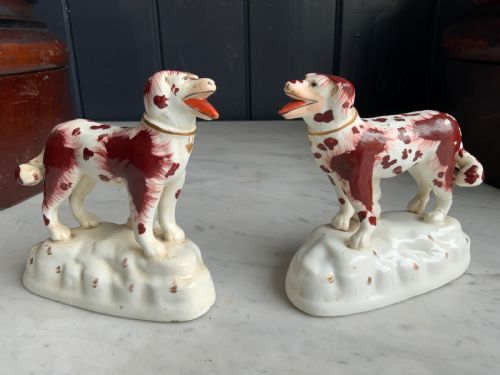


Red and White Pottery Dogs
These red and white pottery dogs are classic mantelpiece figures, bringing instant charm and traditional character to any interior.
Red and White Pottery Dogs
Red and white pottery dogs encompass ceramic figures and decorative figurines, most frequently appearing as Victorian Staffordshire spaniels and comforter spaniels. These pairs of dogs traditionally sat on mantelpieces in nineteenth-century homes, offering a comforting domestic presence.
The selection on this page centres primarily on nineteenth-century English pottery, spanning the Regency period through to the eighteen-eighties. Alongside these Staffordshire pairs, the listings also include mid-seventeenth-century Chinese transitional jars featuring iron red enamel painting.
Buyers seeking red and white pottery dogs will find that paired Staffordshire spaniels dominate the available forms. These earthenware and porcelain figures capture the distinct aesthetic of Victorian mantel ornaments.
How they were made
Potters utilised earthenware and porcelain as the primary base materials for shaping these ceramic figures. Artisans then applied glazes and enamel paint to achieve the characteristic red and white colouring visible across the spans of the nineteenth century.
Earlier seventeenth-century pieces demonstrate different techniques, such as the application of iron red and green enamels against a blue and white ceramic body. Gilt highlights occasionally appear on these pottery and porcelain surfaces to add fine detail to collars and chains.
Red and White Pottery Dogs Retail Price Guide 2026
Typical asking prices for red and white pottery dogs among the pieces listed under this phrase on Sellingantiques today, from the lower quarter to the upper quarter. They describe what is for sale here now, not the wider market.
What varies in quality
The crispness of the enamel painting and the precision of the glaze application determine the visual strength of each figure. Softer, more expressive facial details and careful brushwork separate the finest Staffordshire spaniels from simpler commercial productions.
Material choice also influences the piece, with delicate porcelain examples offering a different tactile and visual weight compared to sturdy earthenware pottery. The survival of original gilt accents and clean red markings preserves the intended decorative impact.
The Red and White Pottery Dogs Glossary
- Earthenware
- A porous pottery fired at relatively low temperatures and typically covered in an opaque glaze. It forms the heavy base body for most nineteenth-century Staffordshire figures.
- Comforter spaniel
- A nineteenth-century ceramic dog figure modelled on the King Charles spaniel. These paired ornaments gained popularity as domestic hearth and mantel decorations.
- Regency
- A British architectural and decorative style period spanning the early nineteenth century. Pieces from this era often display specific neoclassical influences before the full Victorian aesthetic took hold.
- Enamel paint
- A hard, glossy paint applied over fired ceramics and subsequently fired at a lower temperature to fuse with the glaze. It provides the vibrant red markings on these pottery dogs.
Red and White Pottery Dogs: Frequently Asked Questions
What are Staffordshire comforter spaniels?
Staffordshire comforter spaniels are ceramic dog figures made in pairs to sit on either side of a fireplace mantel. Potters designed these earthenware ornaments to look out over the room, mimicking real household pets.
Victorian households prized these red and white pottery dogs for their domestic appeal. They remained fixtures in British homes throughout the nineteenth century.
How do I date these pottery dogs?
Dating relies on stylistic clues, glaze characteristics, and the type of ceramic body used in the construction. Nineteenth-century Staffordshire pieces typically feature hand-painted red markings over a white earthenware glaze.
Consulting the specific period markers helps distinguish Regency examples from later Victorian productions. Subtle shifts in modelling styles reflect the changing manufacturing tastes of the era.
Why are they mostly found in pairs?
Victorian interior design favoured symmetry, making paired mantel ornaments the standard arrangement for decorative displays. Potters produced these spaniels as matching left and right configurations.
Keeping the pair together preserves the intended visual balance of the mantelpiece display. Separating them disrupts the traditional symmetry expected by nineteenth-century decorators.