

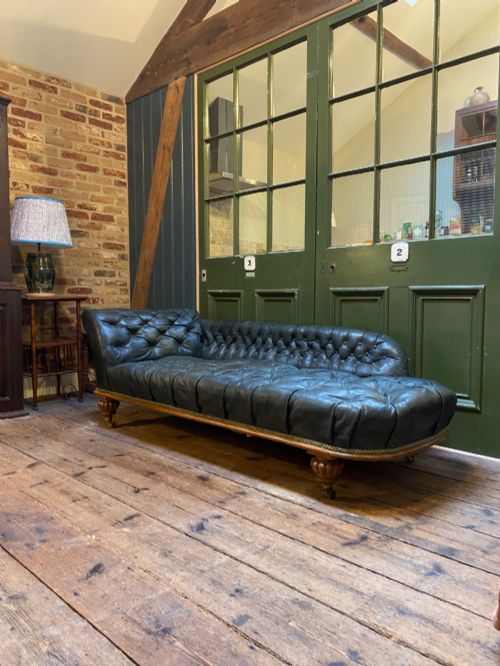
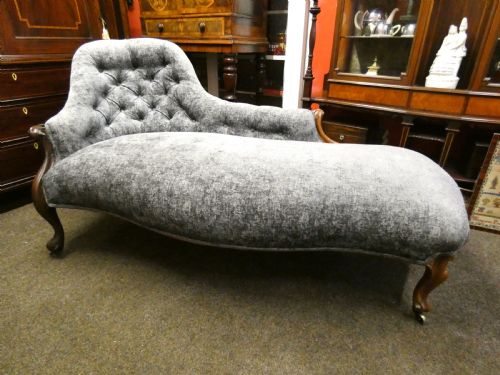
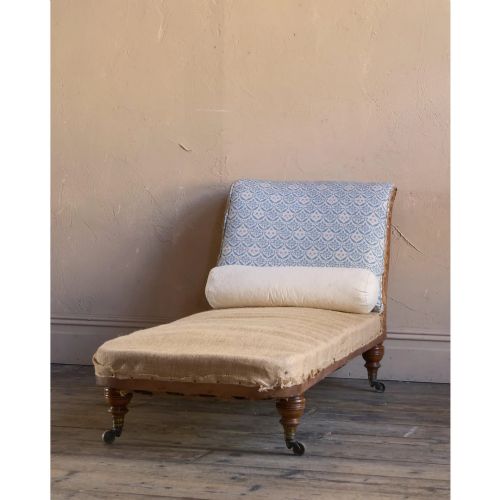
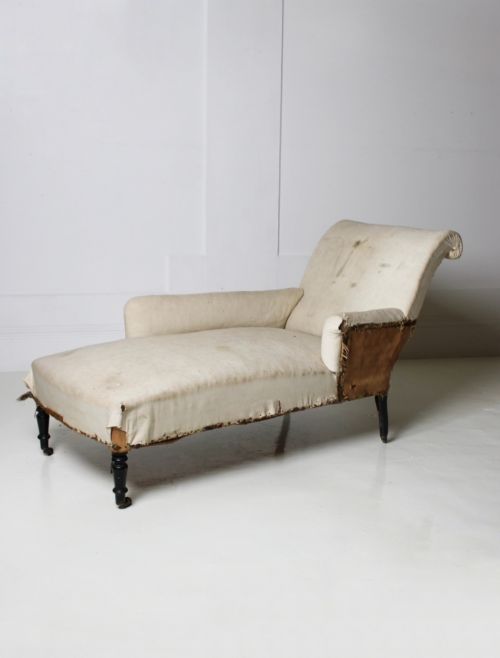
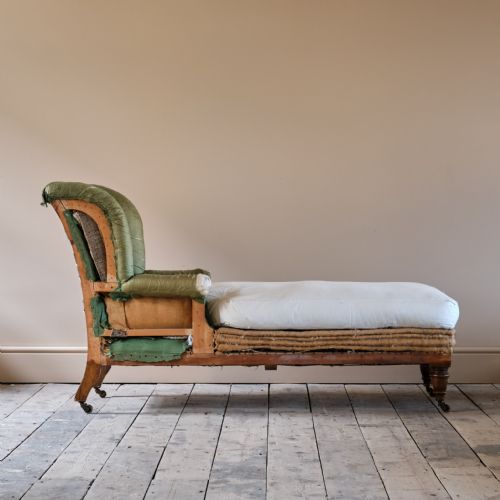
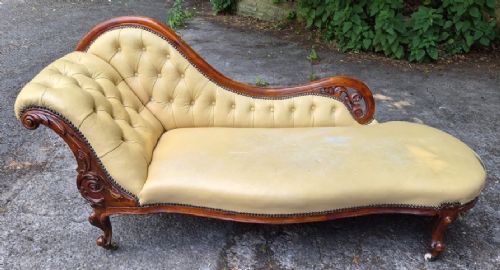


Reclining Fainting Couch
A reclining fainting couch is a nineteenth-century seat designed for semi-recumbent repose, offering homeowners elegant support and historical character.
Reclining Fainting Couch
A reclining fainting couch combines the elongated seat of a daybed with a raised end, offering a comfortable place to recline during the day. When exploring a reclining fainting couch, buyers typically encounter pieces originating from the nineteenth century, including Victorian and Edwardian examples.
The selections span various regional interpretations, featuring English mahogany and rosewood frames alongside French decorative daybeds. Common forms include chaise longues, double spoonback designs, and substantial country house daybeds fitted with turned legs and original castors.
Makers and workshops of the period, such as Howard and Sons and H. Goodall and Sons of Newcastle, produced notable variations of the form. These range from simple oak frames to elaborate carved rosewood structures upholstered in leather, velvet, calico, or hessian.
Materials and construction
Makers built the structural frames of a reclining fainting couch using dense timbers such as mahogany, rosewood, walnut, and solid oak. These hardwoods provided the necessary strength to support the elongated, asymmetric forms characteristic of nineteenth-century daybeds.
Upholstery techniques involved traditional stuffing materials enclosed in fabrics like velvet, leather, calico, and hessian. Brass hardware, including original castors, often facilitated movement for these substantial seating pieces within period interiors.
Reclining Fainting Couch Retail Price Guide 2026
Typical asking prices for reclining fainting couch among the pieces listed under this phrase on Sellingantiques today, from the lower quarter to the upper quarter. They describe what is for sale here now, not the wider market.
Recorded styles encompass Victorian, Edwardian, Regency, and Louis XVI aesthetics applied to daybeds and chaise longues.
Craftsmanship and finish
Quality in a reclining fainting couch rests upon the crispness of the timber carving and the architectural integrity of the frame. Finer examples display deeply sculpted mahogany or rosewood details that integrate harmoniously with the overall scroll of the backrest.
The standard of upholstery and the preservation of original elements, such as turned legs and brass castors, further distinguish superior pieces. Expert joinery ensures the extended frame remains rigid and stable over time.
Howard and Sons·H Goodall and Sons of Newcastle
The Reclining Fainting Couch Glossary
- Chaise longue
- An elongated chair for reclining, literally translating from French as long chair. It serves as the primary structural archetype for nineteenth-century daybeds.
- Daybed
- A couch that functions as a seat during the day and a bed for resting. These pieces frequently feature a single raised headrest.
- Castor
- A small wheel mounted on a swivel attached to the legs of furniture. Original brass versions allow heavy wooden frames to move smoothly across floor coverings.
- Spoonback
- A chair or couch back shaped like the bowl of a spoon, providing ergonomic support. This design appears on Victorian upholstery variants.
- Hessian
- A coarse woven fabric typically utilised as a foundation layer in traditional upholstery. It conceals internal stuffing materials beneath the outer textile.
Reclining Fainting Couch: Frequently Asked Questions
How do I use a reclining fainting couch?
Place the piece against a wall in a living room or study to create a dedicated spot for daytime relaxation. Its raised end supports the head and shoulders while the long seat accommodates the legs.
Ensure adequate surrounding floor space so the asymmetric silhouette remains a focal point within the room's layout.
How do I identify a Victorian fainting couch?
Look for dense timber frames made of mahogany or rosewood featuring characteristic nineteenth-century carving styles. Details like double spoonbacks and turned wooden legs point directly to this era.
Original brass castors and traditional upholstery materials further help confirm the period of manufacture.
Can I place a nineteenth-century daybed in a modern room?
These seating pieces integrate successfully into contemporary spaces by contrasting historic wood tones with modern neutral walls. Their sculptural frames serve as sophisticated statement seating.
Pair the piece with simple textiles to let the traditional craftsmanship of the timber frame stand out.