






Reclaimed Brass Door Handles
Reclaimed brass door handles bring genuine period weight and character to a home.
Reclaimed Brass Door Handles
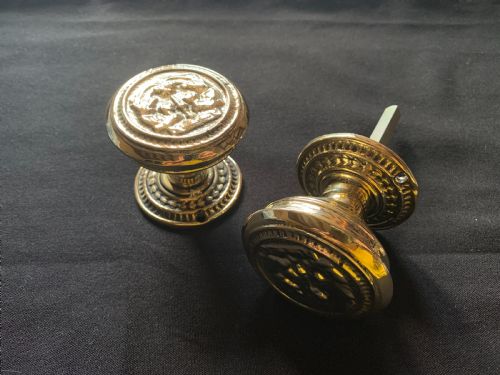
Reclaimed brass door handles are substantial hardware components salvaged from historic buildings, offering an authentic touch for period properties. When you search for reclaimed brass door handles, you encounter functional items that bridge practical utility with historic design. These pieces include matched pairs and single pulls designed for residential and grand interior doors.
The selection on this page centres primarily on Victorian, Regency, Edwardian, and Art Nouveau periods, showcasing the shifts in domestic taste over a century. You find classic round knobs alongside finger plates, pull handles, and centre door knobs. Materials span beyond pure brass to include bronze, walnut, ebony wood, and steel components.
How they were made
Makers fashioned these handles using traditional casting and machining methods in brass and bronze, often pairing metalwork with contrasting materials like ebony and walnut wood. Foundry work produced solid components with notable heft, while decorative styles incorporated floral motifs, geometric lines, or smooth Regency profiles.
Surface patination developed naturally through decades of daily handling and exposure to air, creating distinct tones that modern reproduction items cannot replicate. Secondary materials such as steel fixings and painted elements occasionally appear on composite items.
Reclaimed Brass Door Handles Retail Price Guide 2026
Typical asking prices for reclaimed brass door handles among the pieces listed under this phrase on Sellingantiques today, from the lower quarter to the upper quarter. They describe what is for sale here now, not the wider market.
Materials documented across the inventory include solid brass, bronze, ebony wood, French walnut, and steel.
What varies in quality
The distinction between standard utility hardware and superior examples lies in the thickness of the metal cast and the crispness of the decorative detail. Heavier castings feel substantial in the hand and maintain their structural integrity across centuries of continuous use.
Artistry in the design execution separates basic utilitarian brass from sophisticated Arts and Crafts or Art Nouveau specimens. The preservation of original surface finish and the integrity of paired sets also dictate desirability among collectors and restorers.
The Reclaimed Brass Door Handles Glossary
- Finger plate
- A metal panel fitted behind a door handle to protect the wood surface from marks. These plates often feature decorative embossing matching the associated knob.
- Centre door knob
- A stationary handle positioned in the middle of a grand entrance door rather than the latch edge. They allow visitors to pull or push heavy doors.
- Patina
- The surface sheen and colour acquired by metal through age and handling. A genuine patina indicates authentic period use rather than artificial chemical ageing.
- Bronze
- An alloy consisting primarily of copper, frequently utilised for historic door furniture for its durability and darker tonal quality compared to bright brass.
Reclaimed Brass Door Handles: Frequently Asked Questions
Are these handles sold in pairs?
Many listings offer matched pairs suitable for standard doors where hardware is required on both sides. Single handles and pull plates also appear for specific applications.
Check the individual title to confirm whether you are buying a pair or a single item for your project.
How do I date these door handles?
Stylistic indicators such as flowing Art Nouveau lines, geometric Arts and Crafts patterns, or restrained Regency profiles help determine the period. Materials like ebony wood or walnut pairings also point towards specific decades of manufacture.
Examining the casting style and construction method provides further clues regarding the era of origin.
Will these fit modern doors?
Historic hardware often requires careful measurement of spindle widths and fixing centres to ensure compatibility with contemporary door thicknesses. Some adjustment or professional fitting may be necessary during installation.
Review the dimensions and spindle mechanisms before attempting to mount them on modern joinery.
How should I clean antique brass?
Preserving the aged surface is usually preferable to aggressive polishing that removes the historic character. A gentle wipe with a soft cloth removes dust without disturbing the underlying oxidation.
Avoid harsh chemical cleaners that strip away the authentic finish developed over generations.