



Queen Anne Style Nightstands
Queen anne style nightstands bring timeless walnut warmth to the bedside with graceful cabriole lines.
Queen Anne Style Nightstands
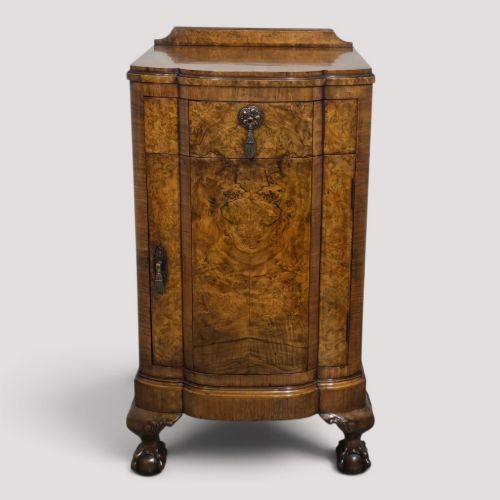
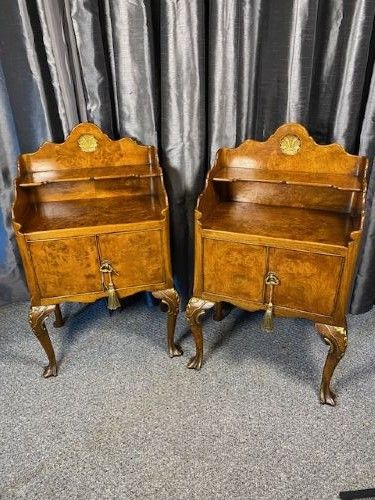
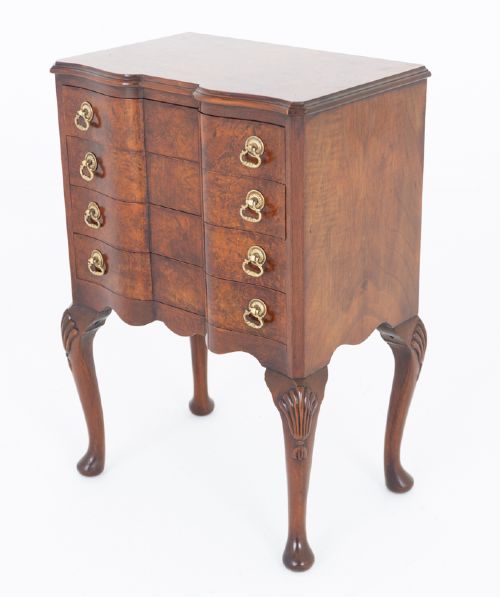
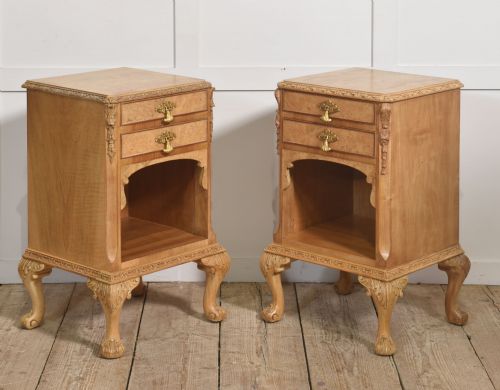
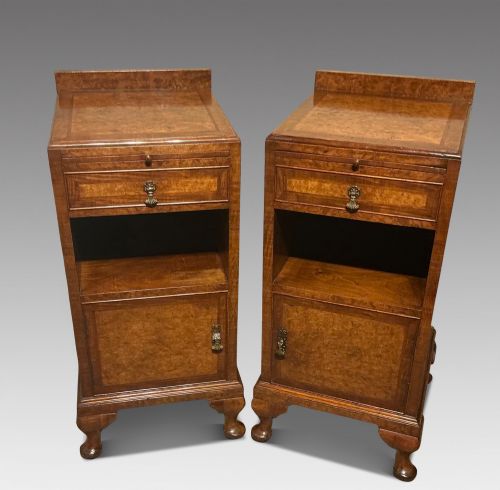
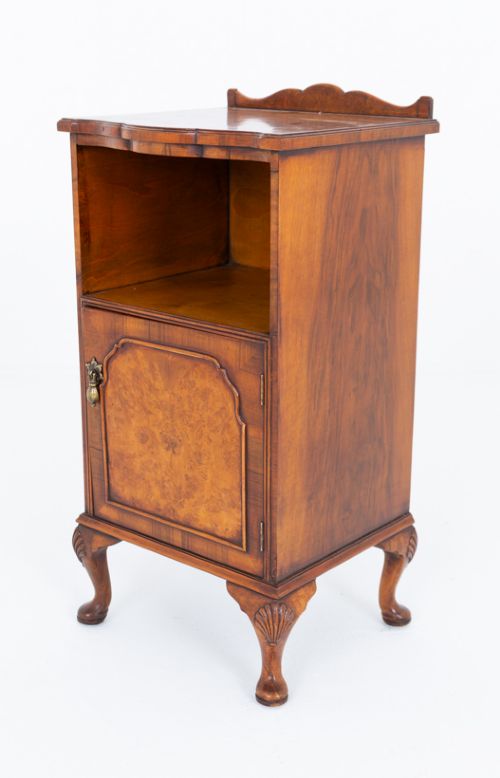
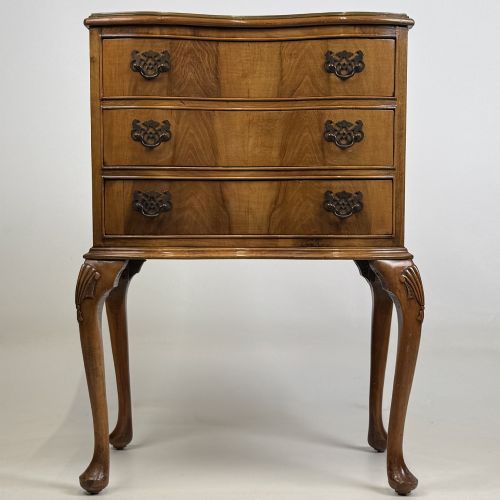
When searching for queen anne style nightstands, buyers encounter a focused selection of bedside cabinets, tables, and small chests dating across the early twentieth century. The period examples span the Edwardian era through the nineteen-thirties, reflecting a sustained revival of eighteenth-century aesthetics. Most pieces take the form of enclosed bedside cupboards or compact chests of drawers designed for domestic use.
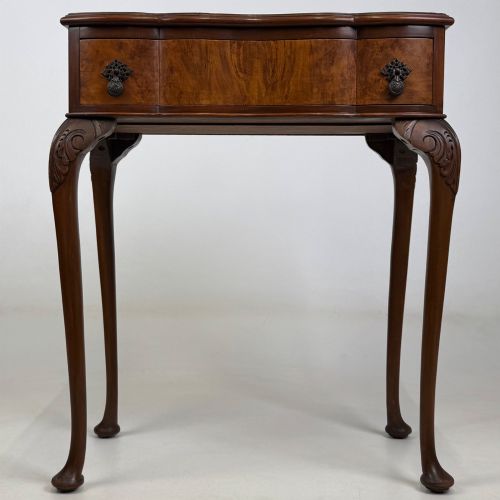
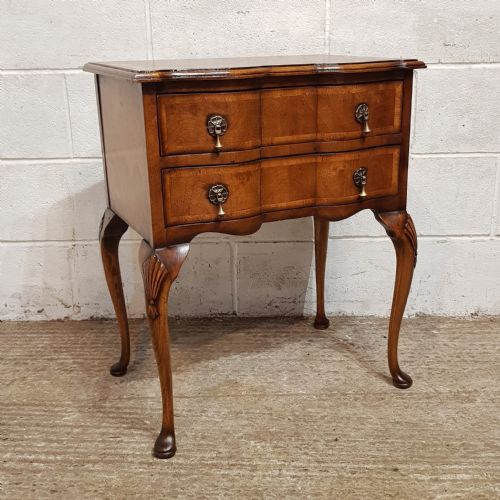
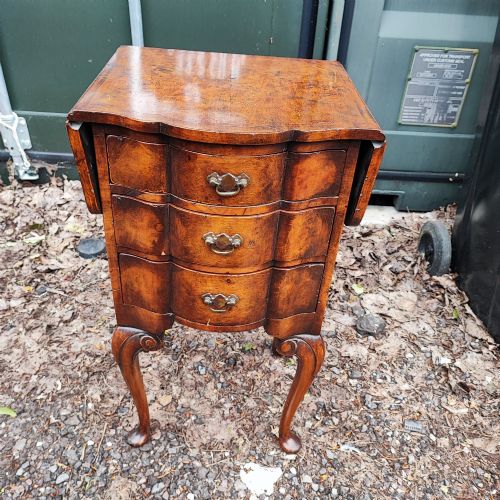
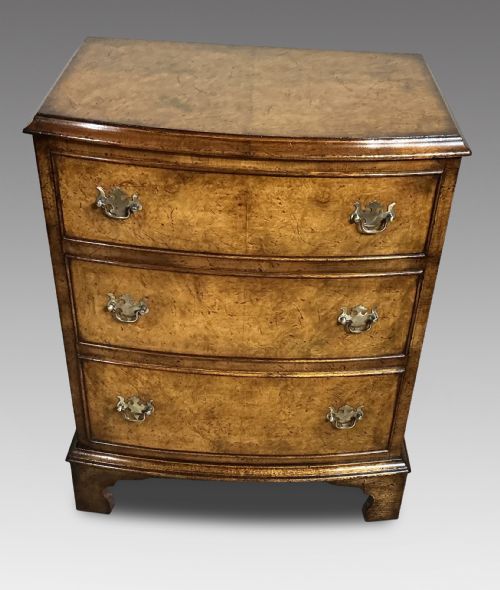
The assortment relies heavily on pairs, alongside individual side tables and occasional pieces that function equally well beside a bed or as lamp stands. Forms range from straight-fronted cabinets to bowfront and serpentine shapes, occasionally featuring tray tops. Walnut serves as the primary structural vehicle for these items, linking them visually to the historic Queen Anne tradition.
How they were made
Construction relies upon solid walnut and figured timbers enhanced by burr walnut veneers. Cabinetmakers utilised these decorative veneers on top surfaces and drawer fronts to create striking grain patterns and visual depth. Brass hardware often appears on drawers and cupboard doors as a contrasting metallic detail.
Pieces frequently incorporate shaped aprons and cabriole legs characteristic of the revival style. The joinery reflects early twentieth-century cabinetmaking standards applied to compact domestic furniture. Surface finishes highlight the natural warmth and figuring of the walnut timber.
Listings feature walnut, burr walnut veneer, and brass across pieces dated from nineteen-ten to nineteen-thirty, alongside Edwardian examples.
What varies in quality
The selection of timber veneer dictates much of the visual appeal, with heavily figured burr walnut commanding attention for its rich patterning. Consistency within a matched pair elevates desirability significantly compared to mismatched individual items. Cabinet proportion and the crispness of shaped fronts like bowfronts or serpentine outlines also influence the overall character.
Refinement in leg shaping and edge detailing distinguishes finer examples from simpler production pieces. The integration of functional elements, such as smooth-running drawers and well-fitted cupboard doors, marks the standard of execution. Condition of the walnut surface and preservation of the grain determine the visual impact of each piece.
The Queen Anne Style Nightstands Glossary
- Cabriole leg
- A furniture leg featuring a double curve, typically swelling outward at the knee and tapering inward toward the foot. This form derives from classical furniture design and defines the revival aesthetic.
- Burr walnut
- Timber sliced from walnut tree growths, producing intricate, swirling grain patterns. Cabinetmakers prize this veneer for decorative surfaces on tables and cabinet fronts.
- Bowfront
- A convex, curved cabinet front that swells outward toward the centre. This shape adds visual movement and softness to bedside furniture.
- Serpentine front
- A furniture front characterised by a central convex curve flanked by concave sweeps. It requires precise woodworking and denotes finer craftsmanship.
- Tray top
- A table top finished with a raised rim or moulding around the edges. This feature prevents small items from rolling off the surface.
Queen Anne Style Nightstands: Frequently Asked Questions
Are these nightstands sold in pairs?
Many listings comprise matched pairs of bedside cabinets or cupboards suitable for placing on either side of a bed. Single side tables and occasional pieces also appear frequently.
Buyers seeking symmetrical bedside arrangement often focus specifically on these matched pairs.
What periods do these pieces date from?
The inventory spans the early twentieth century, incorporating Edwardian examples alongside pieces from nineteen-ten, nineteen-twenty, and nineteen-thirty. These items belong to a revival movement rather than the original eighteenth-century period.
Construction methods and timber selection align with the prevailing standards of those early decades.
What woods are used in construction?
Walnut dominates this category, appearing in plain, figured, and burr walnut veneer varieties. Brass hardware frequently complements the timber surfaces.
Archive records also note occasional flame mahogany on specific revival pieces.
How do bedside cabinets differ from side tables?
Bedside cabinets generally provide enclosed storage through cupboards or drawers to conceal personal items. Side tables and lamp tables offer open surfaces for illumination and decorative display.
Some designs combine a small drawer with an open shelf or cupboard space below.