




Queen Anne Style Carvers
Queen Anne style carvers offer the generous proportions and distinct silhouette of early eighteenth-century seating, built mostly during the revival periods that followed.
Queen Anne Style Carvers
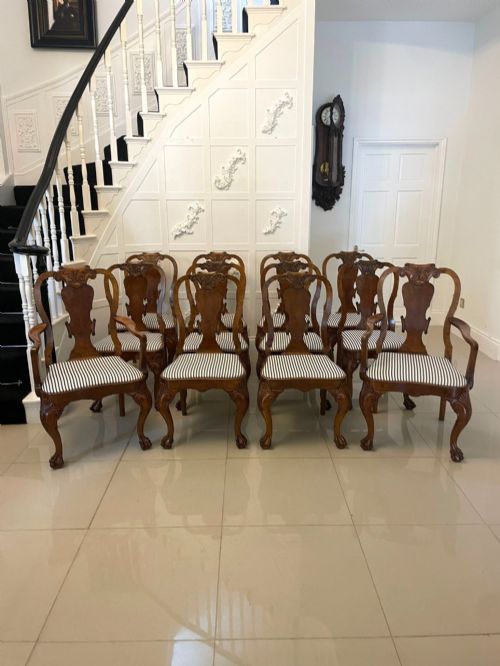
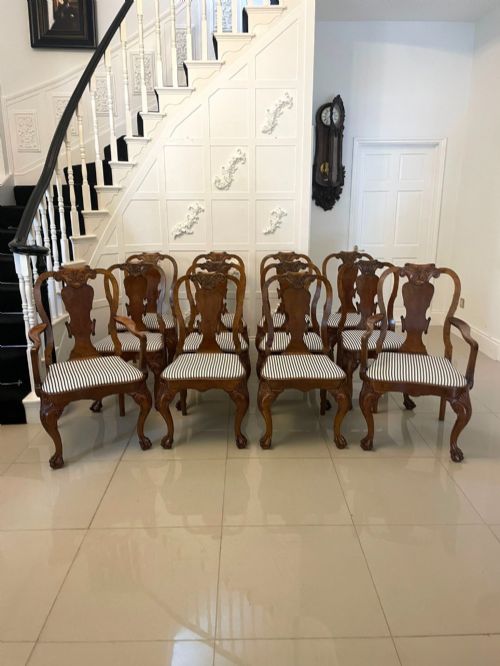
Queen Anne style carvers represent the elbow chairs of a dining set, distinguished by their supportive arms and high backs designed for the head of the table. The search phrase covers pieces originating from the nineteenth century through the 1930s, capturing both Victorian interpretations and the extensive revival cabinet-making of the Edwardian era and the 1920s.
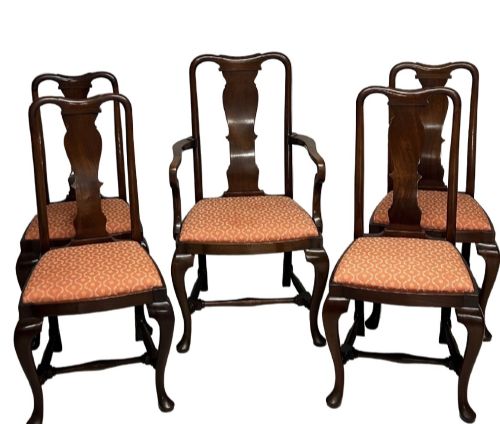
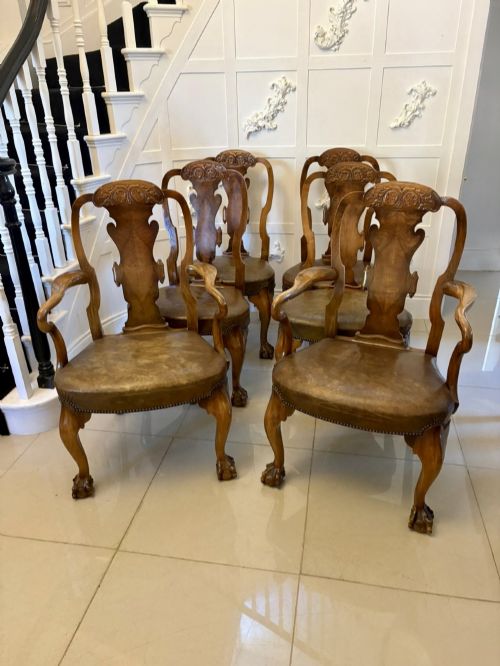
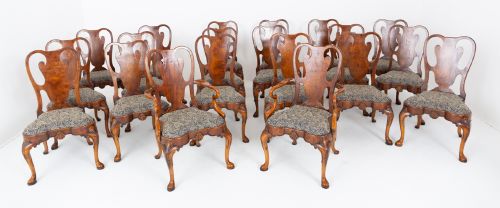
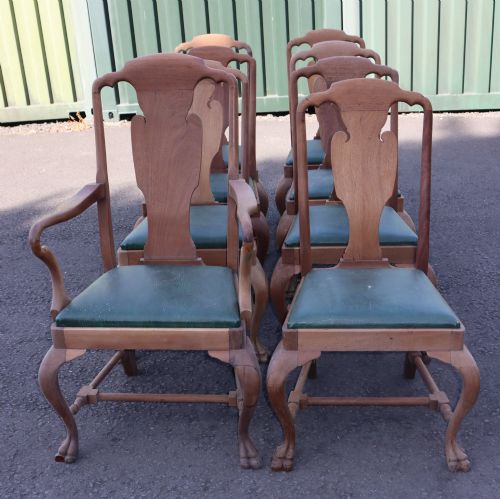
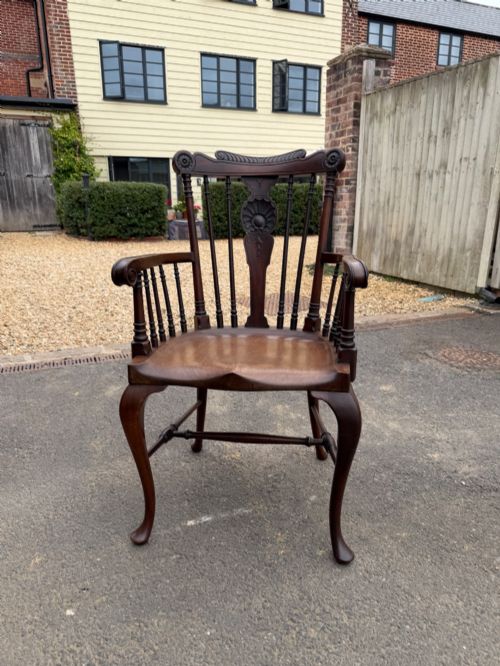
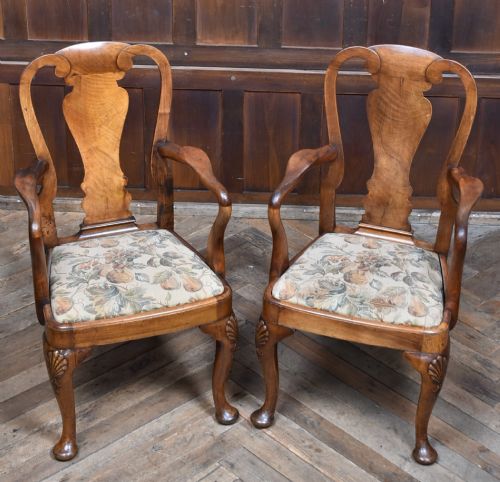
Buyers will most frequently encounter walnut and mahogany examples bearing the characteristic vase-shaped splat and cabriole leg, often supplied singly or as part of larger dining room sets. The construction ranges from modest oak frames to elaborate burr walnut and marquetry pieces, reflecting the diverse domestic tastes of the Victorian and twentieth-century periods.
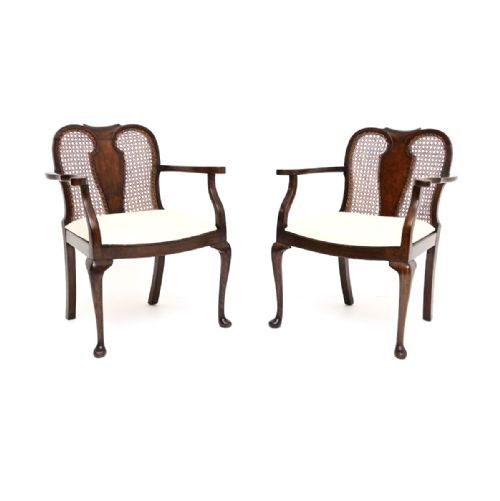
The selection includes pairs of armchairs alongside individual carvers designed to match single chairs around a dining table. These seating forms draw directly upon eighteenth-century models, maintaining the scrolled arms and shaped aprons that define the aesthetic.
How they were made
Cabinet-makers relied heavily on solid walnut, burr walnut, and mahogany, shaping the timber to form the characteristic curved uprights and flowing lines of the frame. Selected timbers provide both the structural strength needed for the arms and the decorative grain displayed across the broad back splats.
Upholstery techniques applied to these carvers utilise traditional stuffing covered in various fabrics, leather, velvet, or textiles, secured to drop-in seats or fixed frames. The joinery employs time-tested methods such as mortise and tenon joints to withstand the daily stresses placed upon the arm supports.
Queen Anne Style Carvers Retail Price Guide 2026
Typical asking prices for queen anne style carvers among the pieces listed under this phrase on Sellingantiques today, from the lower quarter to the upper quarter. They describe what is for sale here now, not the wider market.
Even miniature occupants required formal seating, as recorded by the survival of child-sized walnut armchairs.
What varies in quality
The distinction between standard commercial production and finer cabinet-making rests in the depth and crispness of the carving upon the knees and crest rails. Superior examples display hand-carved shell or leaf motifs executed with precision, whereas simpler pieces rely on plain mouldings.
Timber selection and grain matching across the back splats and seat rails determine the visual harmony of a carver. Workshops utilising highly figured burr walnut or dense mahogany achieve a richer presence than those using plain, unselected woods.
Spillman & Co·Cooper & Holt·Waring & Gillow
The Queen Anne Style Carvers Glossary
- Carver
- An armchair designed to match a set of dining chairs, traditionally placed at the head of the table. These chairs feature open arms to accommodate wide garments.
- Cabriole leg
- A furniture leg that bends outward in a convex curve and tapers inward in a concave curve, ending in a pad or foot. This form derives from classical design and defines many revival chairs.
- Splatt
- The central vertical slat of wood running from the seat to the top rail of a chair back. In these designs, it frequently takes a vase or fiddle shape.
- Vase splat
- A solid piece of wood shaped like the silhouette of a vase, forming the central support of the chair back. It provides lumbar support while offering a canvas for grain patterns.
- Elbow chair
- An alternative term for an armchair, specifically one with low arms intended to support the elbows rather than the full length of the arm.
Queen Anne Style Carvers: Frequently Asked Questions
Are carver chairs sold individually or in sets?
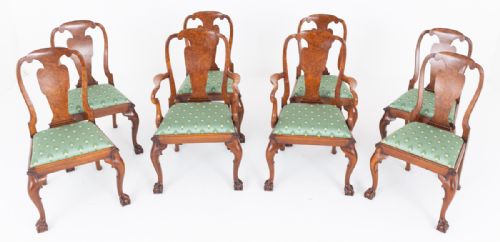
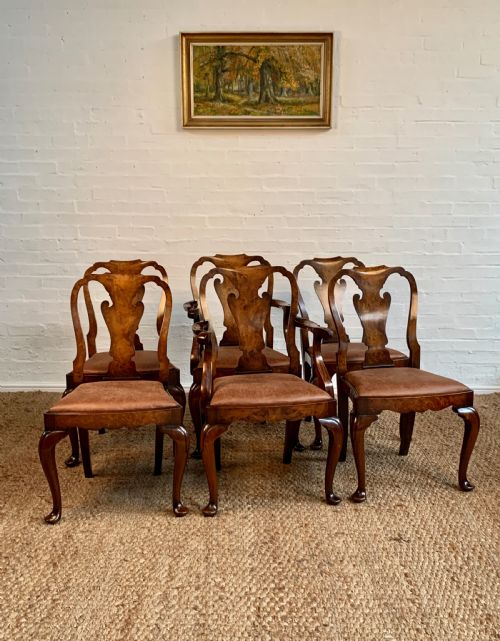
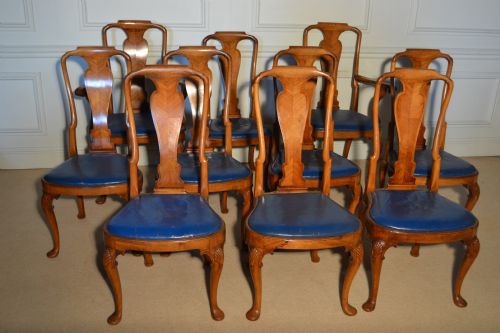
These armchairs appear both as isolated pairs and as part of larger dining room suites alongside matching single chairs. Many dining sets include two carvers intended for the heads of the table.
Buyers searching the archive will find that mixed sets combining side chairs with accompanying carvers are a common format for these walnut and mahogany furnishings.
How do I identify the period of a revival chair?
Dating relies upon examining the timber preparation, the construction methods used inside the seat frame, and the specific characteristics of the revival style. Edwardian and 1920s workshops often employed machine-assisted joining alongside hand finishing.
Evidence from the listings shows production spanning the nineteenth century through the 1930s, with distinct markers such as painted finishes or specific burr walnut veneers indicating early twentieth-century cabinet-making.
What wood types are most common?
Walnut and mahogany dominate the materials recorded in these listings, appearing across Victorian, Edwardian, and later twentieth-century pieces. Oak and elm also occur frequently in earlier nineteenth-century examples and specific regional styles.
Craftsmen often selected burr walnut for its decorative grain, applying it specifically to the back splats and seat rails to enhance the visual appeal of the dining chairs.
How were these chairs used originally?
Carvers served as the primary seating for the host and hostess at the dining table, offering enclosed armrests for added comfort during long meals. They functioned as principal pieces in formal dining rooms throughout the nineteenth and early twentieth centuries.
The sturdy construction of these elm, oak, and walnut frames ensured they endured generations of domestic use while maintaining their decorative presence in the home.